
Speedy
To a locker
- Up to 3 kg From 30 EUR
- Over 3 kg From 50 EUR
To an office
- Up to 3 kg From 40 EUR
- Over 3 to 20 kg From 50 EUR
- Over 20 kg From 100 EUR
To an address
- Up to 10 kg From 60 EUR
- Up to 20 kg From 100 EUR


No products
7,90 €
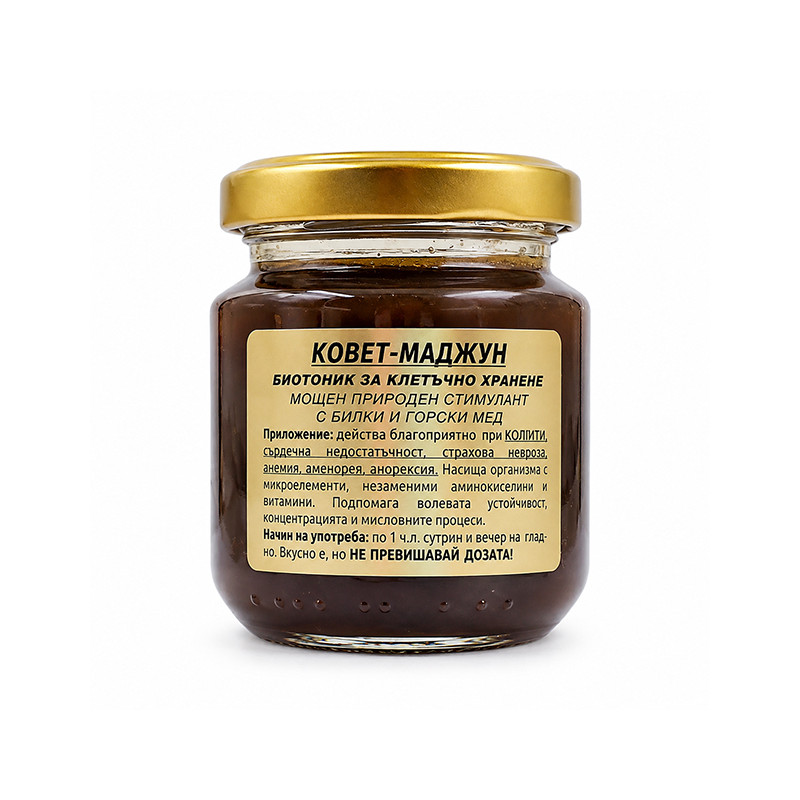
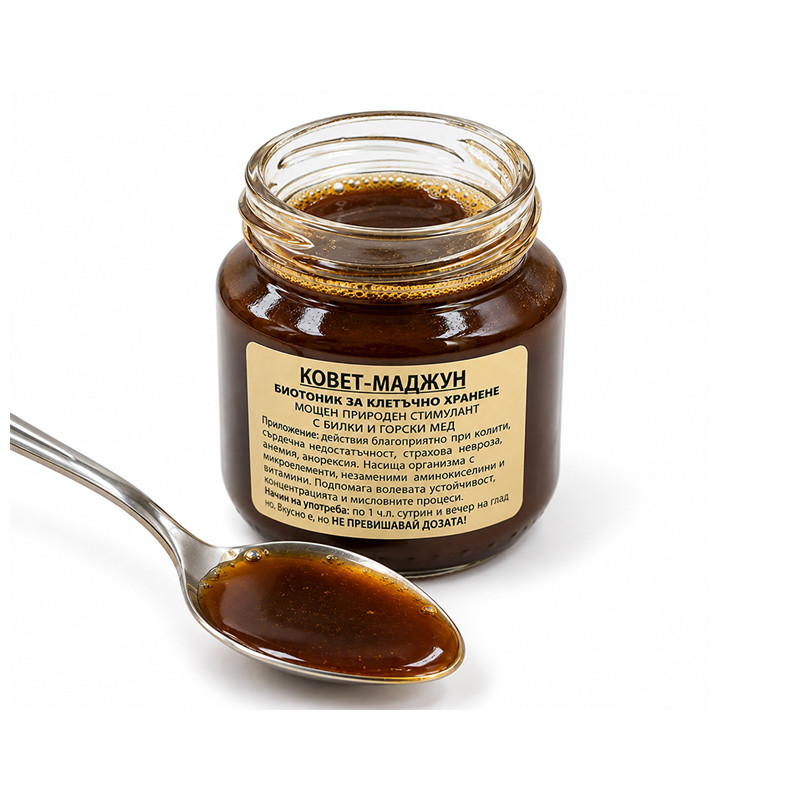
Kovet-Majun - herbal tonic with herbs and forest honey
Traditional Bulgarian herbal recipe
Kovet-Majun is a unique combination of herbal extracts and forest honey, created according to an old Bulgarian recipe dating back to the late 19th century. The product combines the richness of traditionally used herbs with the natural nutritional value and pleasant taste of bee honey.
This is not an ordinary herbal blend, but a ready-to-use herbal majun - a concentrated preparation in which different plants are combined into a traditional formula. This multi-ingredient combination makes Kovet-Majun an interesting product for people who value Bulgarian herbal traditions and are looking for a natural way to enrich their daily diet.
The history of Kovet-Majun is connected with Gabrovo and the old Balkan traditions of preparing herbal majuns. According to accounts associated with the restoration of the recipe, the Gabrovo teacher Nedko Stoykov recorded it in his notebooks in 1892. He added the brief note "against all diseases" - an expression characteristic of the way old herbalists and traditional healers described complex herbal recipes of that time.
The recipe was later supplemented and prepared for publication, but it was never published during the author's lifetime. Over time, the tradition of preparing the old majun was gradually forgotten. In more recent times, the recipe was traced through archival sources and restored as part of the renewed interest in traditional Bulgarian herbal practices.
Nedko Stoykov Nedkov (1856-1938) was born in Gabrovo and left an interesting mark on Bulgaria's social and cultural history. He was a teacher, volunteer soldier, public figure, publisher and local historian. He took part in the Bulgarian Volunteer Corps during the Russo-Turkish War of Liberation and, after the Liberation of Bulgaria, worked for many years as a teacher in Gabrovo and other settlements.
Nedko Stoykov had a strong interest in traditional Bulgarian life, local legends, folklore and the history of his native region. He was also involved in publishing and public activities, contributing to the publication of newspapers in Gabrovo and collecting local historical information. This interest in folk culture and traditional knowledge helps provide the historical context in which the recipe for Kovet-Majun was recorded.
Kovet-Majun stands out above all for its multi-ingredient formula. It combines bee honey with herbs traditionally used in Bulgarian folk medicine and European herbal practices. Rather than relying on a single plant, traditional majun recipes sought to combine different plants, each with its own characteristics and traditional uses.
This approach makes Kovet-Majun a unique meeting point between Bulgaria's herbal heritage and the modern concept of a convenient ready-to-use product. There is no need to prepare separate herbal decoctions or combine numerous plants - the herbal blend is already prepared and combined with honey in a ready-to-consume product.
Couch Grass - rhizome core: Couch grass is a traditionally used herb in Bulgarian folk medicine. Its rhizome is known for its natural content of minerals and various plant compounds and has traditionally been associated with supporting the normal function of the urinary system and the body's natural cleansing processes.
Valerian - rhizome: Valerian (Valeriana officinalis) is one of the best-known European medicinal plants. Its rhizome has traditionally been used in herbal practices for relaxation and calmness and for supporting the normal function of the nervous system. Its presence in the formula adds an herb traditionally associated with emotional balance and rest.
White Broom - seeds: The seeds of White Broom are part of old herbal recipes, including traditional Balkan combinations. In Kovet-Majun, they form part of the overall multi-ingredient formula, in which the different plants are selected to complement one another.
Dandelion - root: Dandelion root (Taraxacum officinale) is a classic herbal ingredient with a long history in European folk medicine. It has traditionally been used as part of herbal combinations aimed at supporting normal digestion, liver function and the body's natural elimination processes.
Elecampane - root: Elecampane (Inula helenium) is a traditional plant particularly well known in herbal practices associated with the respiratory system. Its root contains inulin and other naturally occurring plant compounds and has traditionally been used in herbal decoctions and combinations.
Comfrey - root: Comfrey (Symphytum officinale) is a plant with a long history in traditional herbal practices. Its root is rich in various naturally occurring plant compounds. Due to the specific composition of the plant, the internal use of comfrey preparations should be in accordance with the manufacturer's instructions and applicable safety requirements.
Mallow - aerial parts: Mallow (Malva) is a traditionally used plant known for its content of plant mucilage. In folk medicine, different parts of mallow have mainly been used in herbal combinations to support mucosal comfort and the normal condition of the digestive and respiratory systems.
Mullein - leaf: Mullein (Verbascum) is a traditional Bulgarian and European herb. Its leaves and flowers are known in folk medicine for their use in herbal blends aimed at supporting respiratory comfort. In Kovet-Majun, mullein complements the herbal formula with its characteristic plant compounds.
Nettle - root and seeds: Nettle (Urtica dioica) is one of the best-known Bulgarian plants and has a rich history both as a food and as a herb. Different parts of the plant contain minerals, plant pigments, polyphenols and other naturally occurring compounds. In traditional herbal practices, nettle is used for general strengthening and as part of springtime and cleansing herbal combinations.
Fenugreek - aerial parts: Fenugreek is a traditionally used Bulgarian herb that features in old herbal recipes and combinations. In Kovet-Majun, its aerial parts form part of the multi-ingredient formula and contribute their naturally occurring plant compounds to the overall herbal profile of the product.
Hops - cones: Hops (Humulus lupulus) is a well-known European plant whose cones have traditionally been used in herbal practices to support calmness and normal rest. In the Kovet-Majun formula, hops complement the presence of valerian and other plants traditionally associated with the nervous system.
Goat's Rue - aerial parts: Goat's Rue (Galega officinalis) is an old European medicinal plant, also known in Bulgarian folk medicine. It has traditionally been used in herbal combinations associated with metabolism. Due to the specific properties of the plant, its intake should be in accordance with the recommended dose and the manufacturer's instructions.
Marshmallow - root: Marshmallow (Althaea officinalis) is a classic European medicinal plant. Its root is rich in plant mucilage and has traditionally been used in herbal practices to support mucosal comfort and the normal condition of the digestive and respiratory tract.
Forest honey is not merely the base of Kovet-Majun, but an important part of its character. Bee honey is traditionally used as a natural food and is a source of carbohydrates, minerals and other naturally occurring components. It gives the product a pleasant sweetness and thick consistency, while also serving as a natural food medium for the herbal blend.
The combination of honey and herbs is deeply rooted in Bulgarian folk medicine. This combination is characteristic of traditional majun - an herbal preparation with a thick consistency, traditionally prepared for use in small amounts over an extended period.
Kovet-Majun is based on the idea of comprehensive herbal support, in which different plants are combined into a single formula. Some of the herbs are traditionally associated with digestion and metabolism, others with the nervous system and relaxation, while others are associated with respiratory and urinary system comfort.
This multi-faceted approach is characteristic of old Bulgarian herbal recipes. Rather than focusing on one particular plant, they often combine numerous herbs with different traditional profiles. This philosophy is also at the heart of Kovet-Majun.
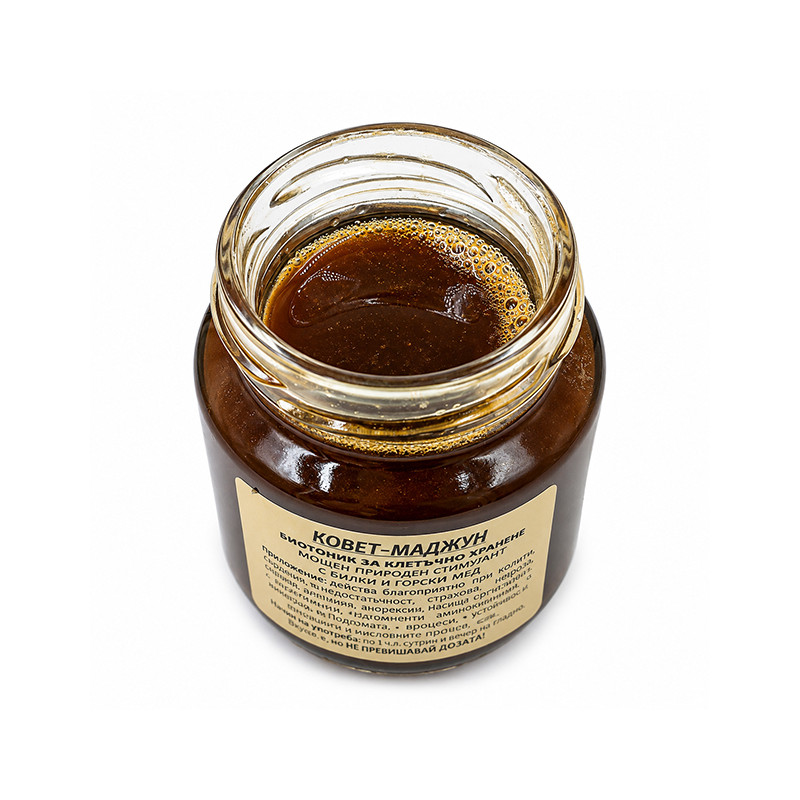
Kovet-Majun has traditionally been used as a supportive herbal preparation for colitis, heart failure, anxiety neurosis, anemia, amenorrhea, and anorexia. It provides the body with trace minerals, essential amino acids, and vitamins, while traditionally being associated with supporting mental resilience, concentration, and cognitive processes.
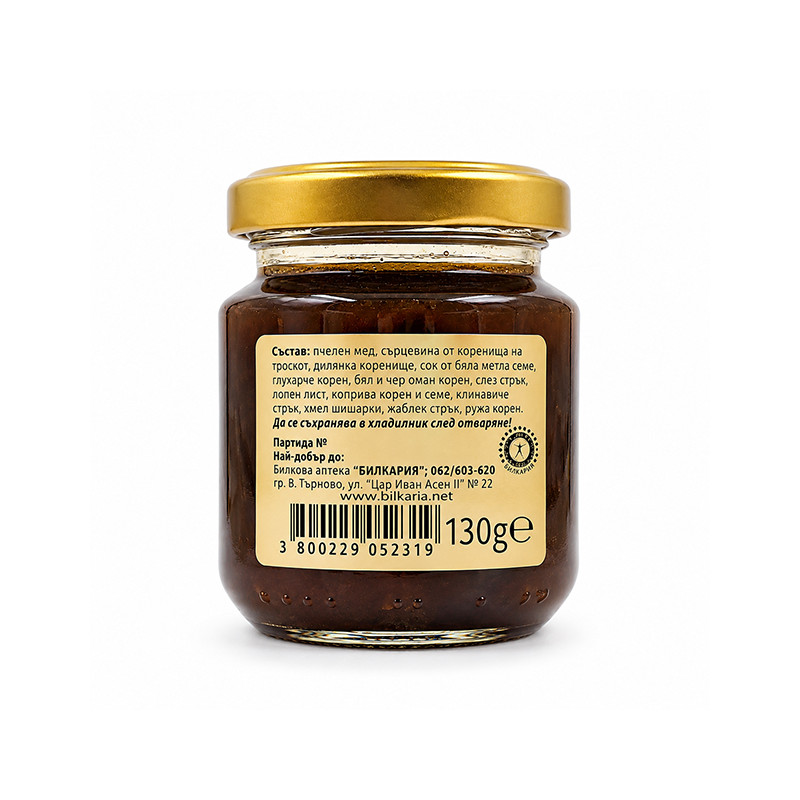
Bee honey, rhizome core of couch grass, valerian rhizome, white broom seed juice, dandelion root, elecampane and comfrey root, mallow aerial parts, mullein leaf, nettle root and seeds, fenugreek aerial parts, hops cones, goat's rue aerial parts, marshmallow root.
Take 1 teaspoon in the morning and evening before meals.
Do not exceed the recommended dose. After opening, store in the refrigerator.
Important: The product is not intended for children under 12 years of age. Its use during pregnancy and breastfeeding is not recommended unless specifically advised by a doctor or qualified healthcare professional.
Due to its multi-ingredient composition, the product is not suitable for people with a known sensitivity or allergy to any of its ingredients. Particular caution is advised if you are taking medication, as some of the herbs in the formula may interact with certain medicinal products.
If you have a chronic medical condition or regularly take medication, consult a doctor or pharmacist before use. Do not use the product as a substitute for prescribed medical treatment.
Packing: 130 g in a glass jar
What is Kovet-Majun?
Kovet-Majun is a traditional herbal majun combining bee honey with a multi-ingredient blend of herbs. The product is ready to use and does not require any additional preparation.
Why is the product called "majun"?
Majun is a traditional form of herbal preparation with a thick consistency, made by concentrating a herbal extract and combining it with honey or another sweet base. This form is known in Bulgarian and Balkan herbal traditions.
What is the history of the recipe?
The recipe is associated with the Gabrovo teacher Nedko Stoykov and is said to have been recorded in 1892. It was later traced through archival sources and restored as part of the modern revival of an old Bulgarian herbal tradition.
Why are so many herbs combined in Kovet-Majun?
The multi-ingredient composition follows the traditional idea behind old herbal majuns - different plants with different traditional profiles are combined into a single formula.
Is the product suitable for daily use?
The product is intended to be taken at the dose specified by the manufacturer. If you are taking medication, have a chronic condition, are pregnant or breastfeeding, it is advisable to consult a doctor or qualified healthcare professional beforehand, as some of the herbs in the formula have specific properties and may interact with certain medications.
What does Kovet-Majun taste like?
Thanks to the bee honey, the product has a naturally sweet taste complemented by characteristic herbal and slightly bitter notes from the plant ingredients.
 Boralin - 4, based on tribulus Terrestris, 500 ml
 22,24 €
 Boralin - 5, based on tribulus Terrestris, 500 ml
 22,70 €
 Boralin - 8, based on tribulus Terrestris, 500 ml
 22,50 €
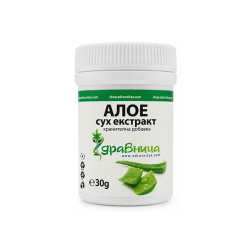 Aloe, dry extract (bittter crystals), Zdravnitza, 30 g
 4,40 €
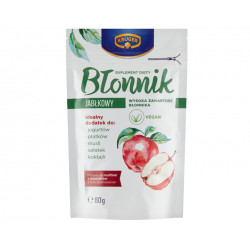 Apple fibers (pectin), powder, Kruger, 80 g
 2,00 €
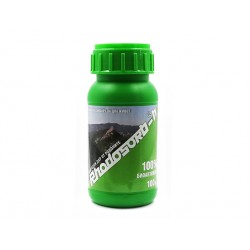 Rhodosorb-H, natural zeolite (Clinoptilolite), 100 g
 25,40 €
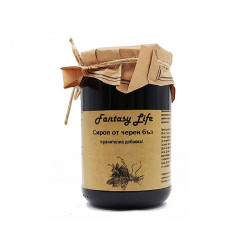 Elderberry syrup, dietary supplement, Fantasy Life, 300 ml
 3,30 €
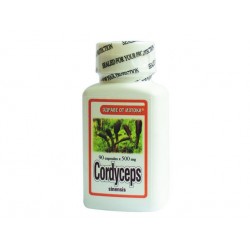 Cordyceps, Boost immunity, 90 capsules
 11,45 €
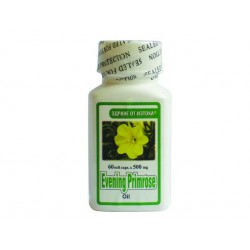 Evening primrose oil, Female problems, 60 capsules
 6,50 €
 Rhodosorb-H, natural zeolite (Clinoptilolite), 80 capsules
 30,47 €
 Marine Collagen with Vitamin C and Biotin, Kruger, 20 effervescent tablets
 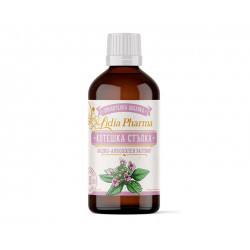 Wild basil, herbal drops, Lidia Pharma, 50 ml
 3,60 €
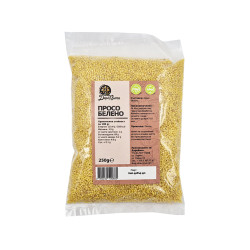 Millet - hulled seeds, DaroVita, 250 g
 1,43 €
 Milk thistle, herbal drops, Lidia Pharma, 50 ml
 2,81 €
 Prune marmalade, no added sugar, Dr. Keskin, 290 g
 2,71 €
 Strawberry jam, no added sugar, Dr. Keskin, 290 g
 2,76 €
 Natural Herbal Spray - Protect, Refresh and Moisturize, Hristina, 100 ml
 7,60 €
 Rezeo, zeolite stones for water ionization, Beno Health, 200 g
  Organic Coconut Milk, CecilBio, 400 ml
  Black Seed Oil (Black Cumin), cold pressed, Zdravnitza, 100 ml
 8,50 €


Love it
It is healthy and tasty. I feel much more energy and more positive taking this. I take it ten or fifteen minutes before a meal and I feel it assists with digestion. I am very happy with this product.