
Smoky aroma, spicy character, garlic, herbs and spices - Cajun is one of those blends that can transform a dish with just a few pinches. But behind its distinctive flavor lies much more than a combination of hot spices.
Cajun is a culinary tradition born in Louisiana, USA - a place where French culture meets local ingredients, American culinary traditions and influences from Africa, Spain, Germany and the Indigenous peoples of North America. It is precisely this blend of cultures that has made Cajun cuisine one of the most recognizable regional cuisines in the United States.
And when you add chicken, shrimp, fish, rice, potatoes or roasted vegetables, you get that distinctive Louisiana-style flavor that is hard to forget.
What does "Cajun" actually mean?
The word Cajun comes from Acadian - the name given to the French settlers of Acadia, a historical region encompassing parts of what are now the Canadian provinces of Nova Scotia, New Brunswick and Prince Edward Island.
During the 18th century, many Acadians were forcibly expelled by the British authorities. Some of them settled in southern Louisiana, where they gradually established their own community and culture.
There, they found themselves in a completely different natural environment. Instead of the ingredients they were accustomed to in Canada, they began using local resources - river and sea fish, shrimp, crabs, game, rice, corn, chili peppers and numerous aromatic plants.
Thus, over time, a cuisine emerged that was both French in origin and deeply Louisianan in character.
Cajun and Creole cuisine - are they the same?
Not quite. Cajun and Creole cuisines are often mentioned together, but they have different historical origins and characteristics. Cajun cuisine developed particularly strongly in the rural areas of southern Louisiana and traditionally has a more rustic, hearty character, often centered around dishes prepared in a single pot.
Creole cuisine is more closely associated with the urban culture of Louisiana and incorporates a broader combination of European, African and other influences.
Nevertheless, the two traditions overlap. Both make extensive use of spices, vegetables, rice, seafood and meat.
One of the most interesting symbols of Cajun cuisine: the "Holy Trinity"
If there is one thing worth remembering about Cajun cuisine, it is the so-called Cajun Holy Trinity - "Holy Trinity".
It consists of: onion, celery and green bell pepper.
This combination plays a role similar to that of mirepoix in French cuisine and is used as an aromatic base for numerous Cajun dishes.
Interestingly, celery is also included in the Cajun blend, making the connection with the traditional cuisine of Louisiana even more intriguing.
What does Cajun contain?
Cajun is not a single, strictly fixed recipe. Like many traditional spice blends, different versions exist depending on the region, family, cook and particular dish.
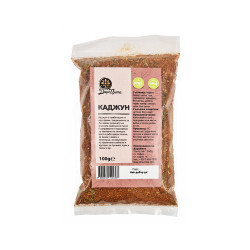
In Darovita Cajun you will find: paprika, garlic, onion, coriander, thyme, white oregano, celery, black pepper, cumin, chili and white mustard.
This combination brings together several different flavor profiles:
- Paprika provides color and a characteristic sweet and spicy aroma.
- Garlic and onion create the rich aromatic base.
- Thyme and oregano add herbal and aromatic notes.
- Coriander and cumin bring a warm, slightly earthy and spicy aroma.
- Black pepper and chili provide the characteristic heat.
- Celery and white mustard add additional aromatic depth.
It is precisely this layered combination that makes Cajun so versatile.
Does Cajun have health benefits?
Spices are traditionally used in small quantities, but that does not mean they are without interesting plant compounds.
Scientific research on culinary spices shows that many of them contain polyphenols, essential oils and other bioactive compounds. However, the clinical evidence varies for each individual spice and cannot always be directly applied to their consumption in the small amounts typical of everyday cooking.
Paprika
Paprika is rich in natural pigments and plant compounds that contribute to the antioxidant potential of the spice. It is also one of the main ingredients responsible for the characteristic reddish color of Cajun.
Chili
This is where the familiar sensation of heat comes in. The main hot compounds in chili peppers are capsaicinoids, with capsaicin being the best known. Research on capsaicinoids suggests a potential influence on energy expenditure, fat oxidation and appetite, but the effects are relatively small and they should not be presented as a weight-loss aid.
Garlic
Garlic contains a variety of sulfur compounds, which are among the reasons for its distinctive aroma and have been the subject of numerous scientific studies. In Cajun, garlic also has a purely culinary function - it rounds out the spiciness and makes the flavor fuller and richer.
Onion
Dried onion concentrates the characteristic sweet and aromatic profile of fresh onion and is an excellent way to add depth to meat, fish, vegetables and sauces.
Coriander
Coriander has a fresh, citrusy-herbal and slightly warm aroma. It contains various plant compounds and essential oils that contribute both to its aroma and to the distinctive profile of the blend.
Thyme
Thyme is an aromatic herb widely used in Mediterranean and European cuisine. It pairs particularly well with poultry, fish, potatoes, vegetables and legumes - making it a natural partner for the other components of Cajun.
Oregano
Oregano adds an herbal, slightly earthy and spicy note. It is particularly suitable for tomato sauces, vegetables, meat and pasta dishes, which explains why Cajun works so well even beyond the traditional cuisine of Louisiana.
Black pepper
Black pepper adds sharp spiciness and an aroma distinct from that of chili. The combination of black pepper and chili gives Cajun not simply heat, but a more complex spicy profile.
Cumin
Cumin is one of the spices with the most recognizable aromas in the blend - warm, earthy and slightly nutty. Scientific research on cumin has identified bioactive compounds such as cuminaldehyde and other phytochemicals, but further well-controlled clinical studies are needed before specific health conclusions can be drawn in humans.
Celery
Celery is an important part of the aromatic profile of Cajun. It is also a key component of the traditional Cajun "Holy Trinity" together with onion and green bell pepper.
White mustard
White mustard adds a characteristic warming spiciness and a slightly bitter, sharp note. It helps make the blend more complex, rather than having all of its heat come solely from chili.
How to use Cajun?
This is one of the strongest qualities of this spice blend. Cajun can be used practically anywhere you want a more intense, spicy and aromatic flavor.
How much Cajun should you use?
There is no single universal amount, as heat tolerance and personal preferences vary.
As a practical starting point:
- For 500 g of meat or fish: start with about 1-2 teaspoons.
- For 500 g of vegetables or potatoes: about 1-1½ teaspoons.
- For 2-3 servings of rice or pasta: about 1-2 teaspoons.
You can use more in marinades, especially when the blend is combined with oil, lemon juice, yogurt or another marinating ingredient.
The best approach is simple: start with a small amount, taste and gradually increase it.
When should Cajun be added?
With meat:
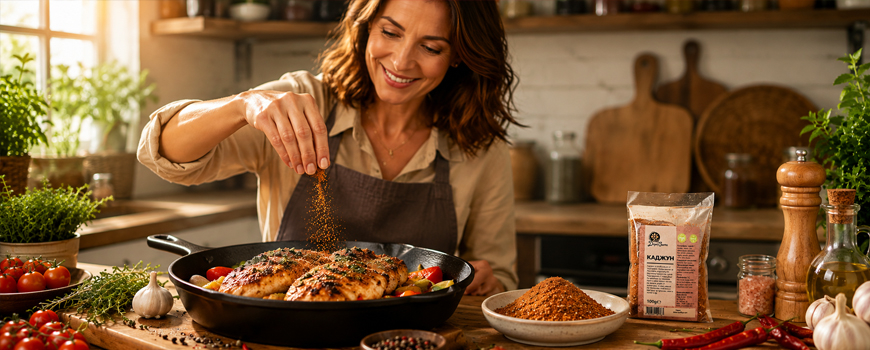
Cajun can be used as a dry rub - simply rub the blend into the meat before baking or grilling.
It works particularly well with:
- chicken
- pork
- beef
- burgers
- minced meat
- chicken wings
With fish and seafood:
This is one of the most natural combinations.
Cajun and seafood are a classic combination in Louisiana cuisine.
Try it with:
- shrimp
- salmon
- white fish
- squid
- crab
- mussels
For a quick option, mix Cajun with a little olive oil and lemon juice and use it as a marinade.
With potatoes:
This is perhaps one of the easiest ways to start using Cajun.
Cut potatoes, add olive oil and Cajun, and roast until golden.
You get flavorful, spicy potatoes with minimal effort.
With vegetables:
Cajun works wonderfully with:
- corn
- zucchini
- eggplant
- cauliflower
- broccoli
- sweet potatoes
- mushrooms
- peppers
- onion
It is particularly delicious when used for roasting or air frying.
With rice:
Rice is a natural partner for Cajun cuisine.
Cajun can be added to plain rice, vegetable rice, chicken and rice dishes or the famous jambalaya.
With pasta:
Here, Cajun fits surprisingly well into modern cuisine too.
Combine it with: pasta + shrimp + garlic + cream or pasta + chicken + tomatoes + Parmesan.
You get a quick dish with a much more pronounced flavor.
What can you combine Cajun with?
Cajun has a sufficiently complex aroma to serve as the main seasoning in a dish, but it can also be combined with other spices and herbs.
It pairs particularly well with:
- garlic
- onion
- smoked paprika
- black pepper
- thyme
- oregano
- rosemary
- parsley
- basil
- lemon zest
- ginger
If you want an even more pronounced Louisiana-style profile, add garlic, onion, celery, green bell pepper and tomatoes.
Cajun + lemon - one of the best combinations
Lemon is an excellent counterpoint to spiciness. Its acidity refreshes the flavor and makes the seasoning particularly suitable for fish and shrimp.
Try: 1 tsp Cajun + 1 tbsp olive oil + juice of ½ lemon. Mix well and use as a quick marinade for shrimp or fish.
Cajun in the air fryer - the quick trick for incredibly tasty potatoes
If you have an air fryer, Cajun is one of the spice blends worth trying.
Cut the potatoes into wedges or cubes.
Add:
- a little olive oil
- Cajun
- optionally, a little garlic powder
Mix well and cook until golden and crisp.
The result is crispy on the outside, tender on the inside and pleasantly spicy and aromatic.
The same method works wonderfully with sweet potatoes, cauliflower, zucchini and corn.
3 top recipes with Cajun
1. Cajun chicken with rice - a flavorful dinner for the whole family
One of the easiest recipes for experiencing the character of Cajun cuisine.
Ingredients:
- 500 g chicken fillet
- 250 g rice
- 1 onion
- 1 green bell pepper
- 2 celery stalks
- 2 garlic cloves
- 1-2 tsp Cajun
- 2 tbsp olive oil
- 500 ml chicken stock
- 1 tomato or 150 g canned tomatoes
- parsley
- lemon
Preparation:
Cut the chicken into bite-sized pieces.
Heat the olive oil and cook the chicken for a few minutes. Add the Cajun and stir well so that the spices coat the meat.
Add the chopped onion, bell pepper, celery and garlic.
Once the vegetables have softened, add the rice and tomatoes.
Pour in the stock, stir and simmer until the rice is cooked.
Finish with fresh parsley and a few drops of lemon juice.
Tip: If you enjoy spicier food, add a little more Cajun just before serving.
2. Cajun shrimp with garlic and lemon
This is the recipe that can transport you to the cuisine of Louisiana most quickly.
Ingredients:
- 400 g cleaned shrimp
- 2 tsp Cajun
- 3 garlic cloves
- 2 tbsp olive oil
- 1 tbsp butter
- juice of ½ lemon
- parsley
- a pinch of black pepper
- optional - chili flakes
Preparation:
Pat the shrimp dry and toss them with the Cajun.
Heat the olive oil and butter in a pan.
Add the garlic and sauté briefly.
Add the shrimp and cook for about 2 minutes on each side, until they change color and are fully cooked.
Add the lemon juice and fresh parsley.
Stir once more and serve immediately.
Best served with: rice, pasta, roasted potatoes or crusty bread.
3. Quick Cajun chicken pasta
When you want something quick, spicy and impressive, this combination is an excellent choice.
Ingredients:
- 300 g pasta
- 300 g chicken fillet
- 1-2 tsp Cajun
- 2 garlic cloves
- 200 ml cooking cream
- 50 g Parmesan
- 1 tbsp olive oil
- ½ red bell pepper
- fresh parsley
- salt to taste
Preparation:
Cook the pasta according to the package instructions.
Cut the chicken into thin strips and season with Cajun.
Heat the olive oil in a pan and cook the chicken until golden.
Add the chopped bell pepper and garlic.
After a few minutes, add the cream and allow the sauce to thicken slightly.
Add the cooked pasta and Parmesan.
Mix well and, if necessary, add a little of the pasta cooking water.
Finish with fresh parsley and another pinch of Cajun.
The result: creamy pasta with a garlicky aroma, spicy character and the distinctive deep flavor of Cajun.
10 Cajun ideas to try today
You do not need to start with a complicated recipe.
Sometimes a few pinches are all you need.
- Cajun potatoes - potatoes + olive oil + Cajun + air fryer.
- Cajun corn - grilled corn + butter + Cajun + lemon.
- Cajun salmon - salmon + olive oil + Cajun + lemon juice.
- Cajun chicken wings - wings + Cajun + a little olive oil, then bake or air fry.
- Cajun shrimp - shrimp + garlic + Cajun + butter.
- Cajun vegetables - cauliflower, broccoli, zucchini or mushrooms + Cajun + olive oil.
- Cajun burger - add a little Cajun directly to the ground meat.
- Cajun eggs - sprinkle over an omelet, scrambled eggs or avocado toast.
- Cajun pasta - combine with chicken, shrimp, tomato sauce or cream sauce.
- Cajun jambalaya - rice + chicken or sausage + vegetables + tomatoes + Cajun.
Small tricks for better results:
Do not over-season at the beginning
Cajun has a layered flavor. It is better to start with a small amount and add more than to make the dish too spicy.
Use some fat
Olive oil, butter and other fats help distribute the flavors of the spices evenly over the food.
Lemon is your friend
Especially when preparing fish and seafood.
Do not season only the meat
Cajun is also excellent on potatoes, rice, corn, pasta and vegetables.
Add the seasoning in two stages
With meat, you can add part of the Cajun before cooking and use a small amount at the end for a final burst of aroma.
This makes the flavor more pronounced and layered.
Why is Cajun so versatile?
The secret is in the balance. Chili alone would provide heat. Black pepper alone - sharpness. Garlic alone - a strong aroma. Thyme alone - herbal character.
But when you combine paprika, garlic, onion, coriander, thyme, oregano, celery, black pepper, cumin, chili and mustard, you get much more than the sum of the individual ingredients.
You get a blend that is simultaneously spicy, aromatic, herbal, slightly earthy and rich.
And that is precisely what allows the same seasoning to work with chicken, shrimp, salmon, potatoes, vegetables, rice and pasta.