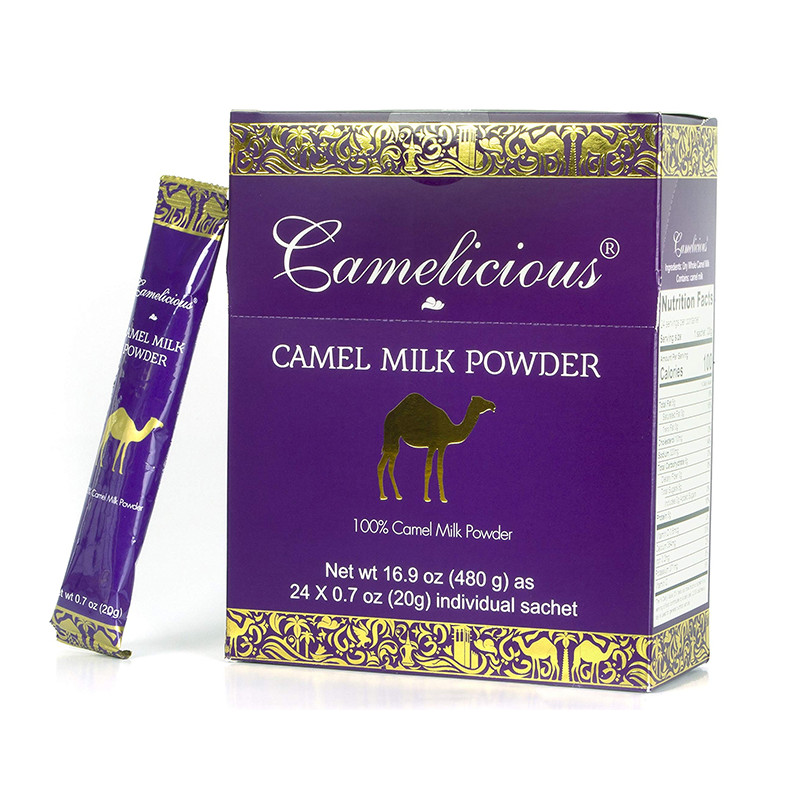
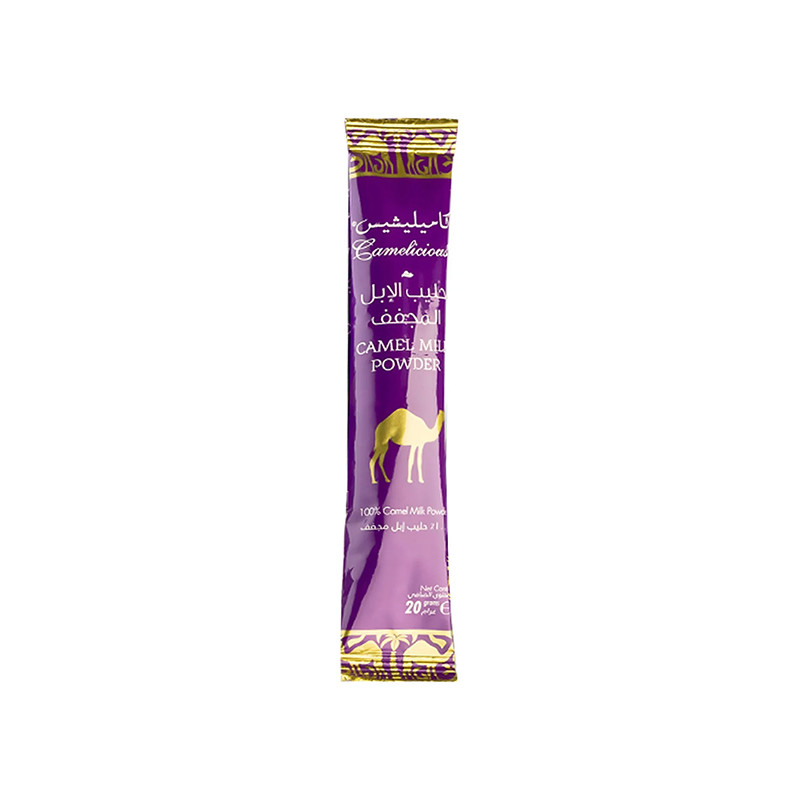
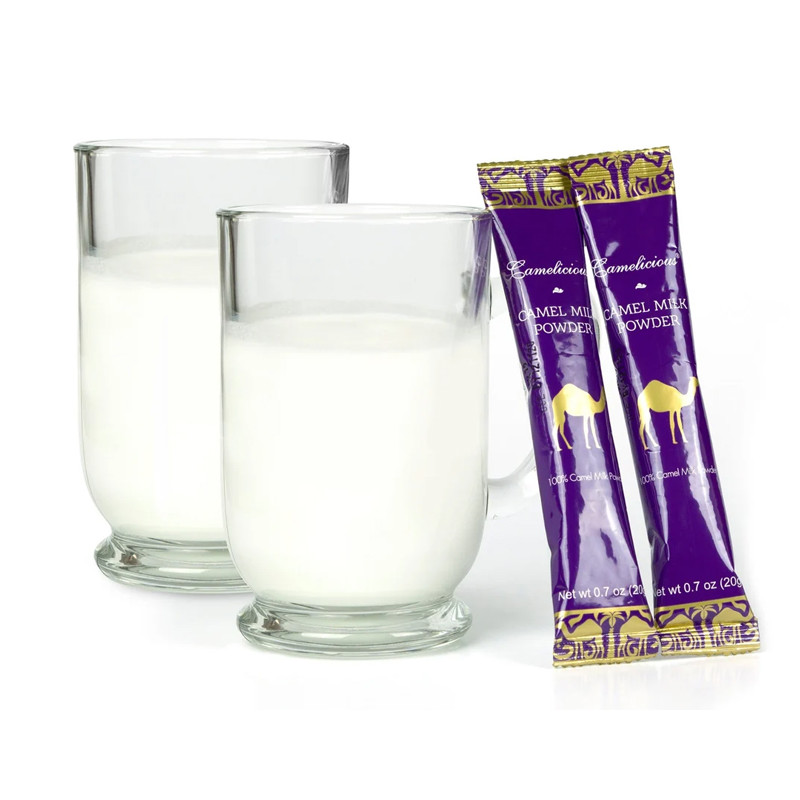
Camelicious Natural Camel Milk Powder is a unique dairy product originating from the United Arab Emirates, made from 100% camel milk. Presented in convenient individual sachets, it makes it easy to prepare a cup of camel milk at home, at work or while travelling.
Camel milk has a long history and has traditionally been part of the diet of people in the Arabian Peninsula, the Middle East and the dry regions of Africa. For thousands of years, camels have been a valuable source of food for communities living in harsh desert environments, where access to fresh water and a variety of foods has often been limited.
Today, camel milk is attracting growing interest beyond its traditional regions of consumption. This is due to its distinct nutritional profile, its naturally occurring vitamins and minerals, and the presence of specific milk proteins and bioactive compounds.
From the deserts of Arabia to the modern table:
For people living in desert and semi-desert regions, camel milk has traditionally been much more than a beverage. It has been a valuable source of nutrients and an important part of the daily diet of people who relied on camels during long journeys and as part of a nomadic way of life.
Today, this ancient tradition meets modern food processing and preservation technologies. By transforming fresh camel milk into milk powder, its characteristics can be presented in a convenient form suitable for today's lifestyle.
What Makes Camel Milk So Special?
- 100% camel milk - the product is made from pure camel milk.
- A natural source of nutrients - contains protein, fat, carbohydrates, vitamins and minerals.
- Rich in vitamin C - camel milk naturally contains more vitamin C than cow's milk.
- Contains calcium, magnesium, potassium and iron - minerals that naturally form part of the nutritional profile of camel milk.
- Contains natural milk proteins - the product provides 26 g of protein per 100 g of powder.
- Convenient powdered form - each sachet contains exactly 20 g of camel milk powder.
- Practical for everyday use - 24 individual sachets, convenient for storage and use at home or on the go.
Camel Milk - A Natural Source of Vitamin C:
One of the most distinctive nutritional characteristics of camel milk is its naturally occurring vitamin C content. Scientific reviews indicate that camel milk generally contains significantly more vitamin C than cow's milk, although the exact amounts may vary depending on the breed, diet, season and other factors.
Vitamin C contributes to the normal function of the immune system, the protection of cells from oxidative stress and normal collagen formation. It also contributes to normal iron absorption.
According to the product's nutritional specification, 100 g of camel milk powder contain 23 mg of vitamin C.
Camel Milk and Minerals:
Camel milk contains a natural range of minerals, including calcium, magnesium, potassium, iron and zinc. The amounts of minerals naturally present in milk may vary depending on the animals' diet, breed, season and farming conditions.
Calcium is necessary for the maintenance of normal bones and teeth and contributes to normal muscle and nerve function.
Magnesium contributes to the normal functioning of the nervous system, normal energy metabolism and the reduction of tiredness and fatigue.
Potassium contributes to normal nervous system and muscle function and to the maintenance of normal blood pressure.
Iron contributes to normal formation of red blood cells and haemoglobin and to normal oxygen transport in the body.
Zinc contributes to the normal function of the immune system and the protection of cells from oxidative stress.
Camel Milk and Milk Proteins:
Camel milk has a different protein profile compared with cow's milk. It contains both casein and whey proteins, as well as a range of bioactive milk components that are the subject of scientific interest.
According to the product's nutritional information, 100 g of camel milk powder contain 26 g of protein. Protein contributes to the maintenance and growth of muscle mass and to the maintenance of normal bones.
It is important to note that camel milk should not be considered guaranteed to be hypoallergenic. It contains milk proteins and may cause an allergic reaction in sensitive individuals.
Camel Milk and Natural Bioactive Compounds:
In addition to its main nutrients, camel milk contains various bioactive components, including specific whey proteins, lactoferrin, immunoglobulins and other compounds that are the subject of scientific research.
Scientific literature investigates camel milk and its potential antioxidant, anti-inflammatory and immunomodulatory effects. These properties are an interesting area of scientific research, but should not be considered evidence that camel milk can treat or prevent specific diseases.
Camel Milk and Metabolic Health:
Camel milk is also the subject of scientific interest in relation to metabolic health and blood glucose control. This interest is associated with specific proteins and bioactive components that differ from those found in traditional cow's milk.
Several clinical studies have investigated the consumption of camel milk by people with diabetes. A systematic review and meta-analysis of 14 randomised controlled trials involving a total of 663 participants reported reductions in HbA1c and insulin requirements among groups consuming camel milk. At the same time, the authors noted considerable differences between the individual studies and the need for further high-quality research.
Important: Camel milk is not a treatment for diabetes and should not be used to replace or alter prescribed medical treatment. People with diabetes should discuss its use with their doctor, particularly if they take insulin or other medicines for blood glucose control.
Camel Milk and Digestion:
Camel milk has a different composition of milk proteins and fats compared with cow's milk and is being studied as an alternative dairy product. Some people perceive it as an easier-to-consume alternative to traditional cow's milk.
However, it is important to clearly distinguish between milk protein allergy and lactose intolerance. Camel milk contains lactose and therefore this product is not suitable for people who need to avoid lactose.
Camel Milk and Autism - What Does the Research Show?
Camel milk has also been studied in relation to autism spectrum disorders. Interest in this area is associated with the bioactive components of camel milk and their potential influence on oxidative stress, inflammatory processes and certain biochemical markers.
However, the available clinical studies are limited. A meta-analysis published in 2024 included five randomised controlled trials involving a total of 299 children and found no statistically significant difference in the primary measure of autism symptom severity. The authors noted that larger and higher-quality clinical studies are needed.
Therefore, camel milk can be described as an interesting subject of scientific research, but not as a treatment or preventive measure for autism.
Camel Milk and Lactose:
Important to know: camel milk contains lactose. It is not a lactose-free product and should not be presented as a suitable substitute for lactose-free milk for people with lactose intolerance.
People with a diagnosed milk protein allergy or lactose intolerance should consult a healthcare professional before consuming camel milk.
Why Is Camel Milk a Valuable Part of a Varied Diet?
Camel milk combines protein, fat, carbohydrates, vitamins and minerals in a natural dairy product. Its distinctive nutritional profile makes it an interesting alternative for people who enjoy discovering new foods and want to add variety to their everyday diet.
Camelicious Natural Camel Milk Powder is particularly convenient for today's lifestyle, as each sachet contains a pre-measured amount of product for preparing one cup of camel milk.
Ingredients:
100% camel milk powder.
Contains lactose. The product is not suitable for feeding infants.
Nutritional Values per 100 g
Energy: 2064 kJ / 493 kcal
Fat: 25 g
of which saturates: 15 g
Carbohydrates: 41 g
of which sugars: 41 g
Protein: 26 g
Salt: 1.7 g
Vitamins and Minerals per 100 g
- Vitamin A: 96 μg
- Vitamin B1: 0.39 mg
- Vitamin B2: 0.33 mg
- Vitamin C: 23 mg
- Vitamin D: 7.2 μg
- Calcium: 644 mg
- Iron: 1.7 μg
- Magnesium: 63 mg
- Potassium: 1921
How to Prepare Camel Milk Powder:
To prepare one cup of camel milk, add 1 sachet (20 g) to 180 ml of lukewarm or warm water.
For best solubility, first pour the required amount of water into a suitable container, then add the camel milk powder. Stir or shake vigorously until a homogeneous beverage is obtained.
Due to the natural characteristics of camel milk powder, small particles may remain undissolved. This is a natural characteristic of the product and does not affect its quality or nutritional value.
People with diagnosed medical conditions or specific dietary restrictions should consult a healthcare professional before including camel milk in their diet.
How to Enjoy Camel Milk:
Prepared camel milk can be consumed on its own as a dairy beverage or incorporated into your everyday diet.
- As a breakfast or between-meal beverage.
- With coffee or cocoa.
- In smoothies.
- With oats and breakfast cereals.
- In various recipes that call for milk.
The product contains lactose and milk proteins. It is not suitable for people with a milk protein allergy or for those who need to avoid lactose.
The product is not suitable for feeding infants.
Packaging: 24 individual sachets x 20 g
Frequently Asked Questions (FAQ):
What is Camelicious Camel Milk Powder?
It is 100% camel milk powder presented in individual 20 g sachets. The product is intended for preparing a ready-to-drink milk beverage by adding water.
How do you prepare Camelicious camel milk?
Add 1 sachet of 20 g to 180 ml of lukewarm or warm water and stir or shake vigorously until the beverage is ready.
How many sachets are in the package?
The package contains 24 individual sachets of 20 g each, providing a total of 480 g of camel milk powder.
Does camel milk contain lactose?
Yes. Camel milk naturally contains lactose. Therefore, this product is not lactose-free and is not suitable for people who need to avoid lactose.
Is camel milk suitable for people with a cow's milk allergy?
Camel milk has a different protein profile from cow's milk and is being studied as an alternative dairy product. However, it contains milk proteins and cannot be considered guaranteed to be safe for people with a milk allergy.
Does camel milk contain vitamin C?
Yes. Camel milk naturally contains vitamin C, and scientific literature indicates that its amount is generally higher than in cow's milk. According to the product specification, "Camelicious" contains 23 mg of vitamin C per 100 g.
Is camel milk rich in calcium?
Yes. Camel milk contains calcium, an important mineral for the maintenance of normal bones and teeth. According to the product specification, "Camelicious" contains 644 mg of calcium per 100 g.
Does camel milk contain protein?
Yes. According to the nutritional information, the product contains 26 g of protein per 100 g of powder.
What does camel milk taste like?
Camel milk has a distinctive dairy taste, which can be slightly saltier and different from cow's milk. Its taste may vary depending on the animals' diet and farming conditions.
Can camel milk be used in coffee or smoothies?
Yes. Once prepared with water, camel milk can be consumed on its own or used in various beverages and recipes.
What does scientific research show about camel milk and diabetes?
Camel milk has been studied in relation to blood glucose control and insulin requirements in people with diabetes. Some clinical studies indicate potential benefits, but the available evidence is not sufficient to consider camel milk a treatment for diabetes. It should not replace prescribed medical treatment.
Has camel milk been studied in relation to autism?
Yes. Clinical studies have investigated its use in children with autism spectrum disorders. However, the available evidence is limited and does not support presenting camel milk as a treatment for autism.
Is camel milk suitable for infants?
No. This product is not intended for feeding infants.