
Speedy
To a locker
- Up to 3 kg From 30 EUR
- Over 3 kg From 50 EUR
To an office
- Up to 3 kg From 40 EUR
- Over 3 to 20 kg From 50 EUR
- Over 20 kg From 100 EUR
To an address
- Up to 10 kg From 60 EUR
- Up to 20 kg From 100 EUR


No products
2,60 €
Common Gromwell
Lithospermum officinale L.
Other names: European stoneseed, Common Gromwell, Sparrow seed, Sparrow millet
Common Gromwell (Lithospermum officinale L.) is a perennial herbaceous plant from the Borage family (Boraginaceae), known in European traditional herbal medicine for centuries. The species was scientifically described by Carl Linnaeus in 1753, while the plant's hard, glossy seeds inspired its Latin genus name Lithospermum, which can be associated with the idea of "stone seed".
The plant has a long history of traditional use in Europe, particularly for concerns related to the urinary system. In various European folk practices, the seeds have traditionally been used for kidney and urinary stones, to support urine excretion and for various urinary tract complaints. In Bulgarian traditional herbal practice, Common Gromwell is particularly well known for the use of its seeds in cases of bedwetting.
Common Gromwell is a perennial herbaceous plant that usually reaches between 30 and 90 cm in height and, under suitable conditions, may grow to around 1 metre. The stem is upright, branched and covered with fine hairs.
The leaves in the upper part of the plant are sessile, elongated-lanceolate and pointed, while those in the lower part have stalks and a more elongated shape. The leaf veins are clearly visible on their surface.
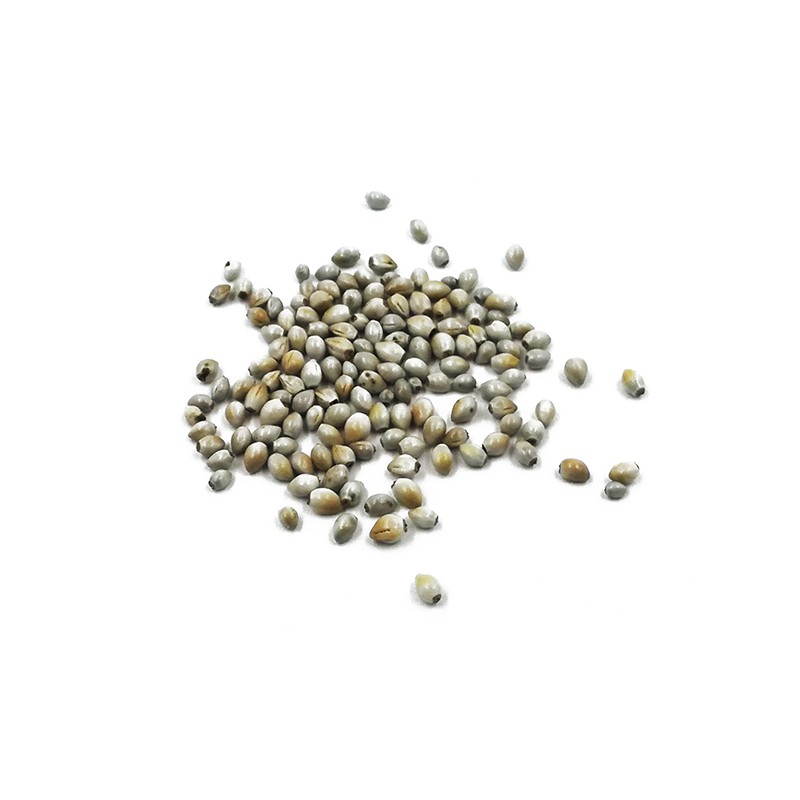
The flowers are relatively small, white to pale yellowish in colour, and are arranged in the upper part of the stem. After flowering, the characteristic hard, smooth and glossy seeds develop. These seeds are the main part of the plant offered as herbal raw material.
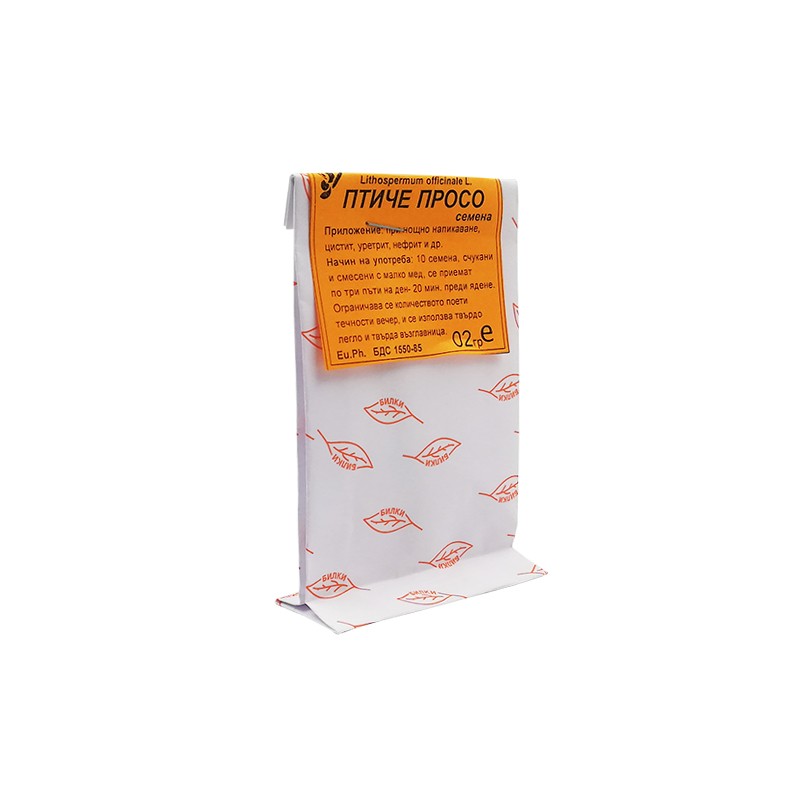
The product offered by Zdravnitza contains Common Gromwell seeds (Lithospermum officinale L.).
Common Gromwell occurs naturally in various regions of Bulgaria. The plant prefers dry grassy and rocky areas, roadsides, grassy slopes, pastures and other well-drained habitats. It can be found both in lowland areas and in the foothills and mountainous regions of the country, growing at elevations of up to approximately 1300-1500 metres.
In Europe, Lithospermum officinale is a widely distributed species characteristic of the temperate regions of the continent. It occurs across much of Western, Central, Northern and Southeastern Europe, including Bulgaria, and extends eastwards towards the Caucasus and parts of Asia. The plant is also found in areas of Western and Central Asia.
One of the best-known traditional uses of Common Gromwell seeds in Bulgarian folk medicine is associated with bedwetting (nocturnal enuresis). The seeds are included in old home remedies traditionally used for children who are unable to control urination during sleep, as well as in folk practices for similar complaints in adults.
This traditional approach is particularly interesting because, unlike many herbs that are commonly prepared as teas or decoctions, Common Gromwell seeds have traditionally been consumed directly, with the amount traditionally determined according to the person's age.
Bulgarian herbal sources describe a traditional method in which, in the evening before bedtime, a number of seeds corresponding to the person's age are taken. This method is part of folk practice and does not represent a scientifically established medical dosage.
Bedwetting in children can have various causes and, in many cases, is part of the normal development of bladder control. In cases of frequent, sudden or persistent bedwetting, or when accompanied by pain, burning, excessive thirst, changes in urine volume or other symptoms, it is important to seek advice from a paediatrician or other qualified healthcare professional.
In addition to its traditional use for bedwetting, Common Gromwell has a long history of use in European folk medicine for various complaints associated with the urinary system. The seeds have traditionally been used in cases of "sand" and stones in the kidneys and urinary bladder, as well as to support urine excretion.
This traditional use is also associated with the hard structure of the seeds, which inspired the plant's name. In historical European herbal practice, Common Gromwell was used for what was traditionally referred to as stone disease, while in some folk recipes the seeds were crushed or boiled as part of herbal preparations.
The traditional use of the plant for kidney and urinary problems should not, however, be considered a substitute for medical diagnosis and treatment in cases of diagnosed stones, urinary tract infection or other medical conditions.
In various European folk healing traditions, Lithospermum officinale has been associated with diuretic, astringent and lithotriptic properties. Traditional use has also included the plant for various conditions associated with the kidneys and urinary bladder, as well as for certain digestive and rheumatic complaints.
The seeds naturally contain fixed oil and mineral substances, while phenolic compounds, flavonoids, tannins and other plant compounds have been identified in different parts of the plant. Modern research continues to investigate the chemical composition and biological properties of the species, but there is insufficient clinical evidence for specific therapeutic applications in humans.
Common Gromwell seeds contain fixed oil. Various parts of the plant have also been reported to contain phenolic compounds, lithospermic acid and its derivatives, flavonoids, tannins, minerals and other naturally occurring plant compounds.
Pyrrolizidine alkaloids have also been reported in the aerial parts of Lithospermum officinale, which is relevant from a safety perspective. For this reason, the use of the plant, particularly its aerial parts, should not be considered without taking potential risks into account. The product offered by Zdravnitza consists of seeds, not aerial parts of the herb.
For bedwetting: In traditional Bulgarian practice, a number of seeds corresponding to the person's age are taken in the evening before bedtime. For example, for a 6-year-old child, the traditional method calls for 6 seeds to be taken in the evening.
Ground seeds: In some folk recipes, the seeds are crushed or ground into a fine powder and used to prepare a water extract. One traditional recipe describes adding approximately 1/2 teaspoon of ground seeds to 400 ml of water, leaving the mixture for around 30 minutes and, after straining, taking it in several portions throughout the day. This method is part of traditional folk practice and does not represent a standardized medical dosage.
Traditional seven-day method: Some Bulgarian herbal sources describe taking the seeds in the evening before bedtime according to the following pattern: 3 seeds on the first day, 6 on the second, 9 on the third and 12 on the fourth, after which the number is gradually reduced to 3 seeds on the seventh day. This is followed by a 7-day break, after which the method may be repeated. As this method originates from folk practice rather than a clinically validated dosage, it should not be considered a medical recommendation.
Common Gromwell - seeds:
Use: traditionally used as a herbal aid for bedwetting in children and adults, as well as in traditional practices involving sand and stones in the kidneys and urinary bladder.
Directions for use: take in the evening before bedtime a number of seeds corresponding to the person's age.
Option 2: grind the seeds into flour using a coffee grinder and mix them with 150 g of honey. Take 1 teaspoon of the mixture in the morning and evening. During the course of use, traditional recommendations include hardening procedures, whole-body friction, limiting fluid intake and using a firm bed and firm pillow.
Use during pregnancy and breastfeeding is not recommended due to insufficient safety data. In cases of liver disease, use of medication or prolonged use, prior consultation with a doctor or pharmacist is necessary.
In cases of diagnosed kidney or urinary stones, blood in the urine, pain, fever, burning during urination or other acute symptoms, do not rely on self-treatment with herbs and seek medical attention.
Packing: 2 g
What is Common Gromwell traditionally used for?
In Bulgarian traditional herbal medicine, Common Gromwell seeds are best known for their traditional use in cases of bedwetting in children and adults. The plant has also traditionally been used for various kidney and urinary complaints.
Is Common Gromwell suitable for bedwetting in children?
The use of the seeds for bedwetting is part of traditional Bulgarian folk medicine. This does not mean, however, that the herb is a proven treatment for enuresis. If a child experiences persistent or frequent bedwetting, consultation with a paediatrician is recommended.
How are the seeds traditionally used for bedwetting?
Traditional Bulgarian practice involves taking, in the evening before bedtime, a number of seeds corresponding to the person's age. This is a traditional method of use and does not represent a scientifically established medical dosage.
Can the seeds be ground?
Yes. In traditional practice, the seeds are crushed or ground and used on their own or in combination with honey. The product offered by Zdravnitza contains whole Common Gromwell seeds.
Is Common Gromwell traditionally used for kidney stones?
Yes, this is another traditional use of the plant in European and Bulgarian folk medicine. In historical herbal practices, the seeds were used for "sand" and stones in the kidneys and urinary bladder. Medical supervision is necessary in cases of diagnosed stones.
Is Common Gromwell the same as ordinary millet?
No. Common Gromwell is Lithospermum officinale L. from the Borage family (Boraginaceae) and is botanically unrelated to ordinary millet, which is used as a cereal grain.
Approximately how many seeds are contained in a 2 g package?
A 2 g package usually contains approximately 100 seeds. The exact number may vary slightly because the natural size and weight of individual seeds are not completely uniform. The package is filled according to the stated net weight of 2 g rather than according to a specific number of seeds.
How long does one 2 g package last?
The duration of use depends on the method of use and the person's age. With the traditional method for bedwetting, where a number of seeds corresponding to the child's age is taken each evening, approximately 100 seeds would last around 25 days for a 4-year-old child, around 20 days for a 5-year-old and around 16-17 days for a 6-year-old. For older children and adults, the package will generally last for a shorter period. When the seeds are ground and taken with honey or used to prepare a water extract, the duration depends on the amount used per serving and cannot be determined precisely based solely on the package weight.
How long is Common Gromwell traditionally taken for bedwetting?
In traditional Bulgarian practice, the seeds are taken every evening before bedtime, and some herbal sources describe a period of at least 2 months or until bedwetting stops. This is a traditional method of use rather than a clinically established treatment period. For children with persistent or frequent bedwetting, consultation with a paediatrician is recommended, particularly before prolonged use.
 Running Clubmoss (Lycopodium Clavatum L.), dried herb, Bilkaria, 20 g
 2,25 €
 Comfrey (Symphytum officinale L.), dried root, Bilkaria, 40 g
 1,70 €
 Nettle (Urtica Dioica), dried leaves, seeds or root, Bilkaria, 50/30/40 g
 1,30 €
 Anise (Pimpinela Anisum L.), dried fruit, Bilkaria, 30 g
 0,90 €
 Basil (Ocimum Basillicum), dried leaves, Bilkaria, 30 g
 0,92 €
 Elfdock (Inula Helenium L.), dried root, Bilkaria, 40 g
 1,28 €
 Meadowsweet (Filipendula ulmaria), dried stalk or root, Bilkaria, 25/30 g
 1,20 €
 White birch (Betula pendula), dried leaves, bark or fruits, Bilkaria, 30/30/20 g
 1,18 €
 Sweet flag (Acorus calamus L.), dried root, Bilkaria, 30 g
 1,28 €
 Bean Husk (Phaseolus Vulgaris), dried herb, Bilkaria, 30 g
 2,00 €
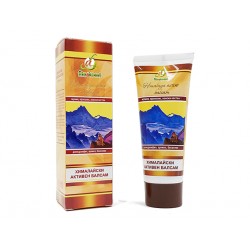 Himalayan active balm with mumio, FitoAkcent, 75 ml
 8,50 €
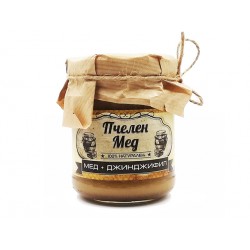 Natural honey with ginger, Ambrozia, 240 g
 3,70 €
 Squirting Cucumber Herbal Tincture, Sinus Support, Bilkaria, 20 ml
 7,30 €
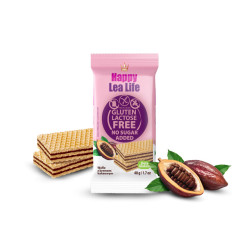 Gluten and Lactose Free Wafers - Cocoa, Happy Lea Life, 48 g
 0,90 €
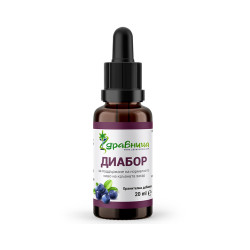 Diabor, Natural Drops to Regulate Blood Sugar, Zdravnitza, 20 ml
 6,20 €
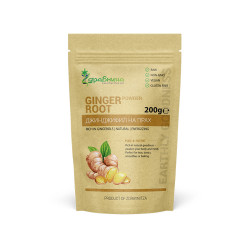 Ginger, root powder, Zdravnitza, 200 g
 3,00 €
 Acacia Body Cream, Hristina, 200 ml
 5,60 €
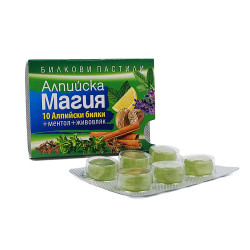 Alpine Magic, herbal throat pastilles, Alpi, 6 pcs
 0,80 €
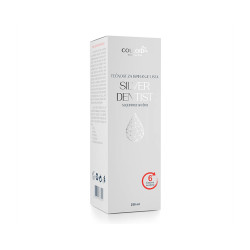 Silver Dentist, mouthwash with colloidal silver and panthenol, Colloid, 250 ml
 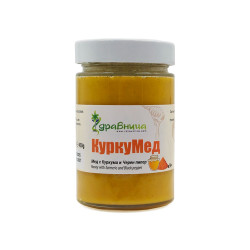 Curcumed, Honey with Turmeric and Black pepper, Zdravnitza, 400 g
 6,30 €