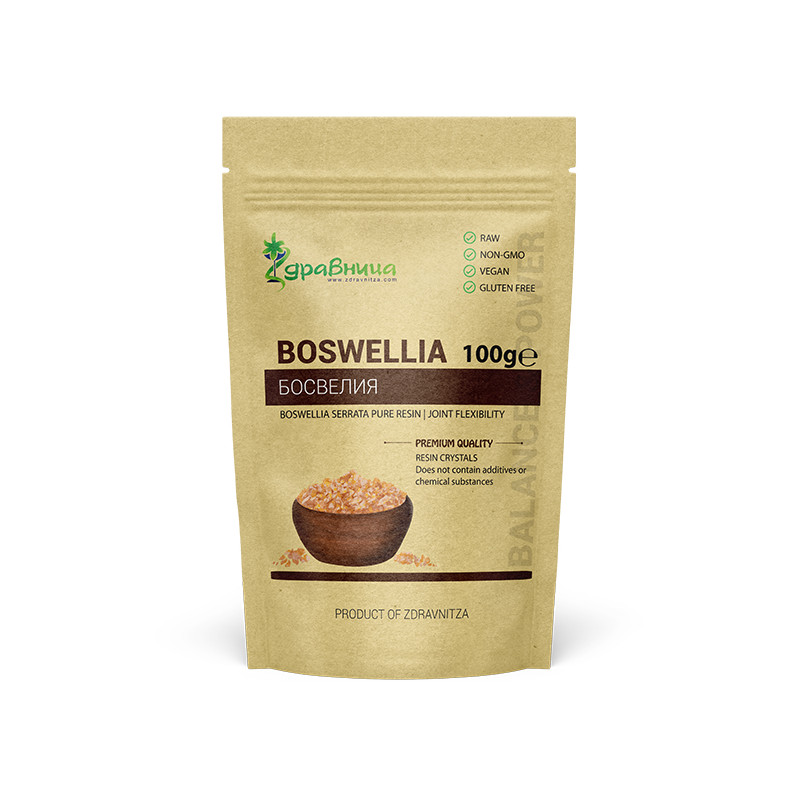
Boswellia (Indian Frankincense) - Resin by "Zdravnitza" is a natural product containing 100% resin crystals from the Boswellia serrata tree. Also known as Indian frankincense, boswellia has a history of use spanning thousands of years in Ayurveda and is one of the plants traditionally valued in connection with the care of the musculoskeletal system and joint comfort.
Interest in boswellia stems from the naturally occurring compounds in its resin, particularly boswellic acids. These compounds are the subject of modern scientific research due to their interaction with certain biological mechanisms involved in inflammatory processes. This is what makes Boswellia serrata an interesting plant for research related to joint mobility and musculoskeletal comfort.
Boswellia - Indian Frankincense in Ayurveda:
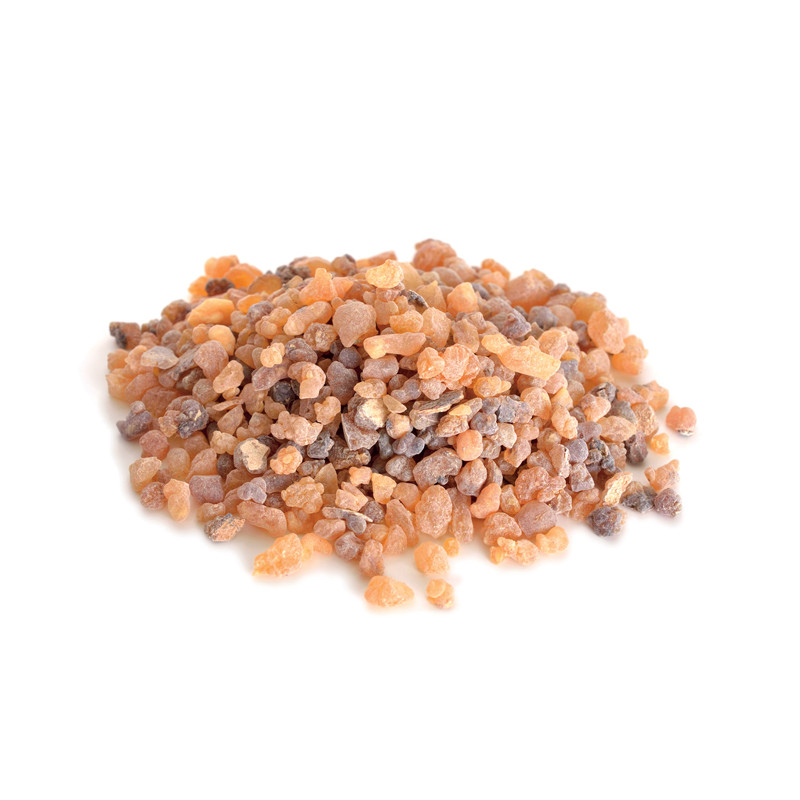
Boswellia (Boswellia serrata) is a tree species found mainly in India and parts of South Asia. When the bark is cut, an aromatic resin is released. Once collected and dried, it forms characteristic solid crystals. This resin is known as Indian frankincense and has held an important place in traditional Indian medicine - Ayurveda - for centuries.
In Ayurvedic practice, boswellia, also known by the names Shallaki and Salai guggul, has traditionally been used in various herbal preparations associated with joint and rheumatic discomfort. The resin is valued for its natural composition and its traditional use in preparations relating to the musculoskeletal system.
In addition to its traditional association with joint health, boswellia is also used in Ayurvedic herbal formulations related to digestive comfort and respiratory health. It is traditionally prepared in various forms, including dried resin, powder and as an ingredient in herbal blends.
Boswellia resin also has aromatic uses. When heated, it releases a distinctive balsamic fragrance, which is why it has been used since ancient times as incense in religious ceremonies, rituals and traditional aromatic practices.
Boswellic Acids - Why Are They of Interest for Joint Health?
One of the most notable characteristics of Boswellia serrata resin is its content of boswellic acids. These are naturally occurring plant compounds belonging to the triterpene group and are among the most extensively studied constituents of boswellia.
Scientific interest in these compounds is related to their interaction with certain enzymes and substances involved in inflammatory processes. One area of research focuses on the effect of certain boswellic acids on the enzyme 5-lipoxygenase, which is involved in the production of leukotrienes - biologically active substances associated with inflammatory responses in the body.
Particular attention has been given to AKBA (acetyl-11-keto-beta-boswellic acid), one of the characteristic compounds found in boswellia resin. It is the subject of laboratory and preclinical research due to its potential interactions with various mechanisms involved in inflammatory activity.
In recent years, clinical studies have also investigated standardised Boswellia serrata extracts in people with osteoarthritis. Some of these studies have reported changes in measures related to joint pain, stiffness and physical function.
What Does Boswellia serrata Resin Contain?
Boswellia resin is a natural combination of various plant substances. Its main groups of compounds include:
- Boswellic acids: naturally occurring triterpene compounds characteristic of boswellia resin and the subject of numerous scientific studies.
- Other triterpenes: plant compounds that contribute to the complex chemical composition of the resin.
- Essential oil and volatile compounds: substances that contribute to its distinctive balsamic fragrance.
- Gum and resinous substances: natural components that determine the structure and physical characteristics of the resin.
What Makes Zdravnitza Boswellia Special?
- 100% natural resin: contains only crystals of Boswellia serrata.
- No added ingredients: contains no fillers, colourings, preservatives or other additives.
- Natural form: the resin is presented as characteristic crystals.
- A plant with a long history: boswellia has been known for centuries in traditional Ayurvedic practice.
- Interesting natural composition: contains boswellic acids and other plant compounds that are the subject of modern scientific research.
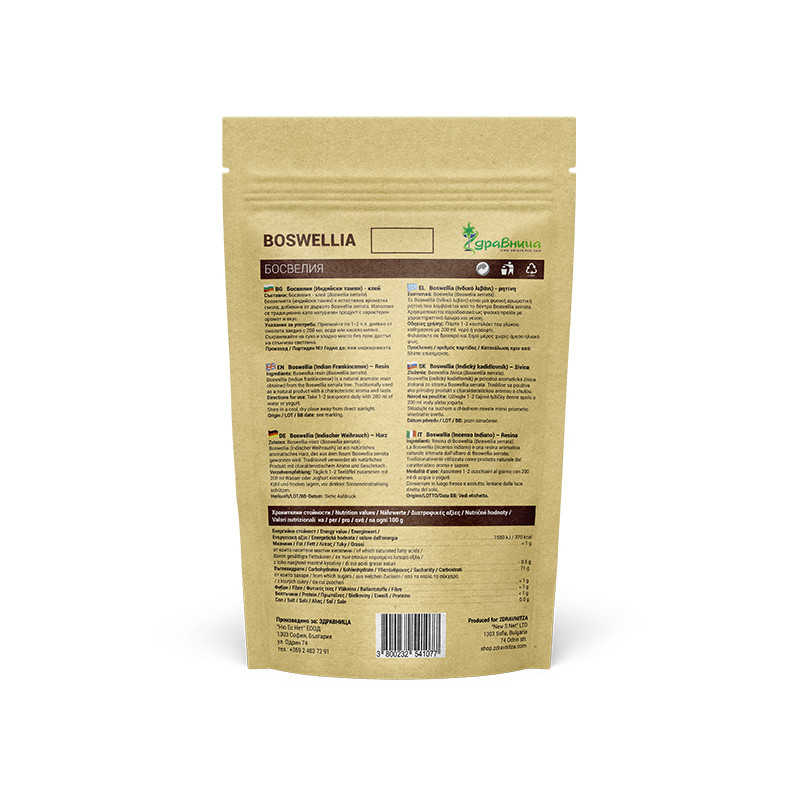
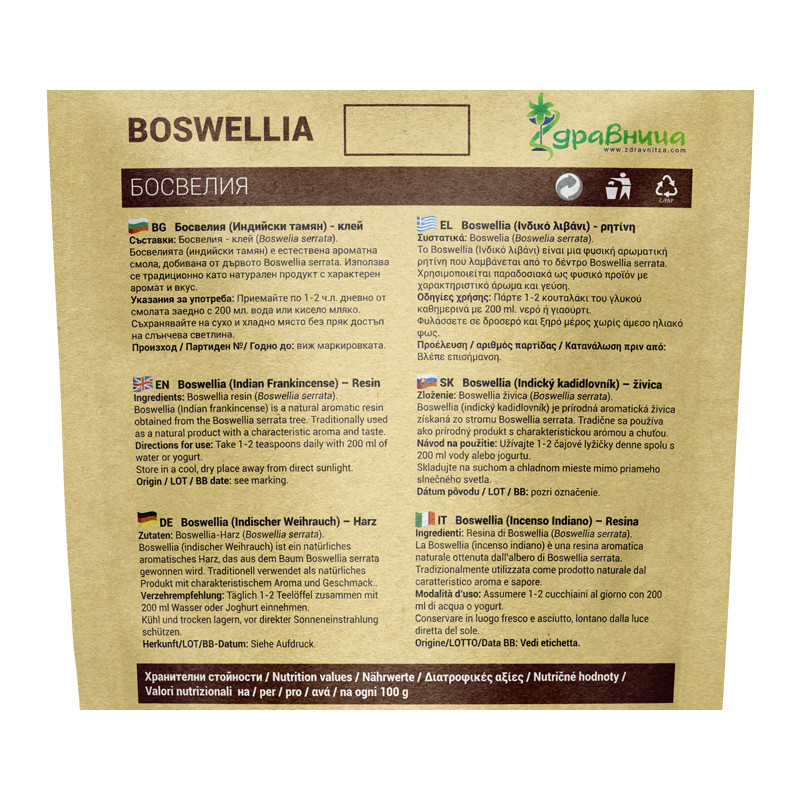
Ingredients:
Boswellia resin (Boswellia serrata).
Contains no added ingredients or other substances.
Directions for Use:
Option 1:
Take 1-2 teaspoons daily with water or yoghurt, before meals. If the crystals in the pack are difficult to swallow, they can be crushed into smaller pieces using a non-metallic utensil.
Option 2:
Pour 1-2 cups of room-temperature water over 1-2 teaspoons of the resin. Cover the container and leave to stand for 10-12 hours. Strain and divide the liquid into 3 equal portions to drink throughout the day.
As aromatic incense
Place a small amount of crystals on a suitable heat-resistant incense holder using a purpose-designed incense burner. When heated, the resin gradually releases its characteristic fragrance. Use in a well-ventilated room, on a stable, non-flammable surface, and never leave the burner unattended.
Contraindications and Precautions for Oral Use:
When taken orally, boswellia is generally well tolerated, although some people may experience mild gastrointestinal complaints such as nausea, heartburn, abdominal discomfort or diarrhoea.
Use during pregnancy and breastfeeding is not recommended due to insufficient safety data. Do not use if you have a known allergy or intolerance to boswellia.
If you take medication, particularly blood-thinning medicines or medicines that affect blood clotting, or if you are scheduled to undergo surgery, consult a doctor or pharmacist before use. Medical advice is also recommended if you have a chronic health condition or regularly take medication.
Packaging: 100 g in a high-quality brown kraft stand-up pouch with a resealable zip closure.
The packaging is made from a three-layer material (Kraft/ALU/CPP) with an aluminium barrier, providing excellent protection and helping to preserve the product's freshness over time, even after repeated opening.
Frequently Asked Questions (FAQ):
What is boswellia?
Boswellia (Boswellia serrata), also known as Indian frankincense, is a tree from which a natural aromatic resin is obtained by making cuts in its bark. Once dried, the resin forms characteristic crystals rich in various plant compounds, including boswellic acids.
Why is boswellia known for its association with joint health?
The resin contains boswellic acids - naturally occurring plant compounds that are being studied for their interaction with certain mechanisms involved in inflammatory processes. Boswellia also has a long history of traditional use in Ayurveda in connection with joint and rheumatic discomfort.
Do boswellia crystals dissolve in water?
The resin does not dissolve completely in water like an ordinary water-soluble ingredient. When mixed with water, its particles may remain suspended, so stirring before use may be necessary.
How long does one 100 g pack last?
One level teaspoon may contain approximately 3 g of resin, although the actual amount depends on the size and density of the crystals. At a daily intake of 1 teaspoon, one pack would last approximately 33 days, while at 2 teaspoons daily, it would last around 16-17 days.
Is boswellia suitable for use during pregnancy and breastfeeding?
Use during pregnancy and breastfeeding is not recommended due to insufficient safety data.
Are there any side effects associated with taking boswellia?
Some people may experience gastrointestinal complaints such as nausea, heartburn, abdominal discomfort or diarrhoea. If any unwanted reactions occur, discontinue use and consult a healthcare professional.















Индийски тамян
Вече няколко пъти си поръчвам продукта и го използвам за проблеми с бъбреците. Изключително доволна съм от получените резултати!