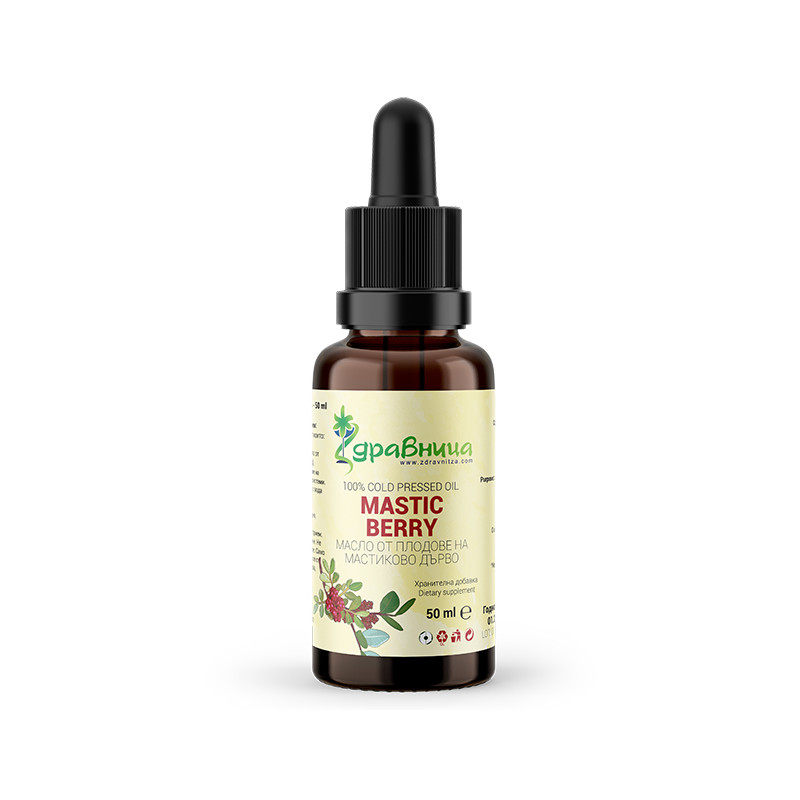
- 100% pure, cold-pressed oil from mastic tree berries (Pistacia lentiscus)
- Rich in Omega-9 and naturally contains Omega-6 and Omega-3 fatty acids
- Contributes to the normal condition of cells and the cardiovascular and digestive systems
- Suitable both for internal use and for skin and hair care
- Free from alcohol, gluten and allergens
There are plant oils that we know well. And then there are those that are a real discovery for lovers of natural products. Mastic Berry Oil is one of them.
Obtained from the berries of the Mediterranean plant Pistacia lentiscus, this oil combines a rich fatty acid profile with naturally occurring tocopherols and plant sterols. It is suitable for daily internal use, while also having a place in skin and hair care.
"Zdravnitza" Mastic Berry Oil is 100% pure and cold-pressed, with no added alcohol and no solvents used. The raw material originates from Algeria, and the oil is obtained by mechanical pressing of the berries of the mastic tree.
The Mastic Tree - a Mediterranean Plant with a Long History:
Pistacia lentiscus is an evergreen shrub or small tree from the Anacardiaceae family, characteristic of the Mediterranean region. The plant has been well known in the traditions of the region for centuries, with different parts of the plant used in food, traditional herbal practices and body care.
The mastic tree is particularly interesting because it provides several valuable natural products. The aromatic mastic resin is well known, while its berries can also be used to produce plant oil.
The oil obtained from the berries has its own distinctive character - an intense botanical aroma and a rich lipid composition that sets it apart from more familiar plant oils.
What Makes Mastic Berry Oil So Interesting?
At first glance, it may seem like just another plant oil. But when we look at its natural composition, the picture becomes much more interesting.
Unsaturated fatty acids predominate, with oleic acid (Omega-9) being the main one. The oil also contains linoleic acid (Omega-6), a small amount of alpha-linolenic acid (Omega-3) and palmitoleic acid (Omega-7).
In addition, it naturally contains tocopherols - forms of vitamin E found in the oil - as well as plant sterols, among which beta-sitosterol predominates.
This means that one small bottle brings together several valuable groups of naturally occurring plant compounds.
Omega-9 - the Main Fatty Acid in Mastic Berry Oil:
Omega-9, or oleic acid, is a monounsaturated fatty acid naturally found in a number of plant oils. In Mastic Berry Oil, it is the main fatty acid, accounting for 47.2% of the fatty acid profile.
Monounsaturated fatty acids are an important part of a balanced diet. When unsaturated fats replace saturated fats in the diet, this contributes to the maintenance of normal blood cholesterol levels.
For this reason, Mastic Berry Oil can be an interesting choice for people looking for a plant-based source of unsaturated fatty acids and adding a variety of cold-pressed oils to their everyday diet.
Omega-6 - an Essential Fatty Acid:
Linoleic acid is a polyunsaturated fatty acid from the Omega-6 family. It is essential, which means that the body cannot produce it on its own and must obtain it through food.
In Mastic Berry Oil, linoleic acid accounts for 22.2% of the fatty acid profile. It is an important component of cell membrane structure and is involved in normal processes related to fat metabolism.
Linoleic acid is part of the body's natural lipid composition and has an important place in a balanced diet. Mastic Berry Oil provides a combination of Omega-6 with a high content of Omega-9 and a small amount of Omega-3.
Vitamin E and Naturally Occurring Tocopherols:
One of the most interesting characteristics of Mastic Berry Oil is its natural content of tocopherols - compounds belonging to the vitamin E family.
Vitamin E contributes to the protection of cells from oxidative stress. This is one of the main physiological functions of vitamin E and is particularly interesting in the context of an oil that naturally contains tocopherols.
Different forms of tocopherols are found in the oil, with alpha-tocopherol predominating. This combination of tocopherols is one of the distinctive characteristics of Mastic Berry Oil.
Naturally occurring tocopherols are also one of the reasons why plant oils are a valuable part of a varied diet and natural skin care.
Plant Sterols and Beta-Sitosterol:
Mastic Berry Oil also contains plant sterols - naturally occurring compounds found in a variety of plant foods and oils.
Among the sterols in the oil, beta-sitosterol predominates. It accounts for 88.22% of the identified sterol fraction.
Phytosterols are a natural part of the plant lipid profile and are one of the interesting characteristics of cold-pressed oils. Combined with fatty acids and tocopherols, they contribute to the rich composition of Mastic Berry Oil.
For the Normal Condition of Cells:
The cells of the body are constantly renewed while maintaining their structure and normal function. Fatty acids are an important part of cell membranes, while vitamin E plays a role in protecting cells from oxidative stress.
Mastic Berry Oil combines precisely these two characteristics - a rich profile of unsaturated fatty acids and naturally occurring tocopherols.
This is also one of the reasons why the product is intended to contribute to the normal condition of cells.
For the Cardiovascular System:
Cardiovascular health is closely linked to dietary habits and the types of fats we consume. Unsaturated fatty acids are an important part of a balanced diet.
Mastic Berry Oil is particularly interesting in this respect due to its high content of oleic acid and the presence of linoleic acid. Replacing saturated fats with unsaturated fats in the diet contributes to the maintenance of normal blood cholesterol levels.
This is why the product is intended to contribute to the normal condition of the cardiovascular system.
For the Digestive System:
The mastic plant has a long history of traditional use in Mediterranean regions, including practices associated with digestive comfort.
"Zdravnitza" Mastic Berry Oil is a registered food supplement intended to contribute to the normal condition of the digestive system.
It is important to note that this product is oil obtained from the berries of Pistacia lentiscus. It should not be confused with mastic resin or mastic essential oil - these are different products with different compositions.
Mastic Berry Oil for the Skin:
Mastic Berry Oil is not only interesting as a food supplement. Thanks to its natural lipid composition, it can also be used as part of a daily cosmetic care routine.
Plant oils are particularly valuable for the skin because they provide lipids and create a comfortable feeling when applied. Mastic Berry Oil is suitable for dry and dehydrated skin, for massage and for use in homemade cosmetic blends.
It can be used on its own or combined with other plant oils according to individual preferences. For facial use, a very small amount is sufficient, applied to clean skin.
Mastic Berry Oil for Hair:
Mastic Berry Oil can also be part of a home care routine for dry, coarse or treated hair. Plant oils are traditionally used to soften the hair, improve the feel during combing and give the hair a smoother appearance.
For an oil treatment, apply a small amount to the lengths and ends of the hair, leave for 20-30 minutes and then wash thoroughly with shampoo. For very dry ends, a very small amount can also be used as a finishing product.
Ideas for Homemade Cosmetics:
Pure Mastic Berry Oil can easily be incorporated into various homemade cosmetic rituals:
- For dry skin: apply a few drops to clean, slightly damp skin.
- For massage: use on its own or combine with another carrier plant oil.
- For dry ends: apply a very small amount to the ends of the hair.
- For a hair oil mask: combine with coconut, argan, almond or another preferred plant oil.
- For a homemade facial oil blend: use a small amount and initially test on a small area of skin.
When used externally, avoid contact with the eyes. If you have sensitive skin, it is recommended to perform a patch test on a small area first.
Purpose:
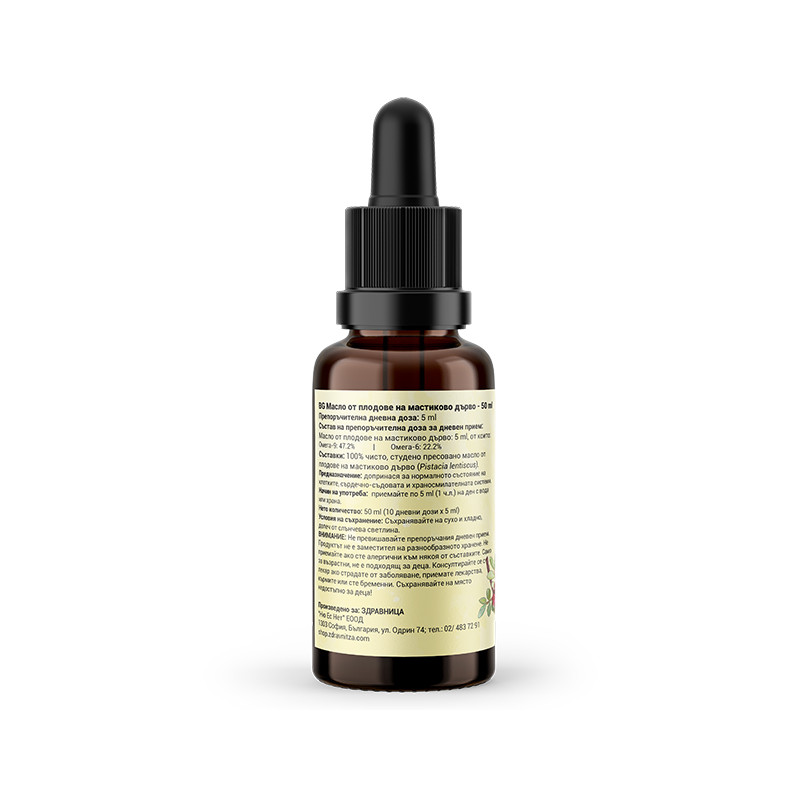
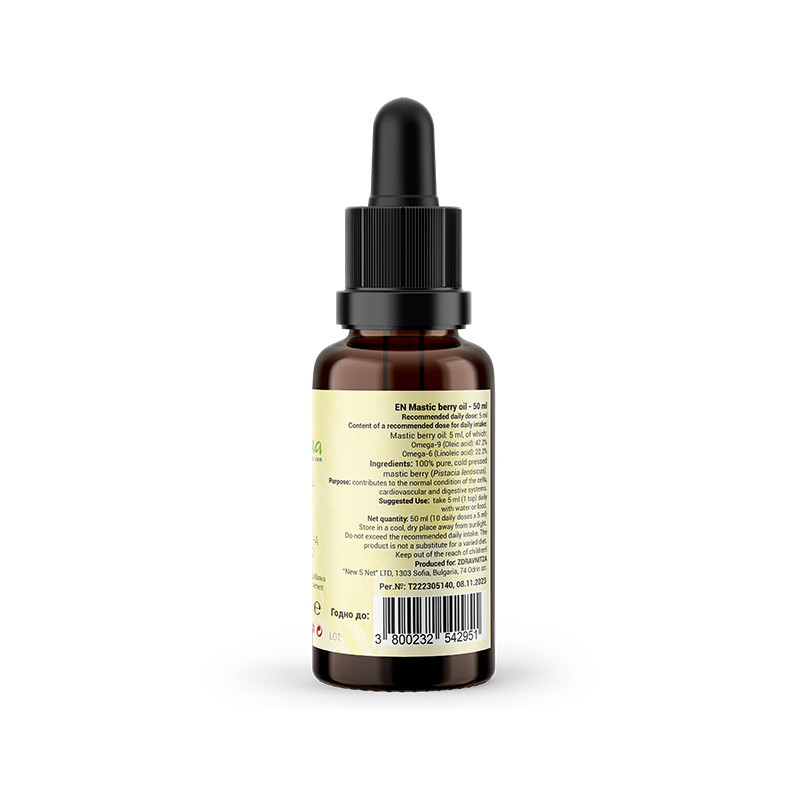
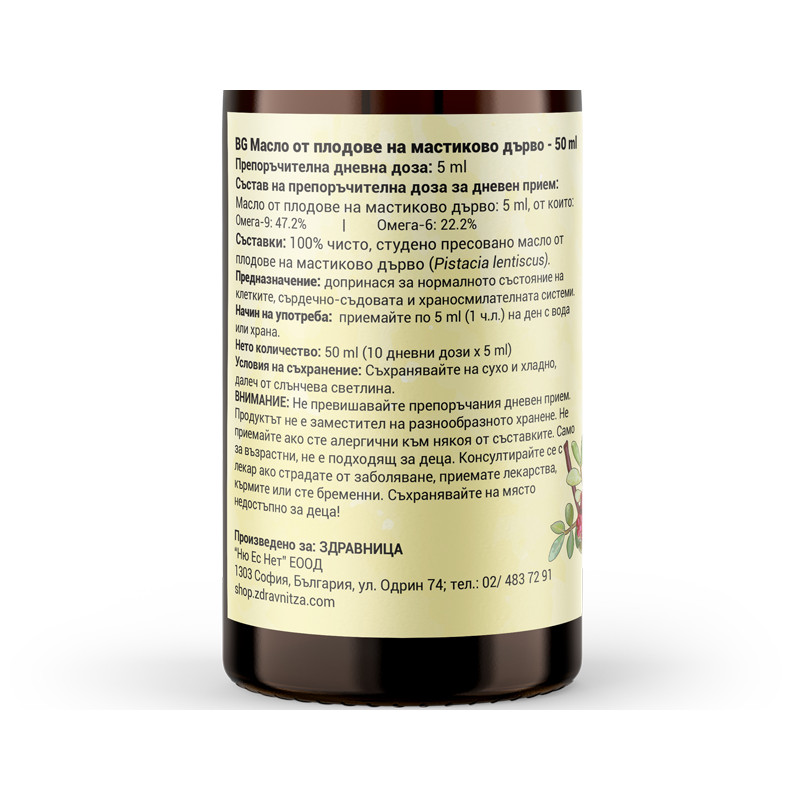
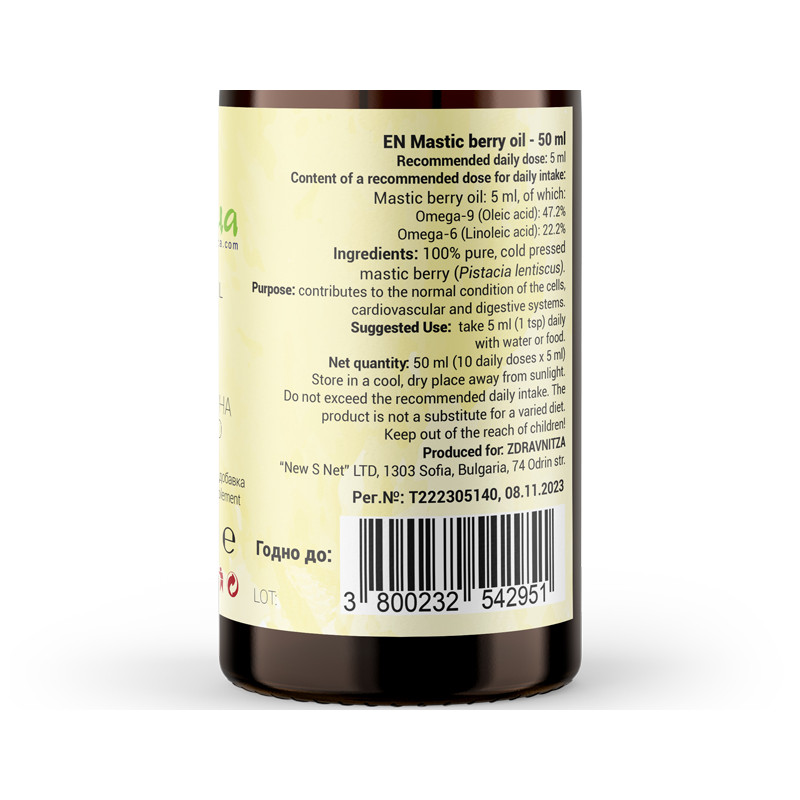
Contributes to the normal state of cells, cardiovascular and digestive systems.
Ingredients:
100% pure, cold pressed mastic berry oil /Lentisk oil/ (Pistacia Lentiscus).
Free from alcohol! Gluten-free! Free from allergens!
Content per Daily Dose (5 ml):
Mastic Berry Oil: 5 ml, of which
- Omega-9: 47.2%
- Omega-6: 22.2%
Laboratory Analysis:
The oil has been tested by an accredited laboratory. The complete analysis certificate, including the physicochemical characteristics, fatty acid profile, tocopherols, vitamin E and plant sterols, is available for download on the product page.
Fatty Acid Profile:
Oleic acid (Omega-9): 47.2%
Linoleic acid (Omega-6): 22.2%
Palmitic acid: 23.7%
Stearic acid: 1.4%
Palmitoleic acid (Omega-7): 2.1%
Alpha-linolenic acid (Omega-3): 0.5%
Tocopherols and Sterols:
Tocopherols: 8540 mg/kg
Active vitamin E: 7945 mg/kg
Alpha-tocopherol: 7590 mg/kg
Beta-tocopherol: 480 mg/kg
Sterols: 4170 mg/kg
Beta-sitosterol: 88.22% of the sterol fraction
Campesterol: 6.41%
Directions for Use:
Take 1 tsp (5 ml) daily with water or food.
Do not exceed the recommended daily intake. The product is not a substitute for a varied diet. Do not take if you are allergic to any of the ingredients. For adults only; not suitable for children. Consult your doctor if you suffer from a medical condition, take medication, are breastfeeding or pregnant.
"Mastic Berry Oil" by "Zdravnitza" is a registered food supplement with the Bulgarian Food Safety Agency (BFSA):
Registration No.: T222305140 dated 08.11.2023
Packing: 50 ml in a dark glass bottle with dropper
Frequently Asked Questions (FAQ):
What is Mastic Berry Oil?
It is 100% pure, cold-pressed plant oil obtained from the berries of the mastic tree (Pistacia lentiscus). It has a characteristic botanical aroma and naturally contains unsaturated fatty acids, tocopherols and plant sterols.
What is the difference between Mastic Berry Oil and mastic resin?
These are two different products obtained from different parts of the plant. Mastic resin is obtained primarily from the resin of the mastic tree, while this product is an oil obtained by cold-pressing its berries.
What fatty acids does Mastic Berry Oil contain?
The oil is particularly rich in Omega-9 (oleic acid) - 47.2%, and contains Omega-6 (linoleic acid) - 22.2%. It also contains Omega-7 (palmitoleic acid) - 2.1% and Omega-3 (alpha-linolenic acid) - 0.5%.
Can Mastic Berry Oil be used on the skin?
Yes. The oil can be used for external skin care. Apply a small amount to clean skin and gently massage it in. It is also suitable as a carrier oil for homemade cosmetic blends.
Can it be used on the hair?
Yes. It can be used on its own or combined with other plant oils as part of a home hair care routine. It is particularly suitable for dry lengths and ends. Apply a small amount before washing and leave for 20-30 minutes, then wash thoroughly with shampoo.
Does it have a distinctive taste and aroma?
Yes. Mastic Berry Oil has a characteristic, intense botanical aroma typical of the raw material. Its taste and aroma may differ from those of more familiar plant oils.
Can children take Mastic Berry Oil?
No. The product is intended for adults only and is not suitable for children.
Can it be taken during pregnancy or breastfeeding?
If you are pregnant or breastfeeding, use of the product should be discussed with your doctor beforehand.
Can it be taken together with medicines?
If you take medication or suffer from a medical condition, consult your doctor before using the product.
Does Mastic Berry Oil contain allergens?
According to the product analysis, no allergens subject to mandatory labelling under Annex II of Regulation (EU) No 1169/2011 have been identified in the oil.