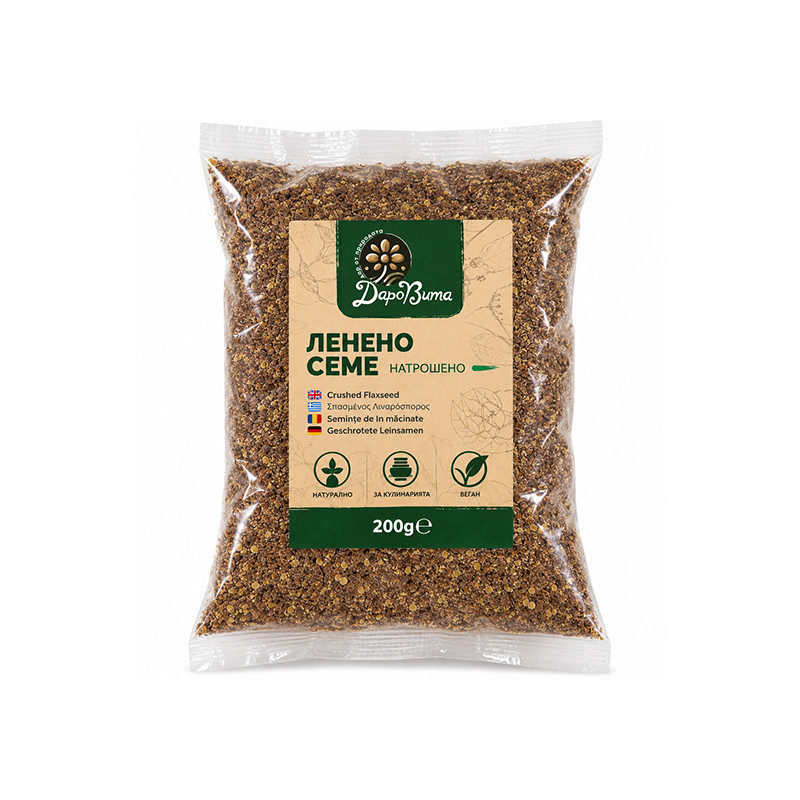
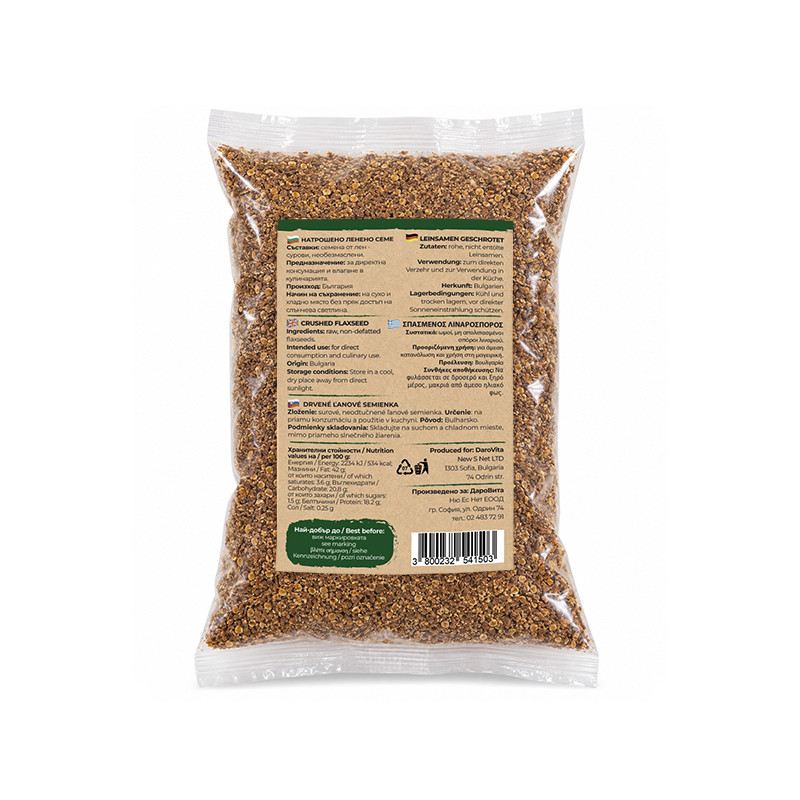
Darovita Crushed Flaxseed is a natural food product suitable for direct consumption and a variety of culinary applications. Flaxseed is valued for its naturally occurring plant-based fats, proteins and other nutrients. It is a source of the omega-3 fatty acid alpha-linolenic acid (ALA), dietary fibre and plant compounds, including lignans.
Thanks to its crushed form, the product is easy to mix with yoghurt, oats, smoothies, salads and other dishes. It has a mild, characteristic nutty flavour and is a convenient way to add more plant-based foods to your daily diet.
Flaxseed - an ancient food with a rich history:
Flax (Linum usitatissimum) is one of the oldest cultivated plants in human history. The origins of cultivated flax are believed to be associated with the Fertile Crescent and neighbouring regions of the Middle East. Archaeological findings provide evidence of its use thousands of years ago.
In ancient times, flax had a dual purpose - its stems provided fibres for making textiles, while its seeds were used as food and for oil production. Over time, flaxseed became established in the food traditions of various peoples across Europe, Asia and North Africa.
Today, flaxseed is a popular ingredient in a varied diet, particularly among people looking for plant-based sources of omega-3 fatty acids, protein and dietary fibre.
Flaxseed in Bulgarian folk medicine and traditions:
Flaxseed has a long history of traditional use in European folk practices, including in the Bulgarian region. It has been valued both as a food ingredient and for the properties of the mucilage released when the seeds come into contact with water.
In traditional practice, flaxseed was used primarily to support digestive comfort. When soaked in water, the seeds form a thick, gel-like substance known as plant mucilage. This property underlies the traditional use of flaxseed for occasional difficulty with bowel movements and mild gastrointestinal discomfort.
In various folk traditions, flaxseed and the mucilage obtained from it were also used in homemade external applications, such as poultices. These practices are part of the plant's historical use and should not be regarded as a substitute for modern medical care.
Beneficial properties and nutritional qualities of flaxseed:
Flaxseed has a diverse nutritional profile. It contains plant-based fats, protein and carbohydrates, including dietary fibre, as well as naturally occurring plant compounds. This combination makes it a suitable addition to a varied and balanced diet.
A source of plant-based omega-3 fatty acids
Flaxseed is one of the best-known plant-based sources of alpha-linolenic acid (ALA), an essential omega-3 fatty acid. It is an essential part of the diet because the body cannot produce it on its own and must obtain it from food.
Adding flaxseed to your diet is one way to increase your intake of plant-based omega-3 fatty acids. The amount provided by a particular serving depends on the quantity of seeds used.
Contains dietary fibre
Flaxseed contains both soluble and insoluble dietary fibre. These are an important part of a balanced diet and contribute to the normal functioning of the digestive system.
When exposed to water, some of the fibre forms the characteristic gel-like mucilage. This property explains the traditional use of flaxseed in dietary routines intended to support regular bowel movements. It is important to drink sufficient fluids when consuming flaxseed.
Provides plant-based protein
Flaxseed contains plant-based protein, which contributes to the growth and maintenance of body tissues. This makes it a suitable ingredient for diversifying your diet, including when eating a greater proportion of plant-based foods.
It can be combined with oats, yoghurt, nuts, seeds and other foods to create a variety of breakfasts and snacks.
Contains lignans and other plant compounds
Flaxseed is notable for its naturally occurring lignans - plant compounds that are being studied for their biological properties. It also contains other naturally occurring substances that contribute to its nutritional profile.
The presence of these compounds is one of the reasons flaxseed is of interest to scientific research. However, their presence does not mean that consuming the product can prevent or treat specific diseases.
Helps add variety to your daily diet
Flaxseed can be incorporated into a variety of dishes, from breakfasts and smoothies to salads, soups and homemade baked goods. It adds a mild nutty flavour and complements the nutritional profile of foods with plant-based fats and protein.
A balanced diet is best achieved through a variety of foods rather than relying on a single product. Flaxseed can be part of such a diet alongside fruit, vegetables, whole grains, legumes, nuts and other seeds.
What is the difference between crushed and whole flaxseed?
The main difference lies in the degree of mechanical processing. Whole flaxseed retains its intact outer hull, whereas crushing breaks the hull and makes the inside of the seed more accessible during consumption. Whole seeds may sometimes pass through the digestive system without being fully broken down, which can limit the absorption of some of their nutrients.
Crushed flaxseed is convenient for adding directly to foods and may make the nutrients inside the seeds more accessible. It mixes easily with yoghurt, oats, smoothies and baking mixtures.
There is also an important consideration: once crushed, the inside of the seeds is more exposed to oxygen, light and heat. This can accelerate the oxidation of fats. Therefore, it is advisable to keep the product tightly sealed in a cool, dry place, protected from direct light, and to follow the storage instructions on the packaging.
How to use Darovita Crushed Flaxseed:
Crushed flaxseed is a versatile ingredient that can easily become part of your everyday cooking. It has a mild, nutty flavour and pairs well with both sweet and savoury foods.
- With yoghurt: Add to yoghurt and combine with fruit, oats or other seeds.
- In porridge: Mix with oats and milk or a plant-based drink for a varied breakfast.
- In smoothies: Add to fruit or vegetable smoothies to enrich their nutritional profile.
- In salads: Sprinkle over a prepared salad or add to a homemade dressing.
- In soups and other dishes: Use small amounts as an addition to prepared food.
- In homemade baked goods: Add to dough for bread, rolls, crackers or savoury biscuits.
- In plant-based recipes: Combine with other seeds, nuts and wholegrain ingredients.
If you are not used to eating flaxseed regularly, start with a small amount and increase it gradually according to your individual tolerance. Make sure to drink sufficient fluids when consuming it.
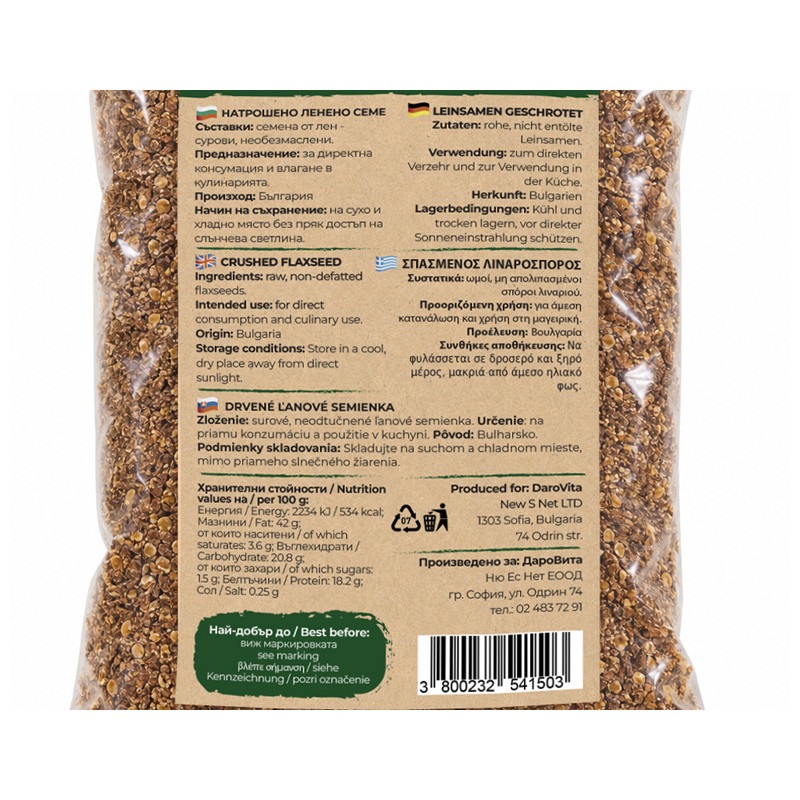
Intended use:
For direct consumption and use in cooking.
Ingredients:
Raw, non-defatted flaxseeds.
Nutritional values per 100 g:
Energy: 2234 kJ / 534 kcal
Fat: 42 g
of which saturates: 3.6 g
Carbohydrate: 20.8 g
of which sugars: 1.5 g
Protein: 18.2 g
Salt: 0.25 g
Ideas for using crushed flaxseed:
1. To support regular bowel movements and digestive comfort
Flaxseed is a natural source of dietary fibre, which helps support normal bowel function. To increase your daily fibre intake, you can add 1 teaspoon of crushed flaxseed to yoghurt or porridge and gradually increase the amount according to your individual tolerance. Drink sufficient fluids throughout the day, as fibre needs water to function properly. This is a dietary approach to supporting regular bowel movements, not a substitute for treatment in cases of persistent constipation.
2. Creamy breakfast with yoghurt, honey and fruit
Mix 200 g of yoghurt with 1 tablespoon of crushed flaxseed, a little honey and sliced banana, apple or seasonal fruit. If desired, add walnuts, cinnamon or a few oats. Leave for 5-10 minutes to allow the mixture to absorb some moisture and develop a thicker texture.
3. Overnight oats - a no-cook breakfast
In a jar, combine 4 tablespoons of oats, 1 tablespoon of crushed flaxseed, approximately 150 ml of milk or a plant-based drink, and a little cinnamon. Refrigerate overnight. In the morning, add fruit, nut butter or a few dried fruits. This makes a satisfying breakfast that can also be prepared in advance.
4. Fruit smoothie with extra fibre
Blend 1 banana, a handful of strawberries or mixed berries, 200 ml of yoghurt or a plant-based drink, and 1 tablespoon of crushed flaxseed. Add a few mint leaves for a fresher flavour. Flaxseed gives the smoothie a slightly thicker consistency and adds fibre and plant-based omega-3 fatty acids.
5. Homemade savoury flaxseed crackers
Combine 100 g of oats, 2 tablespoons of crushed flaxseed, 1 tablespoon of sesame seeds, a pinch of salt and approximately 100-120 ml of water. Leave the mixture for 10-15 minutes, spread it in a thin layer on baking paper and cut into small pieces. Bake at around 170°C until dry and lightly golden, taking care not to let them burn. These homemade crackers make a crunchy snack and can be served with hummus or a vegetable dip.
6. As a plant-based egg substitute in baking
Mix 1 tablespoon of crushed flaxseed with 3 tablespoons of water and leave for approximately 10-15 minutes until a gel-like mixture forms. Use it instead of one egg in suitable recipes for pancakes, muffins, biscuits or banana bread. This substitute is particularly useful in some vegan recipes, although it may slightly change the texture of the finished product.
7. Adding extra goodness to salads, soups and homemade spreads
Sprinkle crushed flaxseed over a prepared salad or add a small amount to hummus, bean spread, vegetable cream soup or homemade dressing. It pairs well with sesame seeds, pumpkin seeds, lemon juice and olive oil. Add it just before serving to preserve its pleasant texture.
Helpful tip: Start with small amounts and increase them gradually according to your individual tolerance. Drink sufficient water. If you have difficulty swallowing or a digestive condition, consult a healthcare professional before using flaxseed regularly. Flaxseed may affect the absorption of certain medicines, so if you take medication, ask your doctor or pharmacist about an appropriate interval between taking your medicine and consuming flaxseed.
Packing: 200 g
Frequently Asked Questions (FAQ):
What are the benefits of eating flaxseed?
Flaxseed is a source of plant-based omega-3 fatty acids, protein and dietary fibre. It also contains lignans - naturally occurring plant compounds. It can be part of a varied and balanced diet.
Is crushed or whole flaxseed better?
Crushed flaxseed may make the nutrients inside the seeds more accessible because the outer hull has been broken. Whole seeds may sometimes pass through the digestive system without being fully broken down. However, crushed flaxseed is more susceptible to oxidation and should be stored properly.
How can crushed flaxseed be consumed?
It can be added to yoghurt, oats, smoothies, salads, soups and homemade baked goods. It is suitable for both sweet and savoury recipes.
Can flaxseed be eaten every day?
Flaxseed can be included in your daily diet as part of a varied eating pattern. If you are not used to eating foods high in fibre, start with a small amount, increase it gradually and drink sufficient fluids.
Is flaxseed suitable for vegetarian and vegan diets?
Yes. Flaxseed is a plant-based product and can be used in a variety of vegetarian and vegan recipes.
What should I know when consuming flaxseed?
Consume it with sufficient fluids and increase the amount gradually. If you have difficulty swallowing, a digestive condition or take medication, particularly medicines that affect blood clotting, consult a doctor or pharmacist before consuming flaxseed regularly.