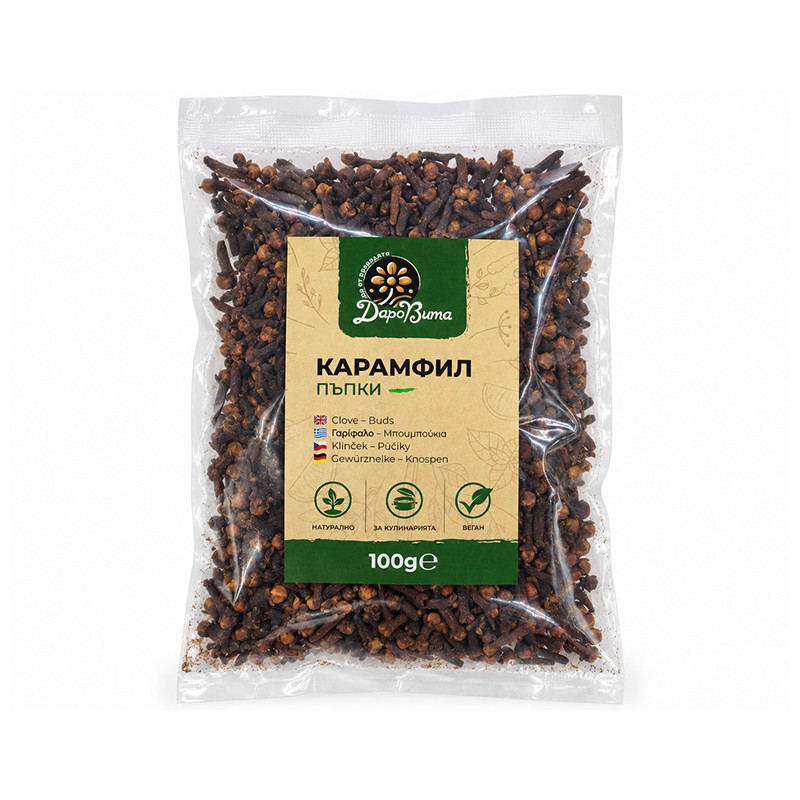
Clove Buds DaroVita - an intensely aromatic spice with a rich history, traditional uses and a place in cuisines around the world
Clove (Syzygium aromaticum) is one of the world's most aromatic and distinctive spices. Used by people for more than two thousand years, it combines an intense, warm, slightly sweet and spicy aroma with a rich history closely associated with both culinary traditions and traditional practices for supporting general well-being.
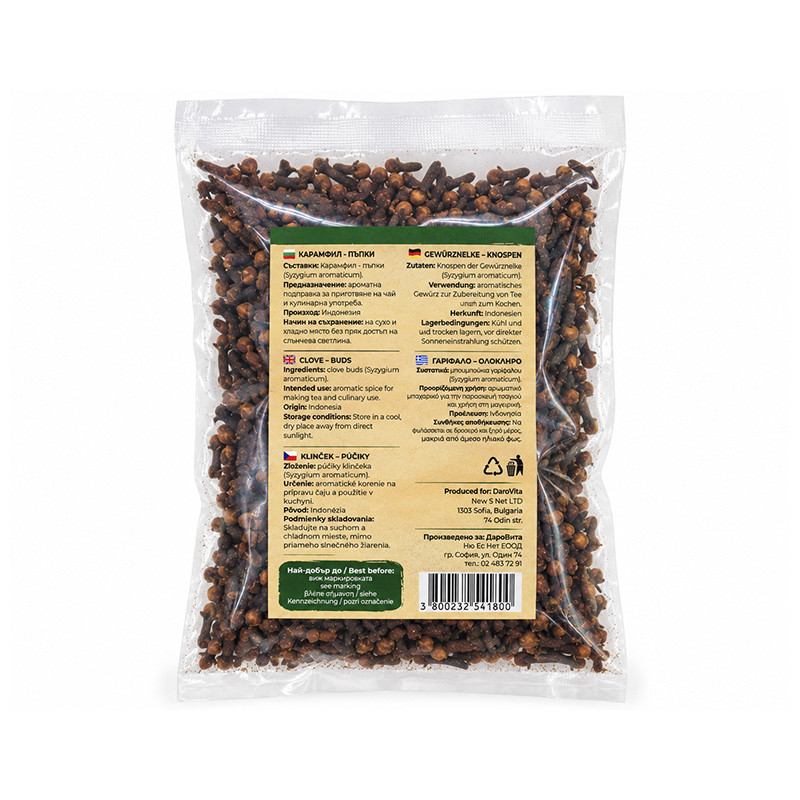
DaroVita Clove Buds are the dried, unopened flower buds of the evergreen tropical tree Syzygium aromaticum. The whole buds retain the plant's characteristic aroma and can be used to prepare fragrant teas and infusions, as well as to flavour sweet and savoury dishes, beverages, marinades and a wide variety of homemade recipes.
What Are Clove Buds?
The clove tree (Syzygium aromaticum) belongs to the myrtle family (Myrtaceae) and is an evergreen tropical plant. The spice is made from the unopened flower buds, which are harvested before flowering and then carefully dried.
Once dried, the buds develop their characteristic shape, resembling a small nail, and take on a rich brown colour. This distinctive shape is also associated with the origin of the English word clove, which derives from the Latin clavus, meaning "nail".
Clove buds contain a variety of aromatic and phenolic compounds, among which eugenol is particularly characteristic. Eugenol is the main component of clove essential oil and contributes significantly to the spice's distinctive aroma and to some of the properties that have been investigated in scientific research.
History and Origin of Cloves:
The history of cloves begins in the Moluccas, an archipelago in present-day Indonesia also historically known as the "Spice Islands". This is the natural origin of Syzygium aromaticum. For centuries, cloves were a highly valued trading commodity and one of the spices that helped drive the development of long-distance trade routes between Asia, the Middle East and Europe.
Cloves have been known in traditional Asian medical systems for more than 2,000 years. In Traditional Chinese Medicine and Ayurveda, they have been used as an aromatic and warming spice, while over the centuries they have also been included in various traditional preparations associated with digestive comfort, oral hygiene and other everyday ailments.
Arab traders played an important role in bringing cloves to the Western world, and during the Middle Ages they became an exceptionally valuable spice in Europe. Because of their high value, cloves were for a long time associated with wealth and prestige.
How Did People in Ancient Times Use Clove Buds?
Since ancient times, cloves have been valued for much more than their flavour. Their intense aroma and naturally occurring aromatic compounds made them a valuable botanical ingredient for a variety of everyday uses.
- As an aromatic spice - used to season and flavour foods and beverages.
- For freshening the breath - whole buds were held or chewed in the mouth because of their intense aroma.
- For digestive discomfort - cloves featured in traditional preparations associated with the stomach and digestion.
- As a warming spice - traditional Asian medical systems used cloves as an aromatic and warming ingredient.
- For flavouring and preserving food - cloves were also valued as a natural flavouring and preserving spice.
- For making aromatic oils - clove buds were used to produce fragrant oils with various traditional applications.
These uses form part of the long history of cloves as a spice and traditional botanical ingredient and should not be regarded as a substitute for medical treatment.
Cloves in Bulgarian Traditional Folk Medicine:
Although cloves are not native to Bulgaria, this aromatic spice, brought from distant lands, gradually found its way into Bulgarian traditional cuisine and folk recipes. In Bulgarian folk practice, cloves are mainly encountered as an aromatic and warming ingredient in homemade preparations.
In traditional recipes, the buds have been used for digestive discomfort, to stimulate appetite, to freshen the breath and as part of warming herbal blends. Cloves are combined with other aromatic plants and spices, including cinnamon, anise and ginger.
Bulgarian folk practice also includes the traditional use of cloves for tooth discomfort - a whole bud was placed in the mouth or near an aching tooth. Historical accounts of Bulgarian folk practices also describe cloves as an ingredient in various homemade preparations.
It is important to note that these applications are part of the traditional folk use of the spice and do not constitute medical advice or proven treatment for diseases.
Beneficial Properties and Natural Compounds in Clove Buds:
Clove buds are particularly interesting because of their rich content of aromatic and phenolic compounds. Among the most extensively studied is eugenol - a naturally occurring compound found in significant amounts in clove essential oil.
In addition to eugenol, cloves contain other bioactive compounds, including eugenol acetate, β-caryophyllene, flavonoids, tannins and various phenolic compounds. The composition and concentration of individual components may vary depending on origin, variety, growing conditions and processing methods.
Scientific research on cloves, their extracts and essential oil has investigated a range of potential biological activities. This is one of the reasons why cloves are of interest not only in culinary applications but also in the study of plant-derived bioactive compounds.
Antioxidant potential:
Cloves are among the spices known for their high content of phenolic compounds. Particular attention has been given to eugenol and other polyphenolic components, which have demonstrated antioxidant activity in laboratory studies.
Antioxidants are compounds that can interact with free radicals and help limit oxidative processes. This characteristic of cloves is one of the biological properties that has been widely investigated.
Natural antimicrobial properties:
Eugenol and other compounds found in cloves have been studied for their activity against various microorganisms. Under laboratory conditions, clove extracts and essential oil have been investigated for antimicrobial and antifungal activity.
This helps explain why cloves have traditionally been used not only as a spice but also in food preservation and flavouring, as well as in various traditional practices associated with oral hygiene.
Cloves and digestion:
In traditional use, cloves are associated with digestive comfort. In different cultures, they have been used for feelings of heaviness, gas, nausea and other temporary digestive discomforts.
Their warming aroma makes cloves a popular ingredient in teas and infusions enjoyed after meals. Scientific research has investigated various mechanisms and biological activities associated with their bioactive compounds, but traditional use should not be presented as a proven treatment for digestive disorders.
Cloves and oral hygiene:
One of the longest-standing traditional uses of cloves is associated with the mouth and oral care. The strong aroma of the buds makes them suitable for freshening the breath, while eugenol is a well-known compound used in dentistry.
Cloves and eugenol have been studied for their antimicrobial, antiseptic and analgesic properties, and eugenol is also used in certain dental materials. This is one of the reasons cloves have played an important role in traditional practices associated with tooth discomfort.
Cloves as an Aromatic and Warming Spice:
Cloves have a characteristic warm, intense, slightly sweet and spicy aroma. Because of their powerful flavour, they are generally used in small quantities. Just one or two whole buds can give a distinctive aroma to tea, compote, sauces and many other dishes.
Cloves pair particularly well with cinnamon, vanilla, cardamom, nutmeg, ginger, anise and citrus fruits. These combinations make cloves especially suitable for autumn and winter recipes.
Why Choose DaroVita Clove Buds?
- Whole dried flower buds of Syzygium aromaticum.
- 100% pure product with no added flavourings or processing additives.
- Intense natural aroma and characteristic warm, sweet and spicy flavour.
- Ideal for preparing aromatic teas and herbal infusions.
- Excellent for seasoning both sweet and savoury dishes.
- Suitable for compotes, desserts, winter beverages and mulled wine.
- Can be used in marinades, sauces and meat dishes.
- Rich in naturally occurring aromatic and phenolic compounds, including eugenol.
- Pairs beautifully with cinnamon, ginger, anise, cardamom and other aromatic spices.
Cloves in Cooking:
Clove buds are a versatile spice that can be used in both sweet and savoury recipes. Because of their powerful aroma and flavour, they are best used in moderation.
- Beverages - for flavouring tea, herbal infusions, mulled wine, punch and other hot drinks.
- Compotes and fruit desserts - add a distinctive warm aroma to apples, pears, plums and other fruits.
- Cakes and baked goods - suitable for cakes, biscuits, pastries, strudels and aromatic creams.
- Savoury dishes - used in meat dishes, rice, legumes, vegetables and stews.
- Marinades and pickles - add depth and a distinctive aroma to marinated vegetables and meat.
- Sauces - a small amount can enhance the aroma of sweet-and-sour and spicy sauces.
- Spice blends - pair particularly well with cinnamon, ginger, cardamom, anise and nutmeg.
Traditional Ways of Use:
Aromatic clove infusion
Pour hot water over 1-2 whole buds and leave to steep for approximately 10-15 minutes. This produces a fragrant drink with a characteristic warm and spicy flavour.
For fresh breath
In traditional practice, one whole bud may be chewed briefly, providing a fresh and intense aroma in the mouth.
In warming herbal blends
Cloves are traditionally combined with cinnamon, ginger, anise and other aromatic plants to prepare warm beverages and homemade herbal blends.
After meals
Cloves are traditionally included in aromatic infusions enjoyed after meals because of their association with digestive comfort.
The uses described above relate to the traditional use of cloves and do not constitute medical advice or a recommendation for the treatment of any condition.
Ideas for Using DaroVita Clove Buds:
Winter spiced tea: add 1-2 clove buds to black tea or a herbal infusion and combine with a little cinnamon, a slice of orange and ginger.
Homemade mulled wine: cloves pair beautifully with cinnamon, orange peel and other winter spices. Use them sparingly, as their aroma is particularly intense.
Flavoured fruit compote: add one or two buds while cooking apple, pear or plum compote for a richer, warmer aroma.
Meat marinade: combine cloves with bay leaf, black pepper, cinnamon and other spices to create an aromatic marinade.
Spiced dessert: use a small amount of cloves together with cinnamon and vanilla when preparing cakes, apple desserts, biscuits and homemade creams.
Practical Usage Tip:
Cloves are an exceptionally aromatic spice and there is no need to use them in large quantities. With whole buds, 1-2 buds are generally sufficient to flavour a cup of tea or a small recipe. In dishes that require longer cooking, whole buds can be added at the beginning and removed before serving.
For a more intense aroma, the buds can be used whole or lightly crushed. Ground cloves release their aroma more quickly, while whole buds generally retain their characteristic aromatic qualities better during storage.
Ingredients:
Clove buds (Syzygium aromaticum).
100% pure product with no added flavourings or processing additives.
Intended Use:
An aromatic spice for preparing tea and for culinary use.
Store in a cool, dry place protected from direct sunlight and moisture. Close the package tightly after use.
Packing: 100 g
EU Friendly Product: Original packaging includes a high-quality multilingual label in English, German, Greek, Slovak, and Bulgarian.
Frequently Asked Questions (FAQ):
What are clove buds?
Clove buds are the dried, unopened flower buds of the tropical tree Syzygium aromaticum. They are used as an aromatic spice and for preparing tea and infusions.
What do cloves taste like?
Cloves have a strong, warm, slightly sweet and spicy flavour with a distinctive intense aroma. For this reason, they are generally used in small quantities.
Can cloves be used to make tea?
Yes. Whole clove buds are suitable for preparing an aromatic infusion. Usually, 1-2 buds are sufficient for one cup. Pour hot water over them and leave to steep for approximately 10-15 minutes.
What are the traditional uses of cloves?
In traditional use, cloves are associated with digestive comfort, freshening the breath, warming beverages and various homemade herbal preparations. They have also historically been used in traditional practices related to oral hygiene.
What is eugenol?
Eugenol is a naturally occurring aromatic phenolic compound and one of the main characteristic components of clove essential oil. It contributes significantly to the spice's distinctive aroma and has been the subject of extensive scientific research.
What spices pair best with cloves?
Cloves pair particularly well with cinnamon, ginger, cardamom, anise, vanilla, nutmeg and citrus fruits. These combinations are especially suitable for teas, winter beverages and desserts.
What dishes can cloves be used in?
Cloves are suitable for cakes, desserts, compotes, preserves, teas, mulled wine, marinades, sauces, rice dishes, meat dishes, stews and a variety of aromatic spice blends.
How many clove buds should I use?
Cloves have a very powerful aroma, so 1-2 whole buds are generally sufficient for a cup of tea or a small recipe. The amount can be adjusted according to the recipe and the desired intensity of flavour.