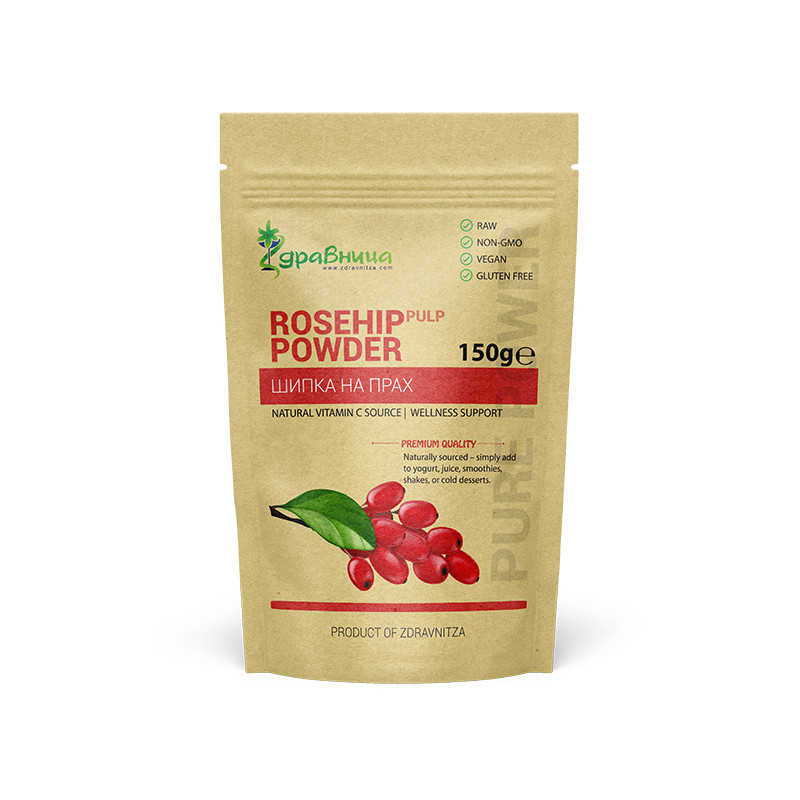
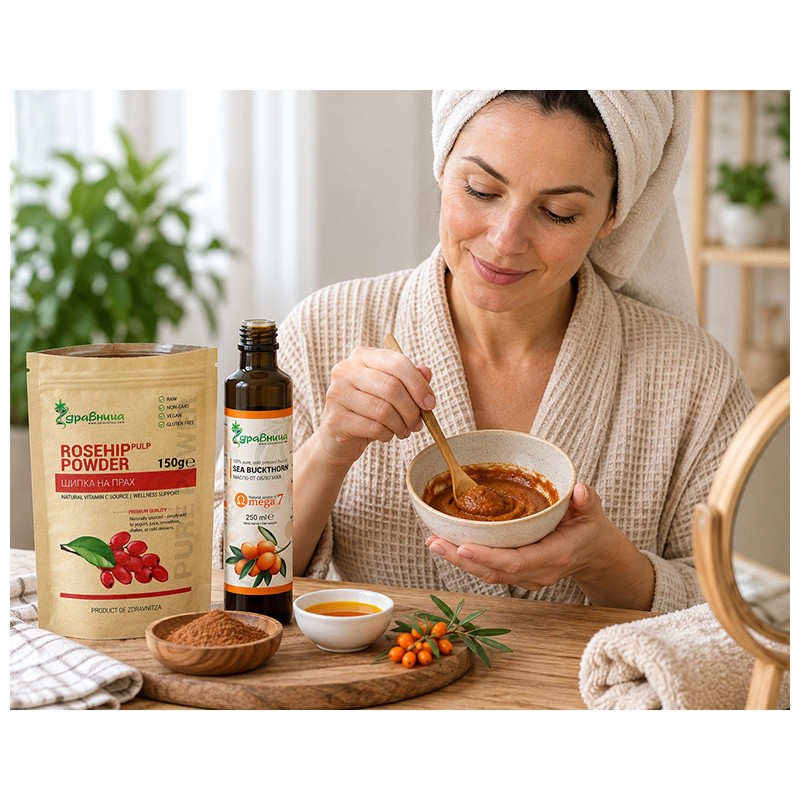
- 100% natural product
- Finely ground rosehip fruit (pulp)
- Suitable for direct consumption and culinary use
- No added colourings, flavourings or preservatives
Rosehip Powder "Zdravnitza" is made from finely ground dried rosehip fruit (pulp) of the rosehip (Rosa canina) - a plant known and used in Europe for centuries both as a food and in traditional herbal practices. With its characteristic tart-fruity taste, natural colour and rich composition, rosehip is a valuable ingredient for everyday nutrition, herbal beverages and homemade cosmetics.
Rosehip fruits contain a variety of natural compounds - vitamin C, polyphenols, flavonoids, carotenoids, organic acids and other phytonutrients. The amount of individual compounds may vary depending on the species, ripeness, geographical origin, growing conditions and drying and processing methods.
Our product is made from dried and ground rosehip pulp, with no added ingredients. It has a pleasant naturally tart taste and is convenient to include in a wide variety of recipes, beverages, desserts and homemade cosmetic masks.
History and origin of rosehip:
Rosehip (Rosa canina) is a wild shrub from the Rosaceae family, widely distributed throughout Europe, Western Asia and North Africa. Its red fruits appear in late summer and autumn and are traditionally harvested once ripe, when they develop their characteristic deep colour.
The history of rosehip use goes back a long way. Since ancient times, the fruits have been used as food, for preparing beverages and in traditional herbal practices. In European culinary traditions, rosehip gradually became part of syrups, jams, marmalades, beverages, teas and other prepared foods. Historical sources on ancient culinary traditions even mention rosatum - a beverage prepared with rosehip, showing how long the fruit has existed at the intersection of food and traditional herbal use.
In more recent history, rosehip became a particularly valued fruit in European households. Dried fruits were stored for the winter months and used to prepare teas, infusions, syrups, jams and other homemade preparations. Its characteristic tart taste and naturally occurring vitamin C contributed to its popularity as a seasonal food during the colder months.
Today, rosehip is used in many different ways - as a food ingredient, for the production of extracts and oils, in beverages and functional foods, as well as in cosmetic formulations. Scientific interest in Rosa canina is associated with its content of polyphenols, carotenoids, vitamin C, tocopherols and other bioactive compounds.
Rosehip in Bulgarian traditional herbal medicine:
Rosehip also holds a special place in Bulgarian tradition. Ethnobotanical studies show that Rosa canina is among the plants well known and widely used by the Bulgarian population. Knowledge of its use has been passed down through generations and is primarily associated with preparing teas, infusions and decoctions from the fruits.
In traditional Bulgarian practice, rosehip fruits have been used during autumn and winter as part of the diet and in herbal beverages, particularly during periods of seasonal colds and reduced vitality. Traditionally, rosehip has also been used as a natural source of vitamin C, as part of preparations intended to support general vitality, and in various homemade preparations associated with digestive and urinary comfort.
It is important to distinguish between traditional use and modern medical evidence. Traditional herbal medicine reflects accumulated experience with a plant, but traditional use alone does not mean that rosehip treats a specific disease. Modern research continues to investigate the various bioactive compounds found in the fruit and their potential physiological effects.
What do rosehip fruits contain?
Rosehip is of particular interest because of the wide range of natural compounds found in its fruit. Its composition varies according to species, origin and processing method, but scientific literature describes the presence of:
- Vitamin C - one of the characteristic nutritional components of many rosehip species;
- Polyphenols and flavonoids - plant compounds with antioxidant activity;
- Carotenoids - pigments associated with the characteristic red-orange colour of the fruit;
- Organic acids - contribute to its characteristic fresh and tart taste;
- Fibre - a natural component of the fruit pulp;
- Minerals and other phytonutrients - present in amounts that depend on the raw material and processing.
Health properties of rosehip:
Interest in rosehip is not based solely on its traditional use. Modern scientific publications describe Rosa canina as a plant rich in various bioactive compounds, including vitamin C, phenolic acids, flavonoids, carotenoids and other polyphenols. This combination is one of the reasons rosehip fruit is being studied for its antioxidant and other potentially beneficial properties.
Antioxidant potential
Vitamin C and the polyphenolic compounds found in rosehip are involved in processes related to the body's antioxidant defence. Antioxidants help limit oxidative processes caused by free radicals and reactive oxygen species. This is one of the main reasons rosehip fruits are of scientific interest as part of a varied diet.
Vitamin C and the body's natural defences
Rosehip is known as a natural plant source of vitamin C. Vitamin C plays an important physiological role and contributes to the normal functioning of the immune system, normal collagen formation, protection of cells from oxidative stress and normal iron absorption.
Polyphenols and flavonoids
The fruits of Rosa canina contain a variety of polyphenolic compounds, including flavonoids and phenolic acids. They are among the components that contribute to the antioxidant potential of rosehip and are one of the reasons the plant continues to be actively studied in the fields of nutrition and plant-based products.
Fibre and digestive comfort
Rosehip pulp is a natural source of dietary fibre. Including fibre-rich plant foods as part of a varied diet supports normal digestive function.
Rosehip and everyday nutrition
Thanks to its characteristic taste and natural composition, rosehip is a convenient way to enrich a variety of foods with plant-based components. It can be combined with fruit, nuts, oats, yoghurt, smoothies and other foods as part of a balanced everyday diet.
Rosehip powder for cosmetic use:
Rosehip is interesting not only as a food ingredient. The fruits of Rosa canina have also been widely studied for cosmetic applications because of their content of vitamin C, polyphenols, carotenoids and other plant compounds.
Various rosehip-derived ingredients - extracts, powders and especially seed oil - are used in cosmetic products designed to care for and improve the appearance of the skin. Scientific publications have investigated the potential of rosehip compounds in relation to antioxidant protection, skin appearance, hydration, elasticity and signs of photoageing.
Our product is rosehip pulp powder, not rosehip seed oil. Therefore, its cosmetic properties are primarily associated with the natural components of the fruit pulp and the physical action of the finely ground plant material. It can be used as an ingredient in homemade face masks and scrubs.
What can it be used for in homemade cosmetics?
- as an ingredient in homemade face masks;
- as a fine plant-based component in exfoliating masks;
- combined with yoghurt, honey, oat flour or plant oils;
- to enrich homemade cosmetic blends with plant polyphenols and carotenoids;
- as part of a homemade skincare ritual for maintaining a fresh and smooth-looking complexion.
For sensitive skin, it is recommended to perform a patch test on a small area first. Do not use on irritated, damaged or inflamed skin and avoid the eye area.
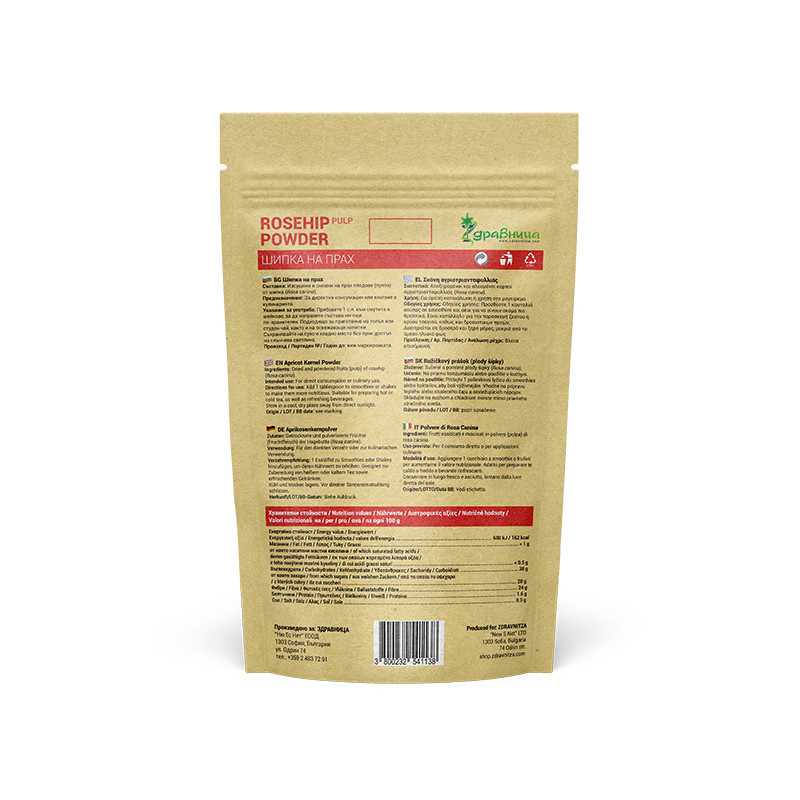
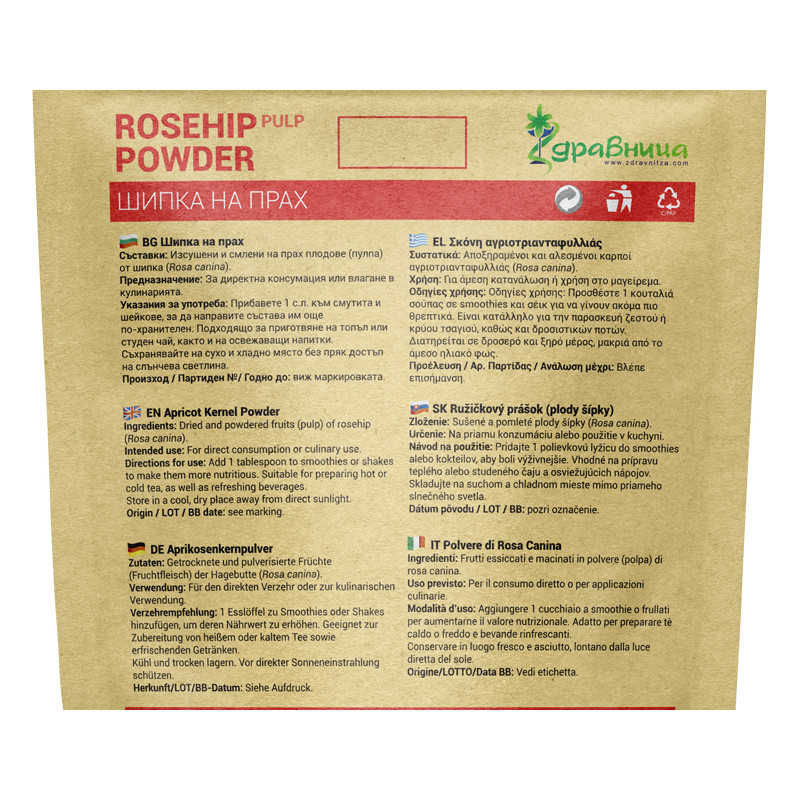
Ingredients:
Dried and finely ground rosehip fruit (pulp) (Rosa canina).
Nutritional values per 100 g:
Energy: 680 kJ / 162 kcal
Fat: < 1 g
of which saturates: < 0.5 g
Carbohydrate: 38 g
of which sugars: 20 g
Fibre: 24 g
Protein: 1.6 g
Salt: 0.0 g
Directions for use:
Suitable for direct consumption or use in cooking.
Ideas for use:
Direct consumption:
Rosehip powder can be consumed directly in small amounts or added to yoghurt, porridge, fruit bowls and other foods.
In smoothies and shakes:
Add approximately 1 tablespoon to a fruit or vegetable smoothie. Its characteristic tart taste pairs particularly well with banana, apple, pear, berries and other sweet fruits.
In desserts:
Suitable for raw desserts, creams, energy balls, homemade bars, chia pudding and toppings. A small amount adds a pleasant fruity acidity and characteristic aroma.
In baked goods:
Rosehip powder can be added to oat, nut and cereal flours when preparing biscuits, cakes, breads and other homemade baked goods.
As an ingredient in beverages:
It can be used to prepare hot and cold beverages and combined with honey, lemon, cinnamon, ginger or other fruits and spices.
In a homemade cosmetic mask:
Mix 1 teaspoon of rosehip powder with yoghurt, honey or a suitable plant oil until a smooth paste is obtained. Apply to clean skin, leave on for approximately 5-10 minutes and rinse with cool water. Avoid the eye area and do not use on irritated skin.
As a gentle exfoliating mask:
Mix a small amount of rosehip powder with oat flour and yoghurt or another suitable cosmetic product. Apply using very gentle movements without vigorous rubbing, then rinse. This option is not suitable for sensitive skin.
Ideas for delicious combinations:
- rosehip + yoghurt + honey;
- rosehip + banana + berries in a smoothie;
- rosehip + oats + nuts;
- rosehip + apple + cinnamon;
- rosehip + cocoa in raw desserts;
- rosehip + lemon + honey for a refreshing beverage.
Store in a cool, dry place away from direct sunlight. After opening, keep in the original packaging or in an airtight container.
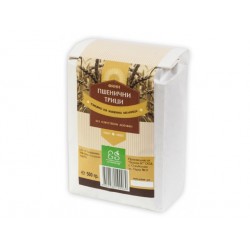
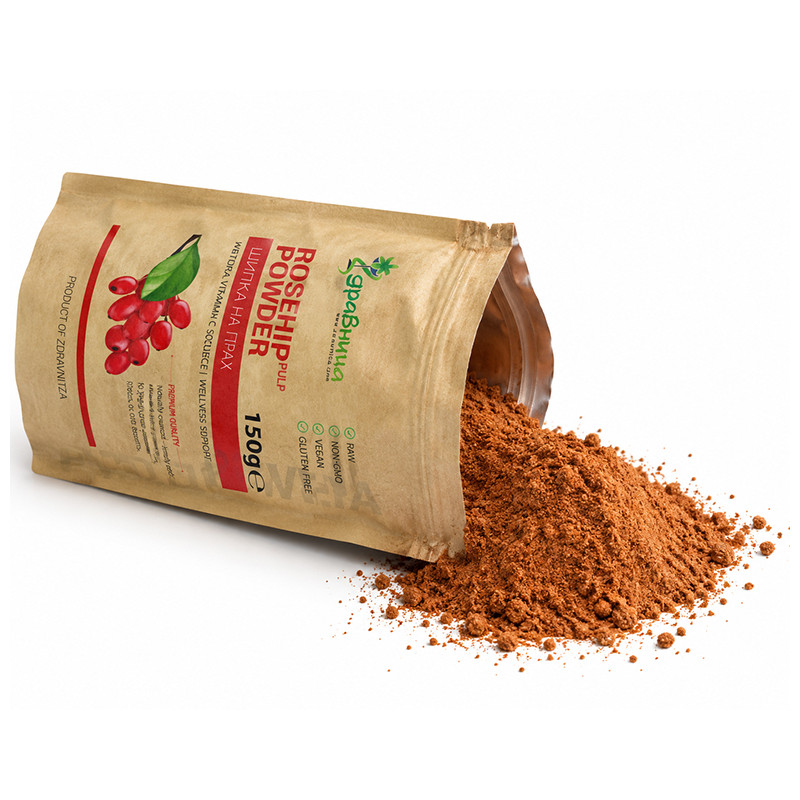
Packing: 150 g in a high-quality brown kraft doypack bag with a zipper.
The packaging is made of a three-layer material (Kraft/ALU/CPP paper) with an aluminum barrier that ensures maximum protection and long-lasting freshness, even after repeated opening.
EU Friendly Product: Original packaging includes a high-quality multilingual label in English, Greek, Slovak, German, Italian and Bulgarian.
Frequently Asked Questions (FAQ):
What is rosehip powder?
It is dried and finely ground rosehip fruit pulp (Rosa canina), suitable for direct consumption and use as an ingredient in a variety of recipes.
Does the product contain seeds?
The product is made from rosehip pulp and does not contain rosehip seeds as a separate ingredient.
Does rosehip naturally contain vitamin C?
Yes. The fruits of various rosehip species are known for their naturally occurring vitamin C content.
Can it be added to smoothies?
Yes. Rosehip powder is suitable for smoothies, shakes, yoghurt, porridge, creams and various fruit desserts.
Can it be used to make tea?
Yes. Rosehip powder can be used to prepare a hot beverage. Due to the fine texture of the powder, some plant particles may remain in the drink.
Is it suitable for vegans and vegetarians?
Yes. The product is a plant-based raw material and contains no ingredients of animal origin.
Can rosehip powder be used on the skin?
Yes. It can be included in homemade cosmetic masks and gentle exfoliating blends. For sensitive skin, a patch test on a small area is recommended before use.
Can it be used every day?
Rosehip powder is a food ingredient and can be included as part of a varied everyday diet. It does not need to be consumed as a medicinal product or according to a fixed therapeutic regimen.
Why does it taste tart?
The characteristic tart taste is a natural feature of rosehip fruit and is due to the organic acids and other natural compounds it contains.