Madder
Rubia tinctorum L.
Other names: dyer's madder, madder
History and origin:
Madder (Rubia tinctorum L.) is a perennial herbaceous plant from the Madder family (Rubiaceae), known since ancient times both as a medicinal plant and as a valuable source of natural red dyes. The species is widely distributed throughout the Mediterranean region, Southern and Eastern Europe, and parts of Western Asia.
In Bulgaria, the plant is best known as "brosh" or "boiadjiiski brosh" and has traditionally been used both as a medicinal herb and as a source of natural dye. The plant's characteristic red roots are closely associated with its long history of use for producing dyes.
The rhizome is the main part of the plant used and is harvested in autumn after the seeds have ripened or in early spring. The rhizome contains the characteristic colouring substances responsible for the long history of madder as a source of dye for textiles and other materials.
Description of the plant:
Madder is a perennial herbaceous plant with a long, horizontal, cylindrical rhizome. Its outer surface is reddish-brown, while the inside is characteristically red when cut.
The stem is four-angled, usually between 30 and 125 cm long, and may be prostrate, erect or climbing. It bears backward-pointing prickles that help the plant attach itself to surrounding vegetation.
The leaves are almost sessile, elliptical, pointed at the tip and usually arranged in whorls of 4-6. The flowers are small, yellowish-green and grouped in branched inflorescences. The plant flowers from July to September.
The fruits are berry-like, initially red and becoming black as they ripen. They consist of two globular parts, each containing one seed.
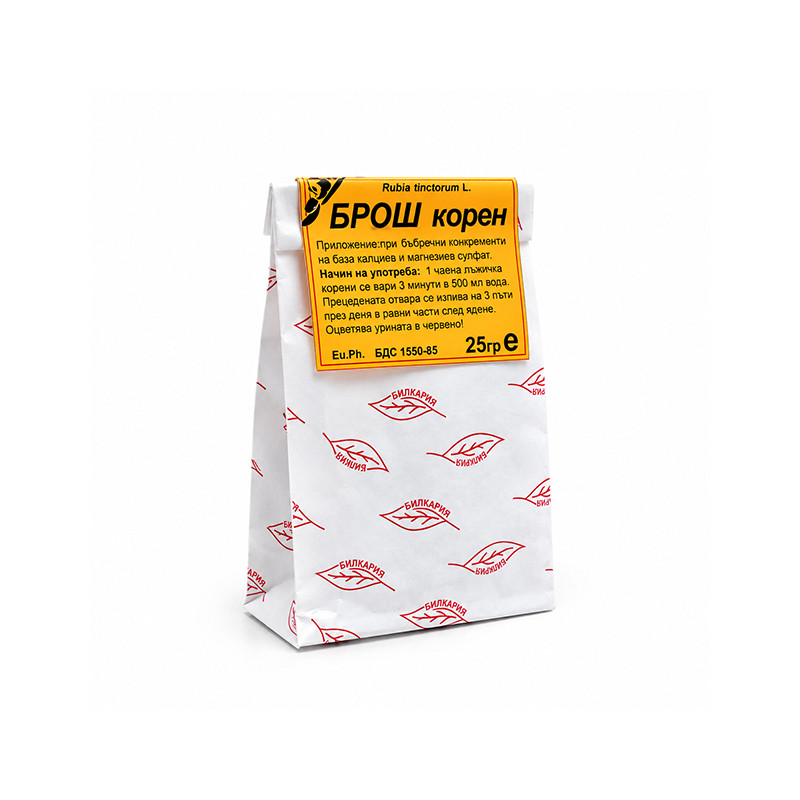
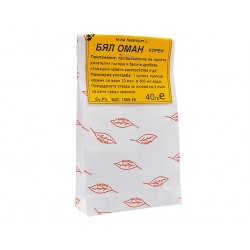
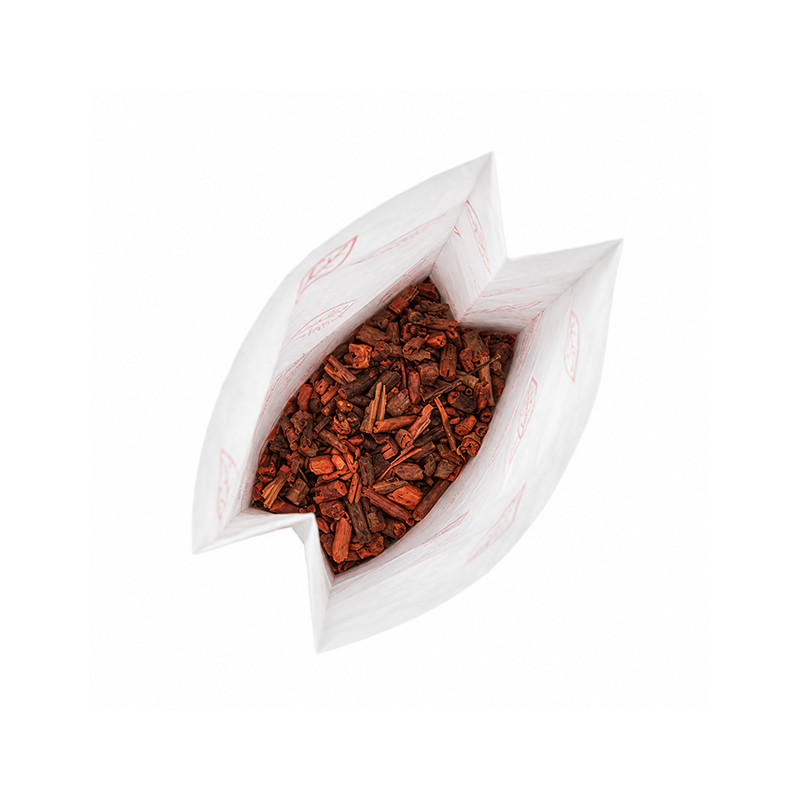
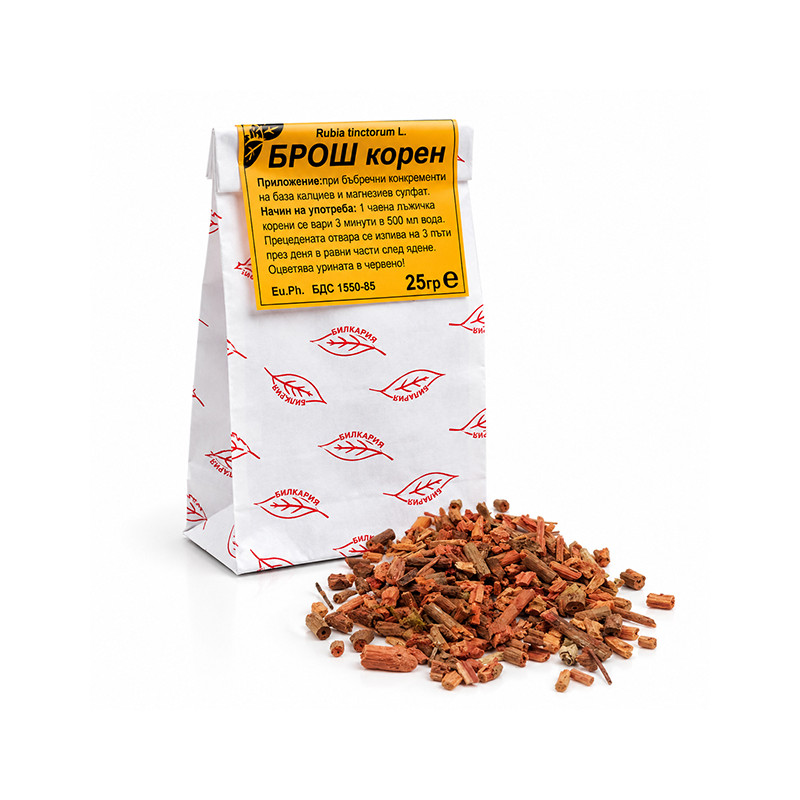
The product offered by Zdravnitza consists of dried madder root (Rubia tinctorum L.).
Distribution in Bulgaria and worldwide:
Madder is widely distributed in regions of Europe and Asia with warm and temperate climates. Its natural range includes parts of the Mediterranean region, Southern and Eastern Europe, and Western Asia, while the plant has also been introduced and cultivated in various regions because of the valuable colouring substances found in its roots.
In Bulgaria, Rubia tinctorum is found relatively sporadically throughout the country, mainly in Southern and Eastern Bulgaria. It grows among shrubs, along roadsides, in gardens and in other suitable habitats.
The plant prefers sunny locations and well-drained soils. Thanks to its ability to attach itself to surrounding vegetation with the help of the prickles on its stems, madder often grows among other plants and can form dense groups.
Madder root as a natural dye:
One of the most important historical uses of madder is associated with the production of natural red dye. The rhizome contains characteristic anthraquinone compounds, including alizarin and purpurin, which are responsible for its colouring properties.
Before the development of synthetic dyes, madder was a valuable source of red and reddish shades used for colouring textiles. The intensity and shade of the resulting colour depend on the way the roots are processed, the dyeing method, the material being dyed and other conditions.
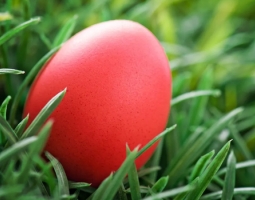
The traditional use of madder as a natural dye has also been preserved in some modern practices, including the colouring of eggs with plant-based materials.
Madder for colouring Easter eggs:
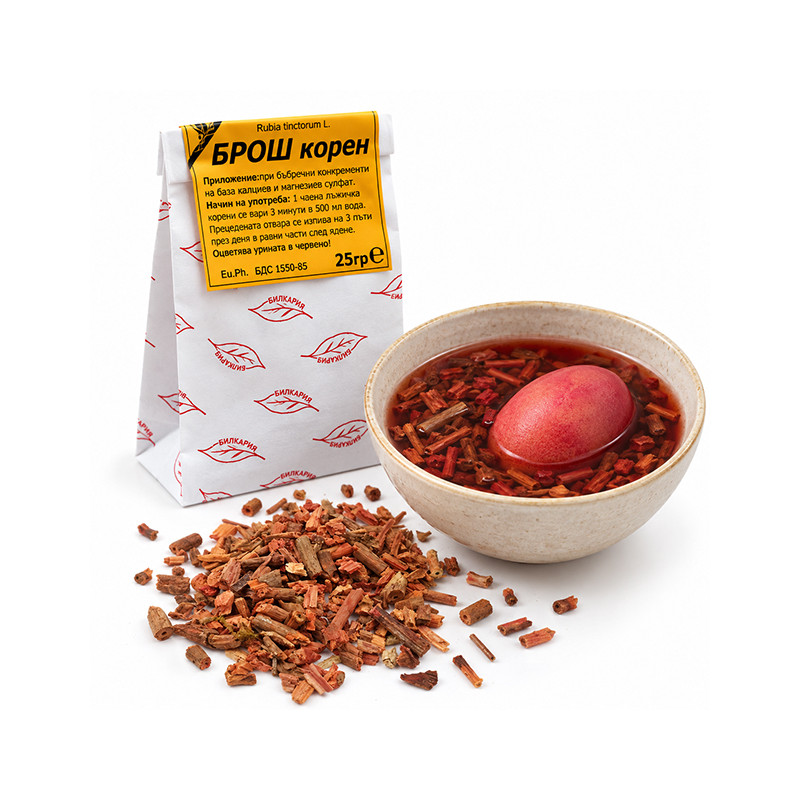
Madder roots are a traditional plant-based dye that can be used to naturally colour Easter eggs. This practice is connected with the plant's long history as a source of red dyes and forms part of the tradition of using natural materials for colouring.
The resulting colour depends on the natural colour of the eggshell, the amount of root used and the length of time the eggs remain in the dye solution. Depending on the conditions, different shades ranging from yellow and orange to terracotta and reddish tones can be obtained.
For a more intense colour, the roots are usually chopped into smaller pieces before being used to prepare the dye. The eggs are then placed in the dye and left to soak until the desired colour is achieved.
When preparing a natural dye, it is recommended to use a container that is not intended for regular cooking, as the plant pigments may cause permanent staining.
Traditional use of madder:
Madder rhizome has a long history of use in traditional herbal practices. In Bulgarian herbal sources, it is described as a plant material traditionally used for various conditions associated with the urinary system.
Composition and characteristic plant compounds:
The rhizome of Rubia tinctorum contains various natural plant compounds, including anthraquinone derivatives. Characteristic compounds include alizarin, purpurin and other substances associated with the characteristic red colour and dyeing properties of the root.
Madder - dried root:
Use: as a traditional herbal aid for kidney calculi composed of calcium and magnesium sulphates.
Preparation: boil 1 teaspoon of the herb in 500 ml of water for 3 minutes. Strain the decoction and drink it in 3 equal portions throughout the day.
Contraindications: may have an irritating effect on the stomach lining and increase gastric acidity. It colours the urine red. If pronounced discolouration occurs, the dose should be reduced or use should be discontinued.
During pregnancy and breastfeeding, in the presence of chronic diseases, kidney or gastrointestinal disorders, or when taking medicinal products, it is recommended to consult a doctor or pharmacist before using the herb.
In cases of severe or persistent pain in the kidney area, blood in the urine, difficulty urinating, fever or other acute symptoms, do not rely solely on herbal products and seek medical attention.
Packing: 25 g
Frequently Asked Questions (FAQ):
What is madder?
Madder (Rubia tinctorum L.) is a perennial herbaceous plant from the Madder family (Rubiaceae). It is traditionally known as a source of natural red dye and has also been used in traditional herbal practices.
Which part of madder is used as herbal material?
The rhizome is the main part of the plant that is used. It is harvested in autumn after the seeds have ripened or in early spring. This product contains dried madder root.
What is dried madder root used for?
The root is traditionally used as a herbal aid for kidney calculi composed of calcium and magnesium sulphates. This use should be considered in the context of traditional herbal practice and does not replace medical diagnosis or treatment.
Does madder colour the urine?
Yes. The use of madder may colour the urine red. If pronounced discolouration occurs, the dose should be reduced or use should be discontinued.
Why is madder used for colouring Easter eggs?
Madder root contains natural colouring substances that can give eggshells various shades ranging from yellow and orange to terracotta and reddish tones. The colour depends on the natural colour of the eggs, the amount of root used and the time the eggs remain in the dye solution.
Can madder be used both for herbal tea and for colouring eggs?
The product consists of dried madder root and can traditionally be used for different purposes. When used for colouring eggs, however, a separate recipe for preparing the dye should be followed rather than the preparation method given above for internal use.
Is madder suitable for everyone?
No. Madder may irritate the stomach lining and increase gastric acidity. During pregnancy and breastfeeding, in the presence of chronic diseases or when taking medicines, it is recommended to seek advice from a doctor or pharmacist beforehand.
How long does one pack last?
According to the manufacturer's recommended method of use, 1 teaspoon of chopped dried root is used per day. Approximately 25 g of the raw material is sufficient for 8-12 days of use, depending on the amount that fits into one teaspoon.