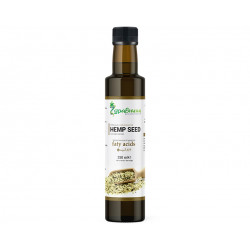
Zdravnitza OMEGA Oil is a blend of cold-pressed, unrefined vegetable oils that combines the nutritional qualities of flaxseed, sesame and hemp seed oils. The blend provides a variety of unsaturated fatty acids, including Omega-3, Omega-6 and Omega-9, which play important roles in the normal functioning of the body.
The oil is suitable for adding variety to your daily diet and dressing salads and other cold dishes. It can also be used externally as part of your skin and hair care routine, providing lipids that help soften the skin and maintain its healthy appearance.
What Is the Omega Oil Blend of Flaxseed, Sesame and Hemp?
This vegetable oil blend combines three oils with different fatty acid profiles. Flaxseed oil is a valuable plant source of alpha-linolenic acid (Omega-3), while sesame and hemp seed oils contribute other unsaturated fatty acids.
- Flaxseed oil - contains alpha-linolenic acid (ALA), an essential Omega-3 fatty acid.
- Sesame oil - contains unsaturated fatty acids, including linoleic acid (Omega-6) and oleic acid (Omega-9).
- Hemp seed oil - provides unsaturated fatty acids, including Omega-3 and Omega-6.
Omega-3, Omega-6 and Omega-9 - What Are They and What Do They Do?
Omega fatty acids are types of unsaturated fats. They are involved in various processes in the body. Some are essential fatty acids, meaning that the body cannot produce them in sufficient amounts and must obtain them through food.
Omega-3 - An Essential Fatty Acid
The main Omega-3 fatty acid in flaxseed oil is alpha-linolenic acid (ALA). It is essential, which means it must be obtained through the diet. Omega-3 fatty acids are structural components of cell membranes and participate in processes associated with the normal functioning of various systems in the body.
- They are involved in the formation of cell membranes.
- They provide energy and participate in fat metabolism.
- They serve as precursors for signalling molecules involved in regulating various physiological processes.
- They help supply essential fatty acids as part of a varied diet.
The body can convert some ALA into other Omega-3 fatty acids, such as EPA and DHA, but this conversion is limited. Therefore, plant oils rich in ALA are not nutritionally equivalent to sources of EPA and DHA, such as certain types of fish.
Omega-6 - Important for Cells and the Skin Barrier
Linoleic acid is an essential Omega-6 fatty acid found in various vegetable oils, including sesame and hemp seed oils. It is necessary for normal growth and bodily function and is an important component of cell membranes.
- It is involved in the structure of cell membranes.
- It contributes to maintaining the normal structure and barrier function of the skin.
- It participates in the formation of substances that regulate various processes in the body.
- It must be obtained through food because the body cannot synthesise linoleic acid on its own.
Omega-6 should not be regarded as an undesirable fat. It plays an important physiological role, and a balanced diet should provide a variety of essential fatty acids in appropriate amounts.
Omega-9 - Monounsaturated Fatty Acids
Omega-9 is a group of monounsaturated fatty acids, represented primarily by oleic acid in many vegetable oils. Unlike Omega-3 and Omega-6, oleic acid is not essential because the body can synthesise it.
- It is involved in the structure of cell membranes.
- It provides energy as part of dietary fats.
- It contributes to the overall intake of unsaturated fatty acids.
- It contributes to the nutritional profile of vegetable oils and can be part of a varied diet in which some saturated fats are replaced with unsaturated fats.
Oleic acid is also found in cosmetic oils, where it contributes to their emollient properties.
Health Benefits of Zdravnitza Omega Oil
Zdravnitza Omega Oil combines three vegetable oils rich in unsaturated fatty acids. These are an important part of a balanced diet and are involved in the formation of cell membranes, energy supply and the maintenance of normal physiological functions in the body.
- Cardiovascular Health: Flaxseed oil is a source of alpha-linolenic acid (ALA), an essential Omega-3 fatty acid. It participates in normal cellular functions, and obtaining it through the diet helps provide essential nutrients. At a daily intake of 2 g of ALA, the authorised EU health claim that ALA contributes to the maintenance of normal blood cholesterol levels may be used, provided the applicable conditions are met.
- Cell Membranes and Normal Bodily Functions: Omega-3 and Omega-6 fatty acids are important structural components of cell membranes. They are also involved in the formation of biologically active substances that regulate various processes in the body. Linoleic acid, an Omega-6 fatty acid, is essential and must be obtained through food.
- Brain and Nervous System: Fatty acids are part of the structures of nerve cells and cell membranes. However, it is important to distinguish the general role of fats in the body from a proven effect on memory or concentration. Such a specific effect cannot automatically be attributed to this oil blend.
- Skin and Its Natural Protective Barrier: Essential fatty acids, particularly linoleic acid, are important for the normal structure and barrier function of the skin. Applying vegetable oils to the skin may help soften it and reduce the feeling of dryness, although the specific effect depends on the product's composition and individual skin tolerance.
- Balanced Nutrition and Energy Metabolism: Vegetable oils provide energy and help supply essential fatty acids. The combination of flaxseed, sesame and hemp seed oils offers a convenient way to include a variety of unsaturated fats in your daily diet.
Cosmetic Properties and Uses of the Oil
Vegetable oils are used in skin and hair care because of their lipid content and emollient properties. Omega Oil can be applied externally as part of a personal care routine, provided it is suitable for your skin and well tolerated.
Care for Dry and Dehydrated Skin
Oils form a lipid layer on the skin's surface that may help reduce the feeling of dryness and leave the skin softer and smoother. Unsaturated fatty acids are important for the normal barrier function of the skin, while topically applied oils may help retain moisture through their emollient effect.
- Suitable for softening dry areas of the body.
- Can be used on the hands, elbows and feet when the skin needs additional emollient care.
- Helps leave the skin looking smoother and more supple through the softening effect of the oils.
- Can be applied in small amounts to slightly damp skin after showering.
Facial Care
As part of a skincare routine, a small amount of vegetable oil can be used to soften dry areas. Suitability depends on skin type and individual tolerance. If you have oily skin or skin prone to clogged pores, it is advisable to test the oil on a small area first.
- Apply a few drops to clean skin, avoiding the eye area.
- Use on its own or mix with a cosmetic product immediately before application, provided the manufacturer of that product permits it.
- Perform a patch test on a small area of skin beforehand, especially if you have sensitive skin.
Hair Care and Dry Ends
Vegetable oils can help give hair a smoother appearance, reduce the feeling of dryness and make it easier to comb. The oil can be used as a pre-wash hair mask or applied in very small amounts to dry ends.
- As a pre-wash hair mask: Apply a small amount along the lengths and ends of the hair, leave for approximately 20-30 minutes, then wash thoroughly with shampoo.
- For dry ends: Rub one or two drops between your palms and apply sparingly to the ends, avoiding excessive amounts.
- For a smoother appearance: Use a small amount according to your hair's needs, bearing in mind that fine hair can easily become weighed down.
Important for external use: Perform a patch test before first use. Do not apply to irritated or damaged skin. Discontinue use if redness or itching occurs, and avoid contact with the eyes. The product contains sesame oil, which may cause an allergic reaction in sensitive individuals. If the oil is labelled solely as a food product, it should not be presented as a specially formulated or dermatologically tested cosmetic product.
Ingredients
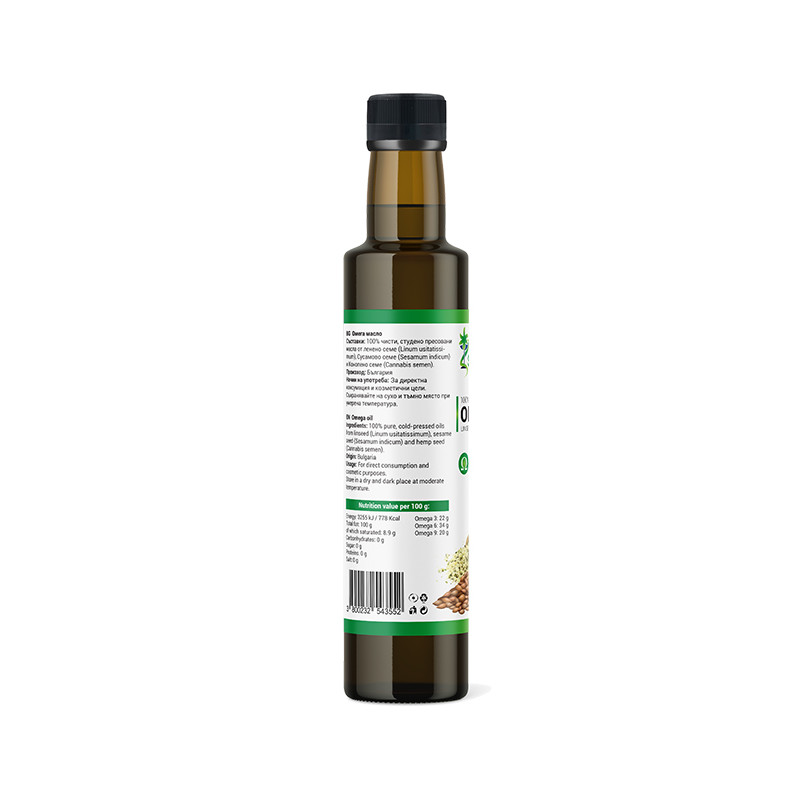
100% pure, cold-pressed, unrefined, extra virgin oils from flaxseed (Linum usitatissimum), sesame seed (Sesamum indicum) and hemp seed (Cannabis sativa).
Alcohol-free! Gluten-free!
Warning: The product contains sesame oil, a potential allergen.
Nutritional Values per 100 g
Energy: 3255 kJ / 778 kcal
Fat: 100 g
of which saturates: 8.9 g
- Omega-3: 22 g
- Omega-6: 34 g
- Omega-9: 20 g
Carbohydrates: 0 g
Sugars: 0 g
Protein: 0 g
Salt: 0 g
Directions for Use
Take 1-3 teaspoons daily before meals. The oil can be taken with water, juice, yoghurt or another liquid.
As a cold-pressed oil with no added ingredients, Omega Oil can be added to salads, cold dishes, desserts and more.
Zdravnitza Omega Oil can also be used externally on the skin or combined with other vegetable oils, natural Aloe Vera products, or added to various cosmetic masks, creams and lotions.
Important: Do not use the oil for frying or cooking at high temperatures.
How long does one bottle last?
At a standard daily intake of 3 teaspoons (approximately 15 ml), one 250 ml bottle lasts around 16-17 days. If you take 1 teaspoon daily, the bottle lasts approximately 50 days.
Practical Tips for Use
Internal Use (Nourishment from Within):
- Direct intake: For maximum absorption, take on an empty stomach, 15-20 minutes before a meal.
- Healthy dressing: Turn any salad into a more nutritious meal. Mix 2 tbsp of Omega Oil with freshly squeezed lemon juice and a pinch of sea salt for an easy way to add it to your diet.
- Culinary tip: Add the oil to ready-made dishes, such as soups, purées or cooked vegetables, to avoid exposing the fatty acids to heat. Do not heat the oil.
External Use (Beauty Care):
- Hair oil mask: Apply along the hair lengths 30 minutes before washing. The oil helps condition the hair, smooth the appearance of split ends and add natural shine.
- Intensive skin moisturising: Apply to slightly damp skin after bathing. Oleic acid contributes to the emollient properties of the oil, helping leave the skin soft and supple.
- Facial care: Add 2-3 drops to your usual night cream or apply a small amount to clean skin as a facial oil.
Store in a dark, dry place away from sunlight. After opening, store at room temperature in the tightly closed original container.
Packing: 250 ml in a dark glass bottle designed to protect the oil from light and help preserve its quality.
Frequently Asked Questions (FAQ)
What is the difference between Omega-3, Omega-6 and Omega-9?
These are different groups of unsaturated fatty acids. Omega-3 and Omega-6 include essential fatty acids that must be obtained through food. Omega-9, represented by oleic acid, is not essential because the body can produce it.
Can Omega Oil be used for cooking?
It is recommended for direct consumption or use in cold dishes. It is not suitable for frying or prolonged heat treatment.
Can it be used on the skin and hair?
Vegetable oils can be applied externally to soften the skin and dry hair ends. Perform a patch test before use and avoid the product if you are allergic to sesame or any of its ingredients.
How long can it be used after opening?
This depends on storage conditions and the manufacturer's instructions. Follow the information on the label and close the bottle tightly after each use.
Is it suitable for children?
When including oils in a child's diet, consider the child's age, individual needs and any allergies. Consult a paediatrician before giving it to young children, especially because the product contains sesame, an allergen.