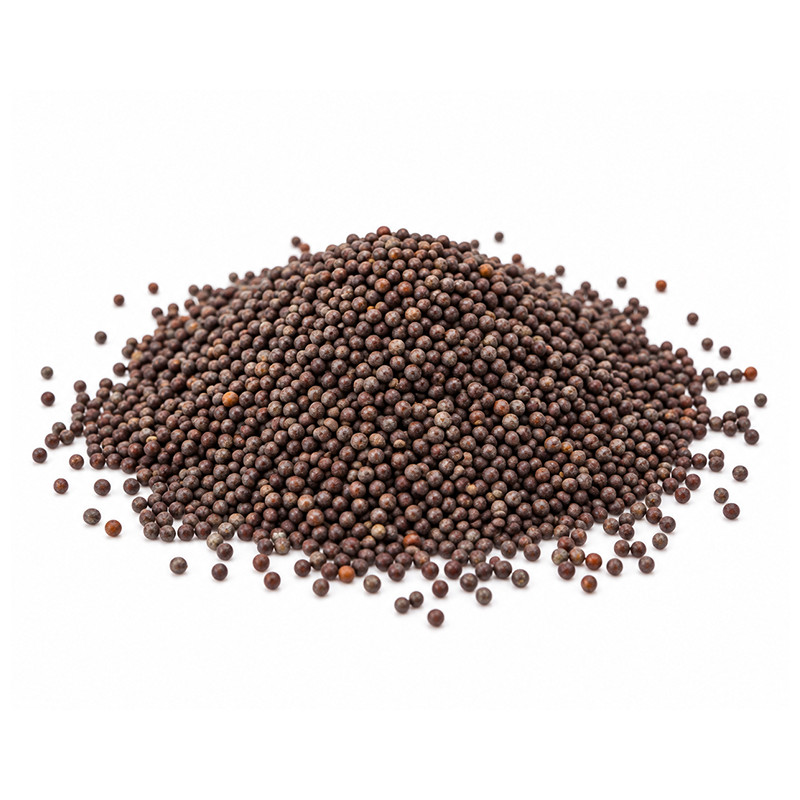
Black Mustard Seeds
Sinapis nigra L.
Other names: Black Mustard, Black Mustard Seed
History and Origin:
Black mustard (Sinapis nigra L.), also known in modern botanical literature by the scientific name Brassica nigra (L.) W.D.J. Koch, is an annual herbaceous plant belonging to the mustard family (Brassicaceae). It is part of the group of mustard plants whose seeds have been used for thousands of years in both food preparation and traditional medicinal practices.
Mustard seeds are among the oldest known plant-based spices. Black mustard has a long history of use in Europe, the Mediterranean region and parts of Asia. In the past, its seeds were valued not only for their pungent flavour but also as an ingredient in various homemade preparations, including topical applications for muscular and joint discomfort.
In European folk medicine, black mustard has traditionally been used for colds, coughs, respiratory complaints and rheumatic pain. A particularly widespread practice involved mixing crushed seeds with water, vinegar or flour and applying the mixture as a poultice. This traditional use is based primarily on the irritating and warming effects of mustard compounds on the skin.
Today, black mustard continues to be valued as an aromatic spice and plant raw material. Its seeds have a distinctive chemical composition that includes glucosinolates, fixed oil, proteins and other naturally occurring plant compounds.
Botanical Description:
Black mustard is an annual herbaceous plant with an erect, branched stem that typically reaches around 30–120 cm in height, depending on growing conditions. The stem bears leaves and may be covered with fine hairs, particularly in the younger parts of the plant.
The leaves are arranged alternately. The lower leaves are larger, stalked and often have an irregularly toothed or lobed margin. The upper leaves are smaller, oblong to lance-shaped, with pointed tips and usually shorter stalks or are almost sessile.
The flowers are yellow, with four petals, and grow in raceme-like clusters at the upper ends of the stems. Flowering generally takes place during the warmer months, although the exact period depends on the climate and habitat conditions.
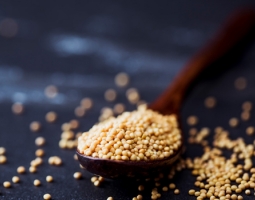
After flowering, elongated seed pods develop, each with a characteristic pointed tip. These contain small, smooth, rounded seeds ranging in colour from dark brown to almost black. The seeds are the main part of the plant used as a spice and in traditional herbal practices.
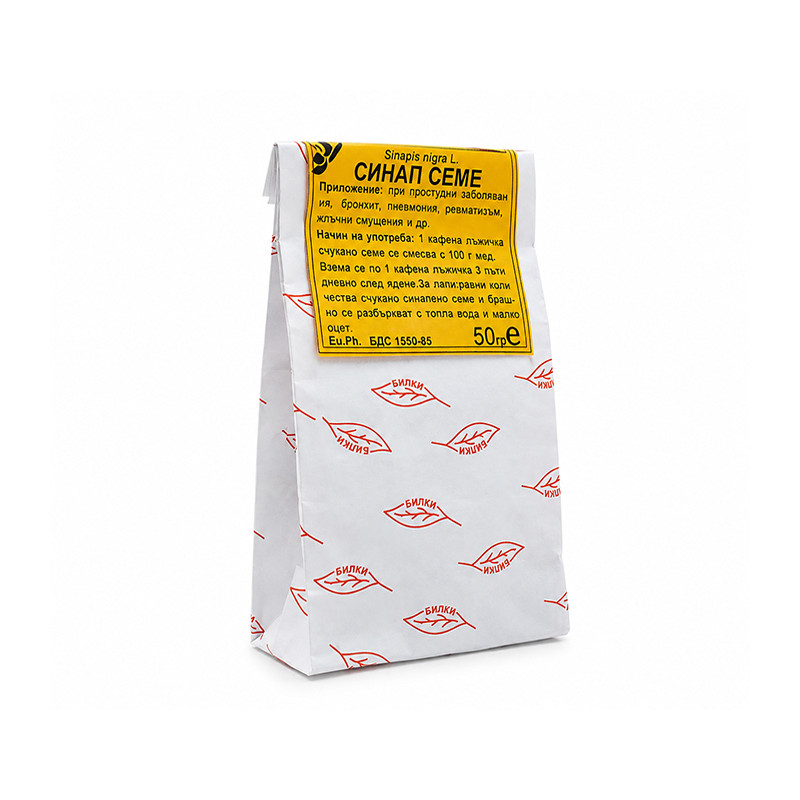
The product offered by Zdravnitza consists of black mustard seeds (Sinapis nigra L.).
Distribution in Bulgaria:
Black mustard occurs in various parts of Bulgaria, including cultivated fields, roadsides, fallow land, vegetable gardens and other areas with disturbed soil. The plant can grow in both lowland and some foothill regions, provided there is sufficient sunlight and suitable soil.
In Bulgaria, the species is also known as a weed in agricultural areas. It flowers during an extended part of the warmer season, and the mature seeds are collected from the plant's fruits.
Beyond Bulgaria, black mustard is distributed throughout much of Europe, the Mediterranean region, North Africa and parts of Western and Central Asia. As a result of centuries of cultivation, the plant has also spread to other parts of the world, where it is cultivated or occurs as a naturalised species.
Black Mustard for Colds and Coughs:
In traditional European and Bulgarian folk medicine, black mustard seeds have been used as a traditional remedy for colds, coughs and other respiratory complaints. One particularly characteristic application is their external use in the form of poultices applied to specific areas of the body.
This traditional use is associated with mustard glucosinolates, of which sinigrin is one of the main constituents. When the seeds are crushed and come into contact with water, enzymatic processes are activated that can produce isothiocyanates, including allyl isothiocyanate. These compounds give black mustard its characteristic pungency and can cause a pronounced irritating sensation.
Historically, the warming and irritating effects of mustard poultices were used to produce local skin redness and a sensation of warmth. However, this does not demonstrate that such applications treat an infection or address the underlying cause of a cough.
Bronchitis, pneumonia, persistent coughing, shortness of breath or a high temperature require medical assessment. Pneumonia is a serious condition and should not be treated independently with mustard seeds, poultices or other home remedies.
Black Mustard for Rheumatism and Joint Discomfort:
One of the historically recognised uses of black mustard is its external application for rheumatic pain, muscle tension and joint discomfort. In traditional practices, crushed seeds are mixed with water and other ingredients, and the resulting mixture is used to prepare poultices.
This approach is based on the local irritant effects of mustard compounds. Skin redness and warmth result from the tissues' response to these irritating substances and are not evidence that the underlying rheumatic condition is being treated.
Mustard poultices can cause severe irritation, blisters and chemical burns, particularly when prepared as a concentrated mixture, applied for prolonged periods or placed on sensitive or damaged skin. For this reason, experimenting with homemade poultices without appropriate guidance from a healthcare professional is not recommended.
For persistent joint pain, swelling, redness or restricted movement, it is important to establish the cause of the symptoms rather than relying solely on topical irritants.
Traditional Use for Biliary and Digestive Complaints:
In some traditional herbal practices, black mustard seeds have also been used for various digestive complaints. Mustard seeds have a pungent taste and distinctive aroma, and they are used in cooking to flavour sauces, marinades, pickles and other foods.
The glucosinolates they contain and the products formed when these compounds break down contribute to mustard's characteristic taste and aroma. However, consuming mustard should not automatically be regarded as a treatment for diseases of the gallbladder or digestive system.
Pain in the upper right abdomen, nausea, vomiting, yellowing of the skin or eyes, or suspected gallstones require medical consultation. In such situations, self-treatment with herbs may delay the identification of the underlying cause.
Other Traditional Properties of Black Mustard:
Historical European herbal sources describe black mustard as a warming, stimulating and locally irritating plant remedy. Mustard poultices and compresses have traditionally played the main role in its external use for various painful conditions.
In food preparation, the seeds are used as a spice because of their characteristic pungent flavour. They can be added to various culinary preparations, with the intensity of their aroma depending on whether the seeds are whole, crushed or ground, as well as on the processing method.
Modern scientific research investigates various compounds in mustard seeds, including glucosinolates and isothiocyanates, for their biological properties. However, laboratory and preclinical findings alone are insufficient to establish effectiveness in treating a specific disease in humans.
Composition and Characteristic Plant Compounds:
Black mustard seeds contain a variety of naturally occurring plant compounds, including glucosinolates, fixed oil, proteins and phenolic compounds. Their exact composition may vary according to the variety, growing conditions, seed maturity and storage method.
Sinigrin: One of the main glucosinolates in black mustard seeds. Under suitable conditions, particularly after the seeds are crushed and moistened, it can break down into allyl isothiocyanate and other products. These compounds contribute to the characteristic pungent aroma and spicy flavour of black mustard.
Allyl isothiocyanate: A volatile compound with pronounced irritant properties that contributes to the characteristic taste and aroma of black mustard. It can irritate the skin, eyes and mucous membranes, particularly following contact with concentrated preparations or prolonged exposure.
Fixed oil: The seeds contain vegetable oil composed of various fatty acids. The quantity and proportions of individual components depend on the plant material and growing conditions.
Proteins and other plant compounds: The seeds also contain proteins, minerals and other naturally occurring compounds characteristic of mustard plants.
It is important to remember that the presence of a particular plant compound does not automatically mean that a product has a proven therapeutic effect. Appropriate studies in humans are required to draw specific conclusions about medical efficacy.
Traditional Methods of Use:
In folk practices, black mustard is used in different ways depending on the intended purpose. The best-known historical applications include using the seeds as a spice, mixing them with honey and applying them externally in the form of poultices.
Crushing the seeds changes their structure and helps release and form characteristic aromatic compounds. Contact with water activates enzymatic processes, meaning that crushed and moistened black mustard can be considerably more irritating than whole, dry seeds.
Black Mustard Seeds:
Traditional use: As an aid for colds, bronchitis, pneumonia, rheumatism, biliary complaints and other conditions.
Preparation: Mix 1 coffee spoon of crushed seeds with 100 g of bee honey. Take 1 coffee spoon three times daily after meals.
For poultices: Mix equal quantities of crushed mustard seeds and flour with warm water and a little vinegar.
Do not use the product if you have a known mustard allergy. During pregnancy or breastfeeding, or if you have a chronic condition or take medication, consult a doctor or pharmacist before using the product for medicinal purposes. Discontinue use if an adverse reaction occurs.
Packing: 50 g
Frequently Asked Questions (FAQ):
What is black mustard?
Black mustard is an annual herbaceous plant belonging to the mustard family (Brassicaceae). Its seeds are small, smooth and dark in colour and have traditionally been used as a spice and in various folk practices.
What is the botanical name of black mustard?
In traditional literature, the plant is known as Sinapis nigra L. Modern botanical sources also frequently use the name Brassica nigra (L.) W.D.J. Koch.
What are black mustard seeds traditionally used for?
In folk medicine, the seeds are associated with traditional use for colds, respiratory complaints, rheumatic pain and certain digestive complaints.
Why does black mustard have such a pungent aroma?
Its characteristic pungency is due to glucosinolates, including sinigrin, which can form allyl isothiocyanate under certain conditions. The amount of aromatic compounds produced depends on how the seeds are processed and whether they come into contact with water.
What is the difference between black, brown and white mustard?
These are different mustard plant species. Black mustard (Brassica nigra) generally has small, dark seeds and a pronounced pungency. Brown mustard (Brassica juncea) and white mustard (Sinapis alba) differ in their botanical characteristics, chemical composition and flavour profiles.
Can black mustard irritate the skin?
Yes. Mustard compounds can cause redness, burning, blisters and chemical burns, particularly following contact with a concentrated mixture of crushed seeds and water. Avoid contact with the eyes, mucous membranes and damaged skin.
Is black mustard suitable for people with a mustard allergy?
No. People with a known mustard allergy should avoid this product. Allergic reactions can be serious, and symptoms such as difficulty breathing or swelling of the tongue or throat require emergency medical assistance.