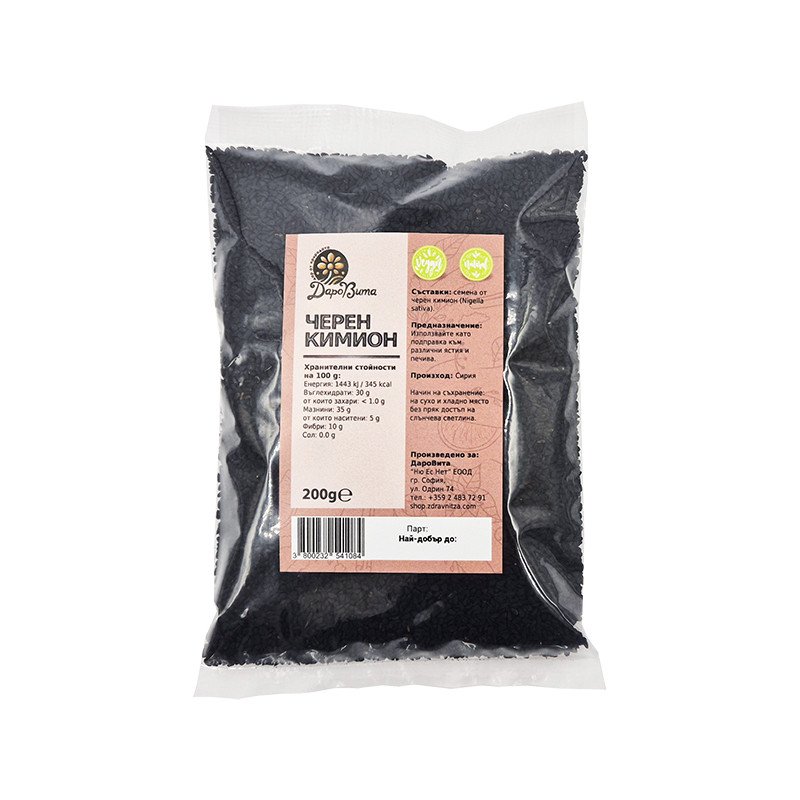
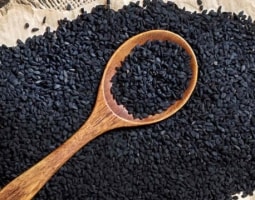
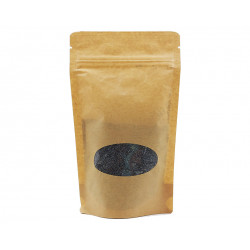
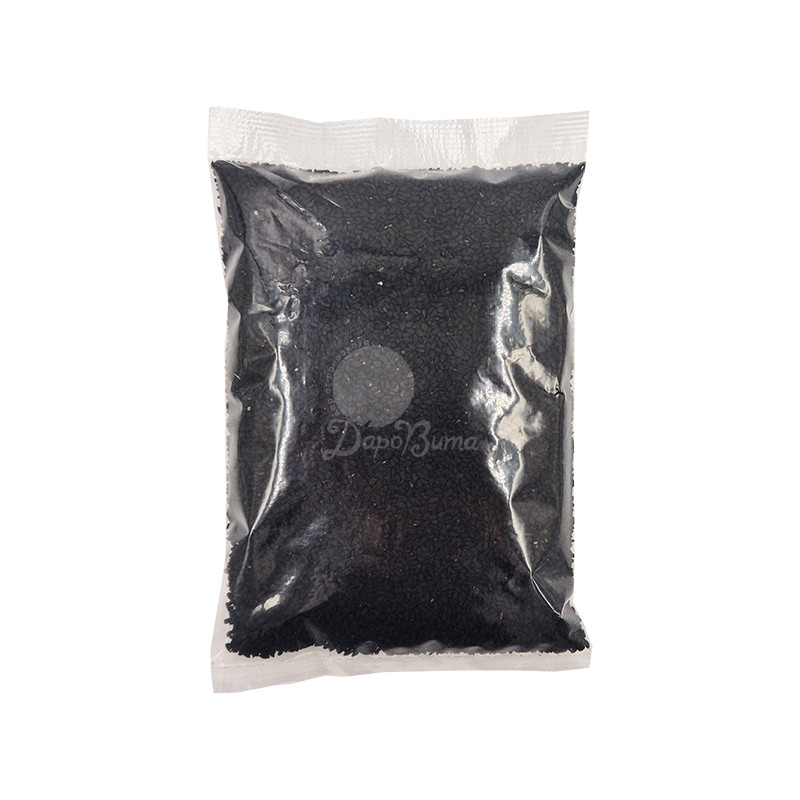
DaroVita Black Cumin - 100% natural raw Nigella sativa seeds for seasoning dishes, baked goods and preparing a herbal infusion.
Black cumin (Nigella sativa) is one of the best-known aromatic plants in the traditional cuisine and herbal practices of the Middle East, North Africa and parts of Asia. The small black seeds have a distinctive aroma, a mildly spicy and earthy taste, and a naturally rich composition. They can be used as a seasoning for a variety of dishes and baked goods or to prepare an aromatic herbal infusion.
DaroVita Black Cumin - Seeds is a 100% natural product made from raw Nigella sativa seeds, without technological additives. The seeds can be used whole or ground immediately before use when you want to release their characteristic aroma more intensely.
What is black cumin?
Black cumin, botanically known as Nigella sativa, is an annual plant belonging to the buttercup family (Ranunculaceae). Despite its name, it does not belong to the same botanical family as common cumin. The small black seeds are the most valued part of the plant and have been used for centuries as an aromatic spice and traditional botanical ingredient.
The seeds have a distinctive spicy, slightly bitter and earthy taste with aromatic notes that may remind you of a combination of black pepper, onion and oregano. This distinctive flavour makes them an interesting addition to a wide variety of savoury dishes and baked goods.
A brief history of black cumin?
The history of Nigella sativa is closely associated with the ancient civilisations of the Middle East and North Africa. The seeds have been known and used for centuries as a spice and traditional botanical ingredient.
Over the centuries, black cumin spread throughout different regions of the Mediterranean, the Middle East and Asia, gradually becoming part of traditional cuisine. The seeds have found their way into recipes for bread, flatbreads, vegetable dishes, salads and various spice blends.
Today, black cumin continues to be valued both for its distinctive flavour and for the rich natural composition of its seeds, which has been the subject of numerous scientific studies.
What do black cumin seeds contain?
The seeds of Nigella sativa naturally contain plant oils, protein, fibre, carbohydrates and a variety of plant compounds. One of the characteristic bioactive compounds found in black cumin is thymoquinone, one of the most extensively studied components of the plant.
The seeds also contain various fatty acids, including linoleic and oleic acid, as well as plant sterols and other naturally occurring phytocompounds. Their composition may vary depending on the variety, origin, cultivation conditions and storage conditions.
Health benefits of black cumin seeds:
The seeds of Nigella sativa have been traditionally used in different cultures for centuries, and over the past few decades they have attracted increasing scientific interest. This is largely due to their naturally rich composition and the presence of bioactive plant compounds, with thymoquinone receiving particular attention.
Modern scientific research has investigated black cumin in relation to various aspects of metabolic, cardiovascular and general health. Systematic reviews and meta-analyses of clinical studies in humans have reported promising results regarding blood sugar, lipid profile, blood pressure and certain markers associated with inflammatory and oxidative processes.
Support for normal metabolic balance:
Black cumin has attracted particular scientific interest in relation to metabolic health. Meta-analyses of randomised clinical trials have reported improvements in markers such as fasting blood glucose and HbA1c following the use of Nigella sativa. A more recent meta-analysis including 30 randomised trials also reported significant reductions in fasting blood glucose and HbA1c, although the authors noted considerable variation between the individual studies and the need for further high-quality research.
Support for a healthy lipid profile:
Black cumin seeds are a natural source of plant fats and various bioactive compounds. Clinical studies and meta-analyses have investigated the effects of Nigella sativa on cholesterol and triglycerides. An analysis of 34 studies involving a total of 2,278 participants found improvements in total cholesterol, LDL cholesterol, triglycerides and HDL cholesterol following the use of Nigella sativa.
Support for cardiovascular health:
The relationship between black cumin and cardiovascular health markers has also attracted considerable scientific interest. A meta-analysis of 82 randomised trials involving more than 5,000 participants reported improvements in a number of markers associated with cardiometabolic health, including blood pressure, lipid profile, blood glucose and certain measures of body composition. These findings contribute to the scientific interest in Nigella sativa as part of an overall healthy lifestyle.
Support for healthy blood pressure:
Several systematic reviews and meta-analyses of randomised clinical trials have reported moderate reductions in both systolic and diastolic blood pressure following the use of Nigella sativa.
Antioxidant support:
Thymoquinone and other naturally occurring compounds in Nigella sativa have been studied for their antioxidant properties. Oxidative stress refers to an imbalance between the formation of reactive molecules and the body's ability to neutralise them. This is one of the reasons why black cumin is of interest as a natural source of plant-derived antioxidant compounds.
Support during inflammatory processes:
Laboratory, experimental and clinical studies have investigated the potential influence of Nigella sativa on various inflammatory mechanisms. Some clinical studies have observed changes in certain inflammatory markers.
Support for the body's natural defence mechanisms:
The rich phytochemical composition of black cumin is one of the reasons why the plant has traditionally been used to support the body's overall condition. Scientific interest in Nigella sativa includes the interaction of its natural compounds with various mechanisms associated with inflammation and oxidative balance.
Support for the respiratory system:
Black cumin has traditionally been used in different cultures to support respiratory comfort. Clinical studies have also investigated the use of Nigella sativa in people with asthma.
Support for digestion:
Black cumin has a long tradition of use as an aromatic spice and botanical ingredient, including after meals and in various traditional recipes. The seeds contain fibre and naturally occurring plant compounds that complement a varied and balanced diet.
Support for healthy skin:
The natural fatty acids and bioactive compounds in the seeds are among the reasons why Nigella sativa is also of interest in the field of skincare. Scientific research has investigated various properties of the plant related to inflammatory and oxidative processes that are relevant to skin condition.
A natural source of valuable nutrients:
In addition to their bioactive plant compounds, black cumin seeds contain naturally occurring fats, fibre, protein and carbohydrates. They are particularly interesting for people who want to diversify their daily diet with different seeds and natural plant-based foods.
Why choose DaroVita Black Cumin Seeds?
- 100% natural product made from Nigella sativa seeds.
- Raw seeds with a natural aroma and distinctive spicy taste.
- Free from technological additives.
- Suitable for direct culinary use.
- Can be used as a seasoning for dishes, salads and baked goods.
- Suitable for grinding and adding to a variety of recipes.
- Can be used to prepare an aromatic herbal infusion.
- A natural source of plant fibre and fats.
Black cumin in the kitchen:
The small black seeds are an exceptionally versatile spice. They can be used whole or lightly ground and added to a variety of savoury recipes. Their distinctive aroma is particularly well suited to bread, flatbreads, savoury baked goods, vegetable dishes and salads.
Black cumin pairs well with spices such as sesame, coriander, cumin, black pepper, garlic and dried onion. It can be sprinkled over dough before baking or added directly to the mixture.
Practical ideas for use:
- For bread and flatbreads - sprinkle the seeds over the dough before baking or add them directly to the flour mixture.
- For savoury baked goods - suitable for homemade savoury biscuits, crackers, pastries and other baked products.
- For fresh salads - add a small amount of whole seeds to vegetable salads.
- For roasted vegetables - combine with courgettes, potatoes, carrots, cauliflower or other vegetables.
- For rice and grain dishes - add the seeds to the finished dish for a distinctive aroma and flavour.
- For homemade spice blends - combine with other favourite spices according to your taste.
- Ground seeds - grind immediately before use and add to a variety of savoury recipes.
Black cumin for homemade bread:
One of the easiest ways to use the seeds is as an addition to homemade bread or flatbreads. The seeds can be sprinkled over the shaped dough immediately before baking. During baking, they release their characteristic aroma and add a pleasant spicy note to the finished product.
For a more pronounced flavour, you can add a small amount of seeds directly to the dough, adjusting the quantity according to the other ingredients and your personal preference.
Black cumin in fresh salads:
Whole seeds can be used as an interesting addition to fresh vegetable salads. They pair well with tomatoes, cucumbers, leafy salads, carrots and roasted vegetables. Add a small amount just before serving to preserve their characteristic aroma.
Black cumin herbal infusion:
Black cumin seeds can also be used to prepare an aromatic water-based drink. When soaked in hot water, some of the water-soluble compounds and aromatic substances are released into the drink.
Preparation:
Soak 1/2 teaspoon of seeds for 60 minutes in 300 ml of hot water. Strain and divide into 3 servings of 100 ml each.
For a more intense release of aromatic compounds, the seeds can be lightly crushed immediately before preparation.
Ingredients:
Black cumin seeds (Nigella sativa).
Nutritional values per 100 g:
Energy value: 1443 kJ / 345 kcal
Carbohydrates: 30 g
of which sugars: < 1.0 g
Fat: 35 g
of which saturates: 5 g
Fibre: 10 g
Salt: 0.0 g
Directions for use:
Can be used as a seasoning for various dishes and baked goods. Black cumin seeds are also suitable as an addition to fresh salads. They can be used whole or ground immediately before use.
For preparing a herbal infusion:
Soak 1/2 teaspoon of seeds for 60 minutes in 300 ml of hot water. Strain and divide into 3 servings of 100 ml each.
Store in a dry and cool place away from direct sunlight. After opening, close the pouch securely to limit exposure to moisture and air and help preserve the quality and aroma of the seeds.
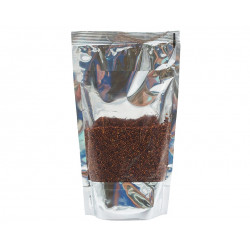
Strong and reliable packaging: DaroVita Black Cumin Seeds are protected in a thick and durable heat-sealed pouch. The thicker material provides excellent mechanical protection, helps prevent the pouch from tearing easily and contributes to better storage and preservation of the quality of the raw material.
Packing: 200 g
Frequently Asked Questions (FAQ):
What is black cumin?
Black cumin is the plant Nigella sativa, whose small black seeds have traditionally been used as a spice and botanical ingredient in different cuisines around the world.
What do black cumin seeds taste like?
They have a distinctive spicy, slightly bitter and earthy flavour with aromatic notes that may remind you of a combination of black pepper, onion and oregano.
How can I use black cumin seeds?
They can be added to bread, flatbreads, savoury baked goods, salads, roasted vegetables, rice and various dishes. They can be used whole or ground.
Can black cumin be used directly as a spice?
Yes. The seeds are suitable for direct culinary use as a seasoning in a variety of sweet and savoury recipes, with their use being particularly characteristic in savoury dishes.
Can the seeds be ground?
Yes. You can grind them immediately before use and add them to suitable dishes, doughs or homemade spice blends.
Do black cumin seeds contain fat?
Yes. According to the stated nutritional values, the seeds contain 35 g of fat per 100 g, which is a natural part of their composition.
Scientific sources and research:
Scientific interest in Nigella sativa and its naturally occurring bioactive compounds is supported by numerous scientific publications. Below are systematic reviews and meta-analyses of clinical studies investigating different aspects of the use of black cumin in humans.
Glycaemic control and blood sugar: A recent systematic review and meta-analysis of 30 randomised controlled trials investigated the effects of Nigella sativa on blood glucose markers and reported significant reductions in fasting blood glucose and HbA1c. The authors noted the need for further research to determine the optimal form, dosage and duration of use.
PubMed - The effect of Nigella sativa supplementation on glycemic status in adults
Blood sugar, cholesterol and lipid profile: A systematic review and meta-analysis of 50 clinical studies investigated the effects of Nigella sativa on glycaemic control, lipid profile and selected inflammatory and oxidative stress markers. The analysis reported improvements in several parameters, including fasting blood glucose, HbA1c, total cholesterol, triglycerides and LDL cholesterol.
PubMed - Effects of Nigella sativa on glycemic control, lipid profiles, and biomarkers of inflammatory and oxidative stress
Inflammatory and oxidative balance: A systematic review and meta-analysis of 20 randomised trials involving a total of 1,086 participants investigated the effects of Nigella sativa on markers of inflammation and oxidative stress. The analysis reported changes in CRP, TNF-alpha, MDA, total antioxidant capacity, SOD and GPx.
PubMed - The effect of Nigella sativa on biomarkers of inflammation and oxidative stress
Antioxidant and inflammatory markers: Another systematic review and meta-analysis of randomised clinical trials examined both seeds and oil of Nigella sativa and reported changes in certain markers associated with inflammation and antioxidant protection. The authors emphasised the need for larger and longer-term studies.
PubMed - The effect of Nigella sativa on biomarkers of inflammation and oxidative stress
Respiratory system and asthma: A meta-analysis of randomised controlled trials investigated the use of Nigella sativa in asthma. The analysis included four studies and reported improvements in some measures of asthma control and lung function, while the authors noted that further clinical research is needed.
PubMed - The influence of Nigella sativa for asthma control: A meta-analysis
Summary of scientific evidence: A more recent umbrella meta-analysis combined the results of several previous meta-analyses and examined the effects of Nigella sativa on inflammatory and oxidative stress markers. The findings support continued scientific interest in black cumin while also highlighting the need for further high-quality clinical research.
PubMed - Alleviating effects of Nigella sativa supplements on biomarkers of inflammation and oxidative stress
Important: The scientific publications listed above investigate different forms of Nigella sativa, including whole seeds, ground seeds, powder, oil and other preparations. Therefore, the results of a particular clinical study cannot automatically be considered evidence of an identical effect for every form and quantity of the product. The scientific sources are provided for informational purposes and do not replace medical advice.